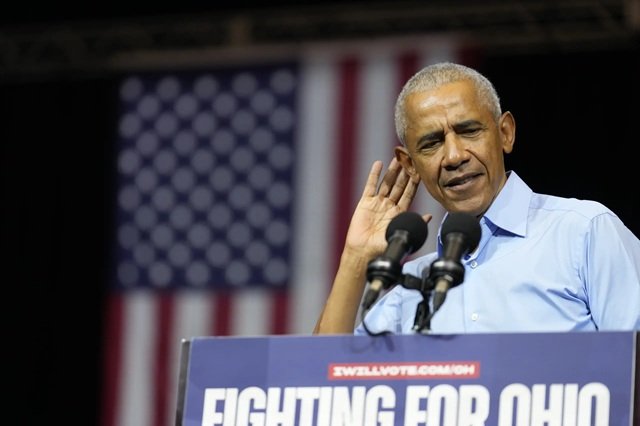
Former US president Barack Obama has accused Donald Trump’s administration of economic mismanagement, corruption and incompetence, comparing the lavish renovations of the White House under the Republican president to the excesses of Saddam Hussein, as he urged Ohio voters to use the state’s elections to challenge the administration’s policies.
Speaking at a campaign rally in Cleveland alongside Democratic Senate candidate Sherrod Brown and gubernatorial candidate Amy Acton, Obama delivered a sustained attack on Trump’s handling of the economy, the conflict involving Iran, immigration enforcement, government spending and alleged conflicts of interest. He described the preceding two years as a period of “chaos and cruelty and corruption and incompetence the likes of which we have not seen in modern times”, urging voters to reject candidates who had supported the president.
Obama centred much of his economic criticism on rising fuel prices, arguing that the administration’s decisions had increased costs for American households. Mortgage payments, healthcare, utility bills and interest rates had all become more expensive, he said, while petrol had reached $4 to $5 a gallon and diesel had risen above $6. Acknowledging that presidents could not control every economic development, he argued that this administration’s policies were directly contributing to the problem.
“Most importantly, he decided to start an unnecessary war that nobody asked for and nobody voted for,” Obama said, referring to the conflict involving Iran. He argued that Trump had abandoned a diplomatic agreement designed to prevent Iran from obtaining nuclear weapons before initiating military action.
Obama said the original justification for the war had been to force Iran to abandon its nuclear programme. But he maintained that the agreement negotiated during his presidency had already constrained Iran’s nuclear ambitions without requiring military force. “I didn’t have to fire a missile to do it,” he said. “I just had to engage in diplomacy.”
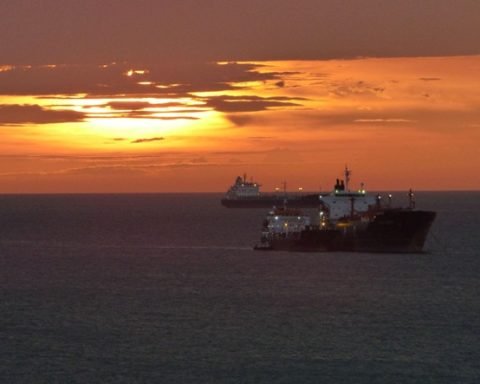
Assessing the consequences of the conflict, Obama said American personnel had been killed, hundreds wounded, and US bases and allies attacked. The military had also depleted its stock of missiles, he said, while Iran had acquired what he described as veto power over the Strait of Hormuz, a crucial route for oil shipments to international markets.
“This is the reason why the price of oil is up,” Obama said, linking the conflict to rising diesel prices and the wider increase in the cost of goods. He also criticised Defence Secretary Pete Hegseth, accusing him of concentrating on the physical appearance and testosterone levels of American troops and broadcasting executions rather than focusing on the responsibilities of his office.
“How much time do you think this defence secretary spends looking at himself in the mirror in the morning?” Obama asked, mocking Hegseth’s appearance and presentation. “These are not serious people. And the problem is you end up having to pay the price for their lack of seriousness.”
Trade policy was another major target. Obama said Trump had been warned that tariffs would increase costs for consumers, both through imported goods and components used in products manufactured in the United States. Rather than reducing the federal deficit as promised, he argued, the policy had contributed to higher prices while the national debt had reached what he described as $40 trillion.
He also criticised Trump for opening a trade dispute with Canada, describing the neighbouring country as a friendly partner whose people had given Americans “maple syrup and Martin Short”. Obama contrasted the administration’s trade policy with its campaign promises to reduce costs and avoid unnecessary international conflicts.
The former president said the only significant legislation passed by the administration in its first two years had been a trillion-dollar tax break that primarily benefited wealthy Americans. He also challenged the administration’s approach to immigration, distinguishing between border security and enforcement practices that he said had not been presented to voters during the campaign.
Obama said he supported an orderly and secure border and the lawful entry of migrants, noting that his own administration had faced criticism from Democratic allies for tightening enforcement. But he said voters had not authorised masked agents to operate in American streets or law-abiding citizens to be arrested, detained or shot. Such measures, he argued, were not necessary to establish border control.
His most personal criticism concerned allegations of financial impropriety involving Trump and his family. Obama cited reports of a US ambassador pressuring a donor to cover a $100,000 credit-card bill and a Venezuelan billionaire allegedly paying $50 million to one of Trump’s personal lawyers to become general counsel at a company before receiving a presidential pardon. He presented the incidents as examples of a wider pattern of alleged influence-peddling, alongside business ventures involving cryptocurrency and taxpayer-funded contracts for companies associated with the president’s children.
“We have never seen a president excel so wildly in just straight-up grifting on your dime,” Obama said. “Never seen a president so intent on selling favours and shaking folks down.”
He said Trump had become billions of dollars wealthier while in office and accused congressional Republicans of failing to intervene. The criticism extended to the president’s extensive White House renovations, including a ballroom, changes to the Rose Garden, a helicopter landing pad on the South Lawn and widespread gold decoration.
“He’s got the White House looking like Saddam Hussein opened a Cheesecake Factory,” Obama said. “Just gold everywhere.”
Obama argued that the administration’s priorities were disconnected from the financial pressures facing ordinary Americans. He said the government had devoted insufficient attention to reducing living costs while the president focused on renovations and personal enrichment.
The Ohio campaigns offered Obama an opportunity to connect his national criticism to specific electoral choices. He accused Republican Senate candidate John Husted of voting 14 times to support the Iran war, three times to block efforts to curb tariffs, and in favour of measures that he said would remove hundreds of thousands of Ohioans from Medicaid and increase healthcare costs.
Brown, whom Obama said he had known for two decades, was presented as a candidate focused on working people. Obama highlighted Brown’s proposals to prohibit congressional stock trading, impose lifetime restrictions on lobbying by former members of Congress, limit utility-rate increases and ensure that corporations, rather than Ohio residents, paid the full energy costs of data centres. Brown also intended to pursue lower prescription-drug prices and stronger protections for people denied insurance coverage, Obama said.
In the gubernatorial contest, Obama criticised Republican candidate Vivek Ramaswamy, questioning whether his ambitions were driven by public service or political celebrity. He cited Republican Governor Mike DeWine’s assessment that Ramaswamy appeared to want to be both a good governor and a political celebrity, and criticised a recent campaign advertisement without providing further details about its content.
Obama contrasted Ramaswamy with Acton, a former Ohio health department leader whom DeWine had recruited to his cabinet. He said Acton’s experiences with abuse, neglect and homelessness had shaped her commitment to helping vulnerable people. Her proposals included tax cuts for as many as 775,000 Ohio families, more affordable childcare, medical-debt forgiveness and anti-corruption executive orders on her first day as governor.
Beyond the immediate campaign, Obama argued that political dysfunction also reflected deeper failures of public values, including dishonesty, bullying and indifference to people in need. Quoting Martin Luther King Jr., he recalled the preacher’s warning that scientific progress had created “a world of neighbourhood” without producing “a brotherhood”.
Obama called for lower costs, an end to the war and accountability in Washington, but said those objectives required political participation and a change in national conduct. With the administration having two years remaining, he described the election as an opportunity to impose greater congressional scrutiny and elect leaders offering practical solutions on healthcare, housing, childcare and energy costs.