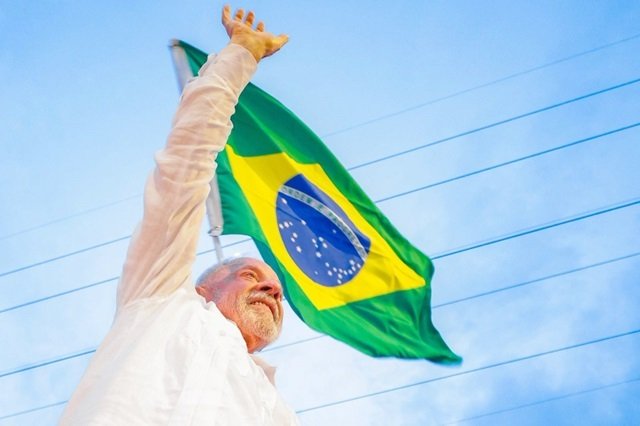
Luiz Inácio Lula da Silva secured a fourth presidential term in Brazil with 51.79% of the vote, defeating far-right senator Flávio Bolsonaro, who received 48.21%, according to the Superior Electoral Court (TSE). The result triggered celebrations in major cities across the country, while Bolsonaro rejected the outcome and announced plans to challenge it in court, citing a decision to extend voting hours amid allegations of public transport disruptions.
With the votes counted, Lula obtained more than 64 million ballots, according to the official tally. His victory followed a substantial turnaround between the two rounds, during which the leader of the Workers’ Party (PT) gained approximately 10 million votes. Datafolha described the comeback as unprecedented since 1989. The PT also increased its representation in the Chamber of Deputies by more than 20 seats compared with 2022, strengthening its position in the legislature.
The scale of the result was reflected in celebrations across Brazil. In Salvador, the capital of Bahia state, crowds gathered in the Rio Vermelho neighbourhood, a traditional meeting point for left-wing activists. Largo da Dinha filled with supporters, while fireworks illuminated the area near the Casa de Iemanjá. Celebrations also spread through Imbuí, Graça, Pituba and Vila Laura, with residents joining from their balconies.
Bahia proved particularly important to Lula’s second-round performance. The state contributed more than 6.4 million votes for him, representing 71% of its total, while Salvador alone provided almost 1.2 million votes, or 73% of the capital’s ballots, according to BNews. These figures helped reverse the first-round result, when Flávio Bolsonaro had finished ahead.
In Brasília, supporters converged on block 405 of Asa Norte, filling the area with people dressed in red and waving flags and umbrellas when Lula’s victory was announced. Celebrations also took place in Águas Claras and Guará, where motorists sounded their horns through the night. Meanwhile, Bolsonaro supporters and supporters of re-elected Federal District governor Celina Leão had planned a victory event at the National Museum of the Republic, reflecting the political division exposed by the contest. Crowds also celebrated in Rio de Janeiro and other major cities.
At 80, Lula returns to office after finishing second in the first round. His opponent, Flávio Bolsonaro, is the eldest son of former president Jair Bolsonaro, who was sentenced to more than 27 years in prison for attempting to overturn the 2022 election result. The latest challenge to the election follows a dispute over voting arrangements that has revived tensions surrounding Brazil’s recent presidential contests.
Flávio Bolsonaro said he would seek to have the election annulled, declaring: “It is impossible to recognize the election results. We will turn to our legal team and request that these elections be annulled.” He based his challenge on a decision by Supreme Federal Court Justice Cristiano Zanin to extend voting by two hours after the PT reported alleged irregularities affecting voter transport in several cities.
Zanin ordered polling stations nationwide to remain open until 7pm Brasília time, rather than closing at 5pm, citing the seriousness of the allegations and the urgency of the measure. The PT accused mayors opposed to Lula of failing to comply with electoral court orders requiring free public transport to operate at full capacity on election day. In Salvador, authorities ordered the arrest of city mobility secretary Pablo Souza over suspicions that he had withdrawn buses to disadvantage Lula. Bolsonaro’s campaign also sought extensions in cities across São Paulo, Paraná and Santa Catarina, according to local media reports, citing heavy rainfall.
Brazilian trade union federations separately denounced what they described as deliberate obstruction of voters’ rights, alleging that reduced bus services had left thousands waiting at stops and prevented some from reaching polling stations. These allegations formed part of the dispute over the voting extension cited by Bolsonaro, although the supplied material does not establish that they justify annulling the result. The controversy recalls the aftermath of the 2022 election, when Jair Bolsonaro repeatedly challenged his defeat by Lula. On 8 January 2023, thousands of his radicalised supporters stormed Congress, the presidential palace and Supreme Federal Court buildings in Brasília. The former president was subsequently sentenced to 27 years in prison for conspiring against Brazil’s democratic order and attempting a coup.
Following his victory, Lula pledged to govern for all 215 million Brazilians. “I have to govern for 215 million,” he said, promising equal treatment for citizens and greater respect for women in public policy. He also described the election as “a defeat of denialism” and “a defeat of the lie”, criticising what he characterised as the dishonesty of his opponent during the campaign.
Lula announced plans to make full-day schooling universal through high school and extend the Pé-de-Meia incentive programme to all students at that level. The programme is intended to discourage young people from leaving education to work. He also proposed a university version and pledged greater attention to care policies for older people. On religion, he said: “I have no preference for any religion. I have preference for the faith of the Brazilian people,” defending a secular state that guarantees religious freedom.
His technology agenda includes regulating digital platforms and treating crimes committed online in the same way as offences in the physical world. Lula criticised companies that earn millions in Brazil without paying taxes and accused foreign interests of attempting to influence the election through digital platforms. He also called for a Brazilian artificial intelligence industry, saying: “I do not want to depend on North American artificial intelligence. I want to create a Brazilian one.” His proposal involves using renewable energy to attract data centres, on condition that companies reserve part of their capacity for Brazilian information.
Lula linked these ambitions to a wider plan to develop Brazil through digital, green and creative industries. He pledged to expand the country’s international role in political and economic decision-making and said Brazil would reduce deforestation for the fourth consecutive year for the first time. His new term is scheduled to begin on 1 January 2027, while his rival’s announced legal challenge leaves the immediate dispute over the election result unresolved.