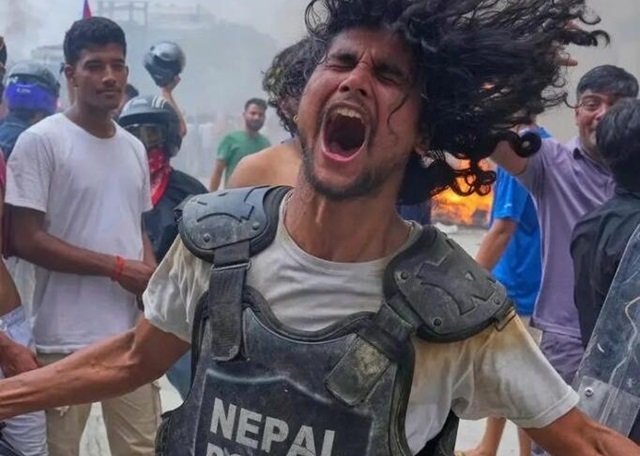
In recent times, mobs of rioters who indulge in street demonstrations, disrupting traffic and destroying public buildings and infrastructure in the name of fighting for a cause, have been successful in “achieving” regime change in Sri Lanka, Bangladesh and Nepal. Now, this “culture of mob rioting” appears to be spreading to other countries, with the rioters gaining confidence that they can do and achieve whatever they want by violent means. This is a very disturbing trend that should cause concern to discerning people all over the world.
Who are these mobs of rioters, and what is their background? Obviously, these rioters are young people, sometimes with brute physical strength, and a few students with little interest in academic pursuits who have been brainwashed by some vested interests behind them to believe that violence can be the means to achieve end results, whatever they may be. These rioters do not have a holistic and balanced view of the scenario and have a sort of clouded vision caused by motivated hate speeches and mischievous propaganda, with a narrow viewpoint. The real vested interests behind the mobs of rioters generally show their faces only if the mobs of rioters succeed in forcing the issues in their favour.
The mobs involved in carrying out riots are not representative gatherings of citizens but may comprise only a very small fraction of the population of the country and certainly less than 0.2% of the country’s population. In democratic countries, the media, chasing news all the time, give disproportionately high coverage to rioting mobs, which inevitably gives the impression that this is a mass uprising, which is really not so. The silent majority of citizens anxiously look at the unfolding scene, feel concerned and hope against hope that the government will deal with the issue and handle the riots suitably to restore peace in society and public confidence. Such a silent majority certainly feels disgusted that violent means are being adopted and justified by the rioters, which is unacceptable in a democratic society.
In democratic countries where elections take place at regular intervals, the party in power does not want to act too tough in dealing with the rioters, as it may give the impression that the government is panicking and may not be looking at the issue in a democratic way. This sort of approach by the party in power is exploited by the rioters, who think that they have unlimited liberty and that the hesitant government’s approach is an indication of their possible march towards success.
One aspect that needs to be pointed out is that, in democratic countries, the acts of rioters are not initially nipped in the bud but are allowed to continue and grow, under the impression that “the rioters would spend themselves” in the course of time. However, the vested interests behind the rioters do not allow this to happen, with such vested interests continuing to fund the riots and carry on their propaganda activities in a discreet manner. The psychology of increasing faith among mobs of rioters has become an issue threatening the stability and progress of society, even though the rioters are only a fraction of the population.
The unfolding street demonstrations and violent activities by mobs of rioters in France are being watched with anxiety all over the world. US President Trump seems to be partly correct when he has remarked that the violent activities in France are due to the “open border policy” and unchecked entry of migrants by the French government. Such a view of President Trump cannot be faulted, since the unchecked entry of migrants could have paved the way for the entry of vested interests.
It is very important that all democratic countries, including India, which is also now facing a sort of street demonstrations, should learn the right lessons from events in different countries and take strong steps to put down the rioters with the force at their command. As highly brainwashed and motivated rioters cannot be made to see reason and stop their approach based on a methodology that revolves around force and violence, there is certainly nothing undemocratic about strong action against the rioters by governments in democratic countries, as the primary duty of the government is to protect citizens and public institutions. It is quite possible that some so-called activists may claim that the use of force against the rioters amounts to a human rights violation, but such arguments are in a vacuum and would be dismissed by the silent majority of citizens.
The Italian Prime Minister has now correctly remarked that the government’s primary duty is to protect citizens from discomfort and violence, and certainly, acting against the rioters strongly and firmly is a matter of necessity.
In any case, elections do take place in democratic countries, and the rioters should participate in the elections and know their real strength, but they may not do this, as the vested interests behind the rioters clearly know that they are not a representative gathering of the people.
Last but not least, it cannot but be said that such mobs of rioters cannot have the freedom to indulge in acts that disturb the peace and engage in street protests in a country governed by a dictatorship.