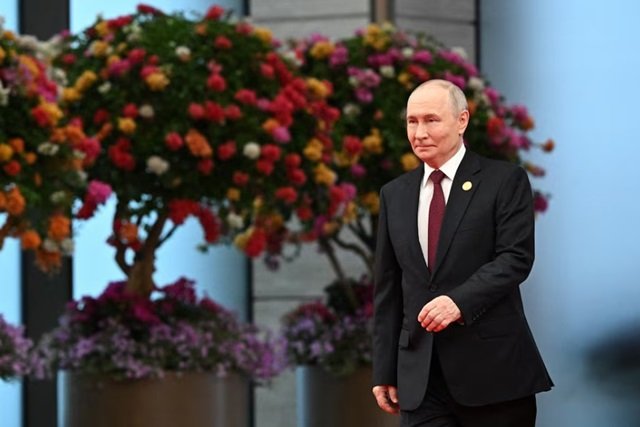
Russian President Vladimir Putin has urged Asia-Pacific Economic Cooperation (APEC) economies to strengthen their engagement with Russia, describing the country as an integral part of the Asia-Pacific region and promoting its logistics infrastructure as a resource for regional economic development. Addressing APEC leaders in China on 19 November 2026, Putin said Moscow regarded constructive partnerships with member economies as a strategic priority and was contributing to the region’s economic prosperity, particularly through food and energy security.
“I would like to emphasise that constructive partnership with APEC economies is Russia’s strategic course. We are an integral part of the region and make a significant contribution to its economic prosperity,” Putin said.
His remarks sought to reinforce Russia’s position within the Asia-Pacific economic framework and encourage regional economies to make greater use of Russian transport and logistics infrastructure. Although he did not specify particular infrastructure projects, routes or investment arrangements, his appeal placed logistical connectivity alongside food and energy supplies as areas for potential cooperation.
Putin also highlighted the importance of maintaining a constructive political and economic agenda within APEC, arguing that the organisation should provide a unifying framework for its participating economies. He called on leaders to promote cooperation rather than allow differences to undermine the group’s collective agenda.
Referring to the draft of APEC’s final communiqué, Putin said the document was intended to establish a common direction and support constructive engagement among member economies. He confirmed that Moscow supported the draft, signalling Russia’s backing for the proposed framework of cooperation.
The Russian president’s intervention combined an economic message with an appeal for institutional consensus. By emphasising Russia’s regional role, promoting its logistics capacity and highlighting its contribution to food and energy security, he presented Moscow as a potential partner in addressing the economic interests of Asia-Pacific economies.
However, his remarks did not include specific commitments, financial figures or details of new agreements. Nor did he identify particular APEC economies with which Russia intended to expand cooperation. The statements therefore outlined Moscow’s strategic position and priorities rather than announcing concrete initiatives.
Putin’s support for the draft communiqué also reflected Russia’s stated preference for a shared agenda within APEC. His call for a unifying tone placed emphasis on maintaining cooperation among the participating economies despite their differing national interests.
The intervention underscored Moscow’s intention to remain actively engaged in Asia-Pacific economic affairs, with logistics, food security and energy cooperation forming the principal elements of its message to regional leaders.