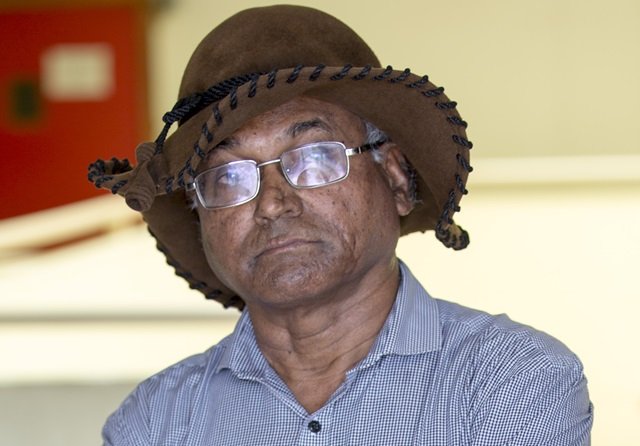
India’s debates over caste have increasingly focused on the caste census and the sub-classification of quotas, but Kancha Ilaiah Shepherd’s autobiography, A Shudra Life, directs attention to a less examined dimension of social inequality: the exclusion of working communities from intellectual life. The book argues that agrarian labourers, although they constitute a formidable voting bloc across the country, have largely been denied recognition as producers of knowledge, philosophy and political thought. In a discussion published by FrontLine India, the book is presented as an alternative political history that challenges the intellectual assumptions of both the conservative Right and the traditional Marxist Left.
Published by SouthSide Books, A Shudra Life runs to 200 pages and is priced at Rs.400. It can be read not only as the autobiography of a prominent political theorist but also as an intellectual history of his Kuruma community, traditionally associated with sheep herding. Ilaiah questions the assumption that the capacity to think, write and develop theory belongs primarily to educated elites. His account instead locates intellectual activity in the practical knowledge accumulated through animal husbandry, cultivation, soil management and artisanal production.
The foundations of his social consciousness emerged from his family, particularly his grandmother and his mother, Kancha Kattamma. His father spent long periods grazing sheep, leaving his mother to assume the role of matriarch and community leader. Ilaiah recounts how she resisted extortion by local forest guards and dominant-caste authorities, before being brutally assaulted during a confrontation involving a feudal landlord’s family. These experiences inform his rejection of romantic portrayals of village life as harmonious or egalitarian. His own name, he explains, derives from Iloni Mallanna, a legendary shepherd chieftain of the Deccan plateau revered as a local deity, connecting his identity to regional history rather than Brahmanical scripture.
Education became another site of conflict. Ilaiah entered school only after overcoming considerable opposition within his community, where limited awareness of formal education was reinforced by inherited religious fears. His family believed that Goddess Saraswati would kill Shudra children who attempted to read and write. Within the village’s caste hierarchy, literacy was treated as a privilege associated with elite castes rather than a universal entitlement. Ilaiah’s subsequent critique of education distinguishes the “creative wealth” generated by manual workers from what he describes as the “non-productive lifestyle” of spiritual elites. In his account, the labouring hands of Shudra communities and working collectives have been central to the creation of human civilisation, yet their contribution has rarely received equivalent intellectual recognition.
This argument extends to the politics of animals and religious symbolism. Ilaiah contrasts the sacred status accorded to the white cow with the marginalisation of the black buffalo, which he identifies as a major contributor to India’s dairy economy and a source of economic capital for Shudra and other Other Backward Classes households. He attributes the buffalo’s exclusion from sacred literature and classical aesthetics partly to its colour and association with Dravidian working-class labour. He also interprets Krishna, commonly revered as a divine figure, as an indigenous, non-Aryan cattle herder and tribal deity associated with the Yadava clan. In Ilaiah’s reading, the transformation of Krishna into a warrior hero and representative of orthodox ethics obscured the traditions of the pastoral communities with which he was originally associated.
Language provides another measure of how social privilege operates. Ilaiah criticises the postcolonial Indian state for praising regional languages as the languages of ordinary people while preserving elite control over English. At the same time, he rejects the idea that regional languages are inherently democratic, arguing that they also contain entrenched social hierarchies and everyday expressions of humiliation. As a young man, he encountered an English-speaking Dalit district collector whom Reddy landlords feared. The experience convinced him that English offered access to power and could help challenge caste domination. He connects this understanding to Frantz Fanon’s examination of language and racial hierarchy in Black Skin, White Masks, presenting linguistic access as a means through which marginalised people can engage with wider anti-colonial thought.
The book also examines how caste and patriarchy operate through food. Ilaiah argues that nationalist ideals built around “pure vegetarianism” reinforce notions of purity and pollution while restricting the nutritional choices of subordinated communities. He pays particular attention to women, especially older mothers, who may be pressured to abandon meat and fish consumption in the name of religious devotion. Such practices, he argues, can reserve strength-giving protein for male household heads. An episode involving the preparation and consumption of fish also reveals how gender hierarchies persist within his own community, complicating any simple division between dominant and oppressed social groups.
His political experiences further shaped this critique. As an Osmania University student, Ilaiah found himself torn between the traditional Marxist Left and the Naxalite movement. He concluded that both were insufficiently attentive to caste, despite their stated opposition to feudalism, and that dominant-caste intellectuals continued to monopolise leadership. In his assessment, Shudra labourers were valued principally for their physical strength rather than their intellectual contribution. His later teaching career exposed him to what he regarded as academic gatekeeping, prompting him to work with grassroots civil rights organisations. He argues that human rights cannot be understood independently of systemic caste discrimination and that serious violations frequently involve collusion between state institutions and dominant-caste landholders.
Yet the book’s argument for a unified labouring identity has its limitations. As the FrontLine India discussion observes, communities classified as Shudra or OBC are not socially or economically uniform. Some dominant, landowning farming groups exploit and commit violence against Dalit labourers. Ilaiah has previously distinguished between upper and lower Shudras, but a comprehensive theory of collective labour must also confront the inequalities and landlordism within these communities.
The challenge is particularly relevant as oppressed-caste young people move from agriculture into the digital gig economy. The growing influence of apps, big data and concealed algorithms creates new conditions in which existing hierarchies may be reproduced through software and automated systems. Ilaiah’s final pages address younger scholars struggling within India’s competitive corporate university system, returning to his central argument that intellectual production cannot be separated from the material lives and work of ordinary people.