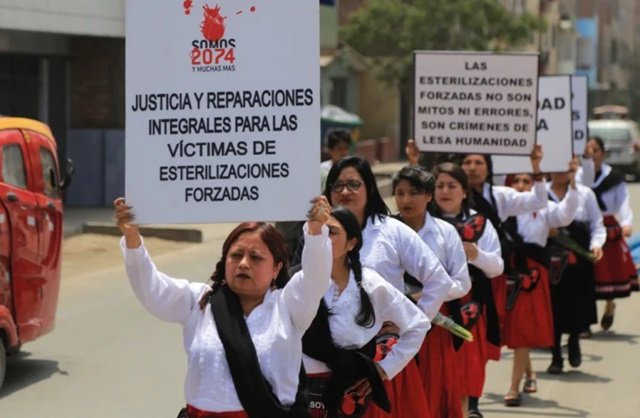
Peru’s human rights prosecutors have closed the criminal case against 52 former officials over the forced sterilisation of thousands of women during former president Alberto Fujimori’s government, declaring criminal liability extinguished despite acknowledging evidence of crimes against humanity.
Fiscal Provision No. 25, issued on 22 October by the Fourth Supra-National Criminal Prosecutor’s Office specialising in Human Rights, runs to more than 6,000 pages and formally declares the case time-barred. The decision brings the principal proceedings against those accused of designing and implementing the state-run programme to an end.
The Public Ministry acknowledged evidence of crimes against humanity and serious harm suffered by more than 4,000 victims. It also recognised that women underwent surgical procedures without their free, prior and informed consent. Nevertheless, prosecutors applied Law 32107, enacted in 2024 with the support of lawmakers allied to Fujimori, to extinguish the proceedings against all 52 defendants.
The law establishes time limits for prosecuting crimes against humanity, departing from the principle under international law that such crimes are not subject to statutes of limitation. Its application has become central to the dispute over whether the forced sterilisation case can proceed.
Among those released from the proceedings is Alejandro Aguinaga Recuenco, who served as health minister under Fujimori and is now a senator representing the Fuerza Popular party. Former health ministers Eduardo Yong Motta and Marino Costa Bauer were also cleared from the process.
According to the prosecutorial document, the sterilisation procedures formed part of a widespread and organised practice directed by the state against poor women in rural areas. The investigation covered 4,172 people who suffered serious injuries, while five women were identified as having died in connection with the programme: Celia Edith Ramos Durand, María Mamérita Mestanza Chávez, Alejandra Aguirre Auccapiña, Reynalda Betalleluz Aguilar and María Genoveva Espínola Otiniano.
Between 1996 and 2000, more than 272,000 women and 22,000 men were subjected to family planning programmes. The source material describes pressure, deception and state-reported quotas as features of the campaigns, under which forced sterilisation became part of official reproductive health policy.
The closure ends a criminal proceeding that had remained open since the first complaints concerning the state-run birth control programme. The decision also follows a separate legal dispute over the application of Law 32107.
In December 2025, the Supreme Court’s Transitory Criminal Chamber declined to apply the law in parallel proceedings, allowing investigations to continue. That ruling prompted disciplinary inquiries by the National Board of Justice against the magistrates involved.
Those parallel investigations have remained open under the Supreme Court’s position, but the principal case against the officials accused of directing and carrying out the sterilisation programme has now been closed. The latest decision extinguishes criminal liability for all 52 defendants in that proceeding, despite the prosecutors’ acknowledgement of evidence of crimes against humanity and the harm suffered by thousands of women.