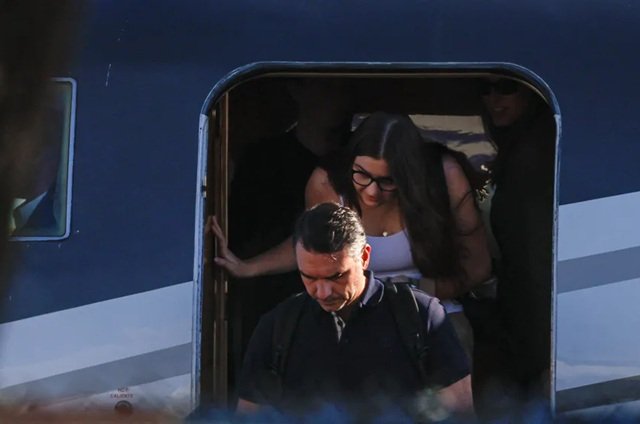
Flávio Bolsonaro, the defeated Brazilian presidential candidate facing investigations over suspected corruption and money laundering, arrived in Miami on Wednesday after leaving Brazil despite an order by the country’s Supreme Court barring his departure, according to reports and video footage from Reuters. His arrival in the United States, where President Donald Trump’s administration had offered to receive him and his family, could open a new phase in the political confrontation between Brazil’s President Luiz Inácio Lula da Silva and the Bolsonaro family.
Footage showed Bolsonaro, 45, disembarking from a private aircraft at Opa-locka Executive Airport, north of Miami. According to Argentina’s immigration authorities, he had initially travelled overland into Argentina with his wife and two daughters before continuing by private plane to Ecuador. Flight-tracking information from Flightradar24 indicated that the aircraft departed again less than an hour after arriving. Earlier reports from US media had suggested that Bolsonaro had already reached the United States, while other accounts traced his journey through South America.
The departure came days after Bolsonaro lost Sunday’s presidential run-off against Lula, the 81-year-old incumbent, who secured another term with just under 52 per cent of the vote. Bolsonaro’s political future had become increasingly uncertain as he faced legal scrutiny and approached the end of his Senate mandate, which was due to expire in early 2027 according to reports surrounding the election. Losing parliamentary immunity would leave him more exposed to prosecution.
On Monday, Bolsonaro publicly insisted that he had no intention of leaving Brazil. In a video recorded after his electoral defeat, he said he would surrender his passports and defend himself against the allegations, which he described as a farce and an attempt at intimidation. The subsequent departure appeared to take even some members of his political camp by surprise.
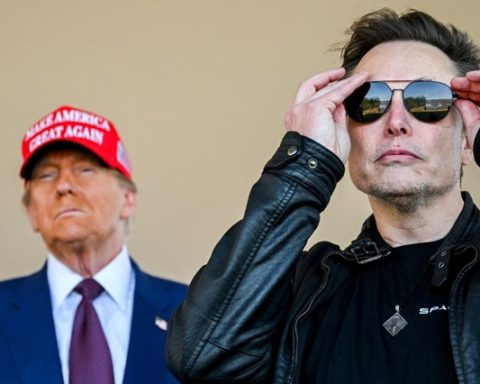
Washington had already signalled its willingness to accommodate Bolsonaro. The US State Department said it would issue visas to him and his family, while Trump publicly supported his entry into the country, describing the family as “decent people”. The reported assistance has heightened concerns in Brasília that the Brazilian president’s political opponents could continue their campaign from abroad with the backing of a powerful foreign ally.
Lula condemned Bolsonaro’s departure as “shameful”. Speaking at the presidential palace on Tuesday, his 81st birthday, he said: “Anyone who has nothing to hide has nothing to fear.” Lula has also accused the US administration of colluding with the Bolsonaro family to return them to power, a charge that reflects the increasingly direct political dimension of the dispute between the two governments.
The relationship between Washington and the Bolsonaro family predates Flávio’s electoral defeat. His father, Jair Bolsonaro, a former Brazilian president, travelled to the United States in late 2022 after narrowly losing that year’s election to Lula. He left Brazil two days before the presidential handover, having refused to transfer the presidential sash to his successor. He spent about three months in Florida before returning to Brazil, where he sought to rebuild support among the political right.
Jair Bolsonaro subsequently faced investigations into alleged efforts to overturn the election result and prevent Lula from taking office. Prosecutors accused him of involvement in a failed coup attempt, and Brazil’s Supreme Court eventually sentenced him to 27 years in prison. He denied the allegations and maintained that the proceedings were politically motivated. Trump has repeatedly described the case against the former president as a “witch hunt”.
The family’s efforts to influence events in Brazil from the United States became more organised in 2025, when Jair Bolsonaro’s son Eduardo moved to Texas. Through contacts with US Secretary of State Marco Rubio and Treasury Secretary Scott Bessent, Eduardo sought to persuade the Trump administration to intervene against Brazil’s judiciary and prevent his father’s conviction.
Washington subsequently imposed sanctions on Supreme Court Justice Alexandre de Moraes, who presided over the proceedings against Jair Bolsonaro, withdrew his US visa and froze potential assets in the United States. The Trump administration also imposed tariffs of up to 50 per cent on Brazilian goods. Despite the pressure, Brazil’s Supreme Court proceeded with the case and sentenced Jair Bolsonaro to 27 years in prison. Eduardo was sentenced in absentia to more than four years and remained in the United States.
Trump’s support for Flávio extended into the recent presidential campaign. In May, the US president received him in the Oval Office and praised him as “a smart young man who loves his country”. Flávio had promised to pardon his father if elected, while also signalling support for Trump’s campaign against drug cartels and offering to facilitate US access to Brazilian raw materials. The partnership held out the prospect of closer political and economic alignment between Washington and a Bolsonaro-led government.
Brazilian voters instead returned Lula to office, rejecting Flávio’s bid for the presidency. The defeated candidate has not accepted the result, and Trump has also questioned the election, repeating Bolsonaro’s unsubstantiated allegation that it was manipulated.
The immediate consequences now depend partly on how Brazil’s judiciary proceeds. If Brazilian authorities seek Flávio Bolsonaro’s extradition and the Trump administration refuses, the case could become a direct confrontation between the two governments. Lula has been attempting to improve relations with Washington, particularly as the United States remains Brazil’s second-largest trading partner and negotiations over US tariffs continue. Yet the Bolsonaro family retains substantial influence among allies in Brazil’s newly elected Congress, while its members can now draw on support from the White House.