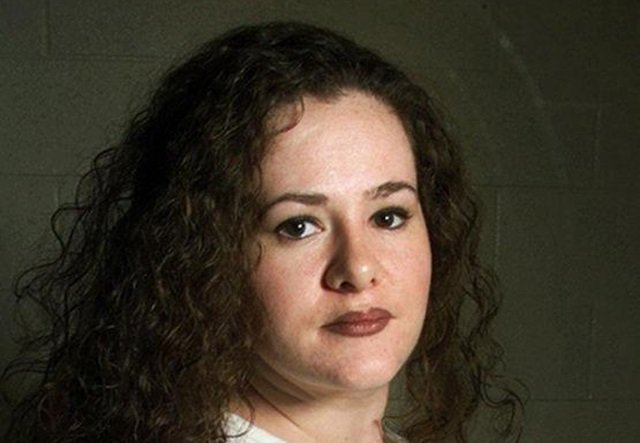
Christa Pike, the only woman on Tennessee’s death row, has described continuing physical and psychological suffering after surviving a failed execution involving two doses of the lethal injection drug pentobarbital on 30 September. In her first public statement since the incident, the 50-year-old said she was recovering in the medical unit of a prison but remained in pain weeks after the execution attempt at Riverbend prison in Nashville.
“Since that night, there has not been a single moment when I have not felt pain,” Pike said in a statement released by her legal team on Friday. “My body hurts. My arms hurt. My hands hurt. My throat hurts. I still struggle to speak. And the pain is not only physical; I also feel pain in my mind and my soul.”
Pike received two injections of pentobarbital on 30 September, but the execution did not proceed as intended. Witnesses reported that she complained of pain in her arm while the injections were being administered and continued breathing. She was subsequently transported by ambulance to hospital, where she was placed on a mechanical ventilator. Six days later, she regained consciousness and was transferred back to the Nashville prison where she was serving her sentence.
Her lawyers say the failed procedure left her arms swollen and bruised after execution personnel repeatedly attempted to insert intravenous lines through which the lethal drug was supposed to be administered. Several experts have suggested that the pentobarbital may have leaked into the tissue surrounding a vein rather than entering the bloodstream. Such a failure could explain why the intended execution did not take place, although the precise circumstances remain subject to investigation.
Tennessee’s Department of Correction has maintained that all the required steps under the state’s execution protocol were followed. The conflicting accounts have intensified scrutiny of the procedures used to administer lethal injections, particularly the ability of execution teams to establish reliable intravenous access before administering the drugs.
In her statement, Pike also expressed concern for the family of Colleen Slemmer, the 19-year-old woman whose murder led to her death sentence. “I am deeply hurt by the incompetence that has placed so many people in this terrible situation,” she said. “I continue to think about my victim’s family and the terrible pain and loss they have had to endure.”
The incident was the second failed execution attempt in Tennessee this year. In May, prison authorities were unable to establish an intravenous line for Tony Carruthers, who sustained multiple puncture wounds to his chest and arms during attempts to prepare him for execution. Unlike Pike, Carruthers was never injected with pentobarbital.
The two incidents prompted action from Tennessee Governor Bill Lee, a Republican, who ordered an independent investigation following Pike’s failed execution and suspended another execution scheduled for later this year. Frank Strada, the head of the state’s prison system, subsequently announced his resignation. The investigation is expected to examine the circumstances surrounding the failed procedure and the administration of the state’s execution protocols.
Pike was sentenced to death for the 1995 murder of Slemmer, a fellow student at a vocational training centre in Knoxville. She was 18 at the time of the killing. According to the account of the case, Pike and two other people, including her then-boyfriend Tadaryl Shipp, who was 17, took Slemmer to an isolated location and killed her. Shipp was sentenced to life imprisonment, while the third participant testified against both and received parole.
Pike had been scheduled to become the first woman executed in Tennessee in more than two centuries. Her case had also attracted attention because of arguments raised by her lawyers concerning her childhood and mental health. They asked the courts to commute her death sentence to life imprisonment without the possibility of parole, arguing that she had suffered childhood abuse and experienced mental health disorders that were not presented during her trial three decades ago.
An appeals court issued a last-minute suspension of the execution, but the Tennessee Supreme Court subsequently allowed it to proceed. The lethal injection was carried out at Riverbend prison on 30 September, but the two administrations of pentobarbital failed to produce the intended outcome.
Pike’s survival has left her facing continued recovery while the state examines the circumstances of the execution attempt. Her lawyers have described the physical injuries caused by repeated intravenous access attempts, while the Department of Correction maintains that its personnel complied with the prescribed procedure. The independent investigation ordered by Governor Lee follows two unsuccessful execution attempts in Tennessee within five months, both involving difficulties in establishing intravenous access.