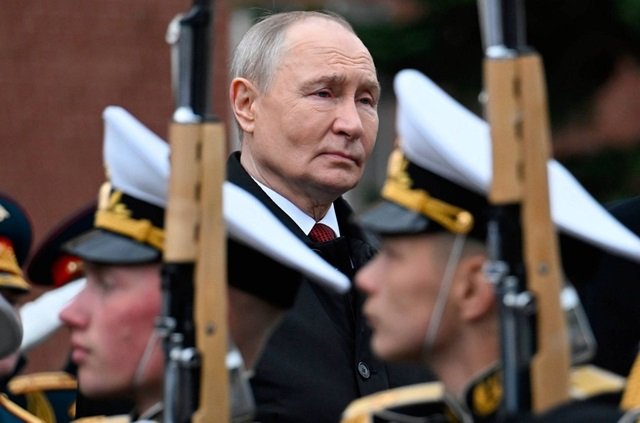
When delegates left Moscow on 5 October, they had little to show for the day. The eighth round of the Moscow Format consultations on Afghanistan ended without a joint statement. According to the account Pakistan’s side offers, it was the first time that had happened since the format began in 2017. The reason is worth dwelling on. Kabul’s delegation reportedly objected to wording that linked Afghanistan with terrorism, wording it had accepted a year earlier. A government that won’t put the word in a communiqué is unlikely to act against the thing on the ground.
That is the core of Pakistan’s argument, and it is a serious one even if you don’t accept every part of it.
A table with an empty chair
The Moscow Format has always been a talking shop with ambitions. Russia hosts, the Taliban attend, and neighbours like China, Iran, India and Pakistan send envoys. Its value was supposed to be that it kept everyone in one room. But the room has changed. Russia took the Taliban off its list of banned organisations in 2025 and has since formally recognised the government in Kabul. Pakistani analysts argue that Moscow gave away legitimacy and got nothing concrete back, no verifiable counterterrorism commitments, no timelines, no monitoring.
Pakistan’s Special Representative, Muhammad Sadiq, used the forum to say what Islamabad has been saying for months: terrorism is not one problem among many in Afghanistan, it is the problem, and it sits in the relationship between the ruling authorities and armed groups on their soil. His message did not become the room’s message.
Different capitals, different worries
It helps to see why the regional players behave as they do. Russia looks at Afghanistan mostly through the lens of ISKP and the risk of militants drifting into Central Asia and eventually Russia itself. China cares about its western frontier, about Uyghur militants, and about mining and trade. Both want calm next door. Neither feels the daily pressure Pakistan does.
Pakistan’s complaint is that this selective view leaves a hole. Moscow’s own assessments, as cited in the brief, put the number of militants in Afghanistan somewhere around 18,000 to 23,000, with 5,000 to 7,000 of them in the TTP and about 3,000 in ISKP. If those figures are right, the largest single formation in the country is the one fighting Pakistan, not the one Russia worries about most. Counterterrorism that picks its enemies, Islamabad says, isn’t really counterterrorism.
What Pakistan says it has tried
The list of diplomatic effort Pakistan cites is long: four foreign minister visits, five visits by the Special Representative, eight Joint Coordination Committee meetings, 225 border flag meetings, hundreds of protest notes and a stack of demarches. Mediation was accepted in Doha, Istanbul, Riyadh and Ürümqi. Religious scholars and tribal elders were sent to Kabul.
The outcome, according to Pakistan, was verbal assurances and a refusal to put anything in writing, while more than five dozen camps and staging areas stayed in place. The human cost is what drives the urgency. Pakistan reports 1,429 people killed and 2,679 injured so far in 2026 in violence it traces to Afghan soil. It says it has identified over 260 Afghan nationals killed fighting alongside the TTP, and puts Afghans at around 70 percent of the fighters crossing the border. It points to a ceremony on 21 September attended by Taliban officials for a suicide bomber who struck a police station in Kohat, as an example of how the line between the authorities and the attackers blurs.
Who is paying for all this?
One of the sharper parts of the brief is about money. Donors have paid roughly $8 billion in humanitarian aid since August 2021, with billions more committed, and the United States, Britain, Germany, Japan and the EU lead the list. On top of that, the brief cites $17.5 billion in direct foreign grants. Afghanistan, by its own numbers, imports about $12 billion of goods a year and exports only $1.7 billion. A $10.3 billion annual gap has to be filled by something.
Pakistan’s answer is that it is filled by outside money plus the narcotics trade, and that some of the proceeds end up with Kandahar’s leadership and groups like the TTP. That is a heavy charge and the evidence in public is thinner than the confidence of the claim. Aid agencies would point out that humanitarian money mostly flows through international organisations, not the authorities directly. Still, the broader question is fair: when a country this poor and this isolated runs such large deficits, someone should ask where the cash comes from and who controls it.
Playing every side
Pakistan also argues that Kabul’s foreign policy is transactional to the bone. It courts Moscow and Beijing while keeping channels to Washington open, a relationship traceable to the 2020 Doha Agreement and kept alive through visits by American envoys. In this telling, the Taliban criticise the West in public and bargain with it in private for money, access and recognition. They don’t choose sides, they collect from all of them.
The threat doesn’t stay put
Perhaps the most persuasive section is the warning to everyone else. Russian officials, from Putin in 2022 to Shoigu and the FSB chief this year, have all spoken about militants in Afghanistan seeding cells across Central Asia and recruiting among migrant workers. Iran has suffered attacks from Jaish al-Adl, including one at Taftan in October 2024 that killed ten police. Chinese nationals were targeted in cross-border attacks into Tajikistan last November. The point Pakistan keeps pressing is simple: a group sheltered today may strike somewhere else tomorrow.
It also ties this to the big connectivity projects, the Uzbekistan-Afghanistan-Pakistan railway, CASA-1000 and TAPI. None of them works if the routes are exposed. Security, on this view, isn’t a rival priority to trade, it is the entry fee.
A government at war with itself?
The brief closes by arguing that Kabul isn’t as stable as it looks. It cites a sweeping shift toward religious schooling, resistance groups claiming 178 attacks across 29 provinces between August and October, and a scramble among factions for control of mining revenue. Contracts have reportedly been handed out without tenders, many to companies tied to commanders. Whatever one makes of the specific numbers, the underlying point stands: a leadership fighting on several internal fronts is a shaky partner for projects that need decades of predictability.
Where this leaves the region
The conclusion Pakistan draws is blunt. Engagement that sidesteps its concerns will stay trapped in conference rooms. Regional platforms, it says, should stop merely hosting the Taliban and start pressing for verifiable action against camps and networks.
That deserves a fair hearing, along with the other side. The Taliban have long denied sheltering anti-Pakistan militants and describe the TTP as a Pakistani internal problem. Russia says the Moscow Format was never meant to settle bilateral disputes. Many analysts argue that isolation hasn’t worked either, and that keeping Kabul at the table is the only leverage anyone has. Several of the figures above come from Pakistani official assessments and haven’t been independently verified.
What is hard to dispute is the trend the Moscow outcome revealed: engagement is moving faster than accountability. Whether that gap closes by pressure, by bargaining, or not at all will shape the region far more than another communiqué would.