Benjamin Netanyahu’s political survival following Israel’s latest parliamentary election has left the country facing an uncertain government formation process, with significant implications for regional security, the war in Gaza and the possibility of renewed military confrontation with Iran. Although his Likud Party-led coalition fell well short of retaining its previous parliamentary strength, Netanyahu performed considerably better than opinion polls and political commentators had anticipated, complicating the efforts of opposition leader and former military chief Gadi Eisenkot to assemble an alternative government.
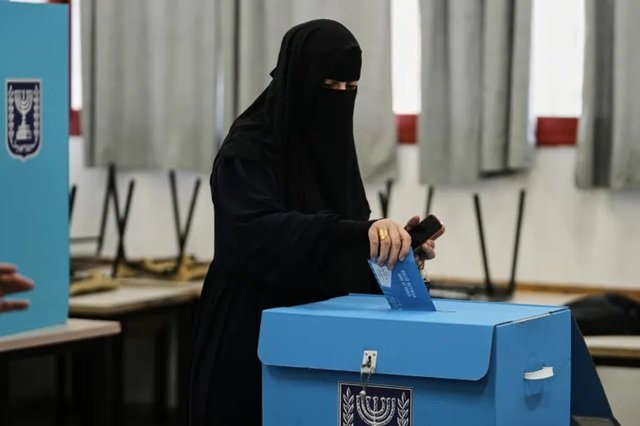
According to an analysis published by The Soufan Center, Netanyahu’s coalition secured 53 seats in the 120-member Knesset, down from the 68 it previously held and below the 61 required for a parliamentary majority. Eisenkot’s opposition bloc won 48 seats, considerably fewer than pre-election surveys had projected. Meanwhile, the two main Arab-led electoral lists, which include Christians, Druze and a small number of Jewish candidates, secured a combined 19 seats, exceeding the 15 predicted in polling. Their performance has positioned them as potential kingmakers in negotiations over the next government.
Neither of the principal Jewish-led political blocs has an immediate parliamentary majority, leaving several possible coalition arrangements. Netanyahu remains caretaker prime minister until a new administration is formed. If neither side succeeds, Israel could face another election in early 2027.
Eisenkot has the option of combining his bloc’s 48 seats with the 19 held by the Arab-led parties, creating a 67-seat parliamentary majority. He signalled his willingness to consider such an arrangement, although his stated requirement that coalition partners support removing Hamas as Gaza’s governing and security authority could complicate negotiations. Joining an Arab-led coalition would also expose Eisenkot to criticism from Netanyahu and right-wing Zionist politicians, who could portray the arrangement as a threat to national security.
Arab citizens constitute approximately 20 per cent of Israel’s population. Their families remained in the country following the 1948 war surrounding Israel’s establishment, and they retain close connections with Palestinians in the occupied West Bank and Gaza. Their political positions vary, although many support the establishment of a Palestinian state. Only once, in 2021, has an Arab party joined an Israeli governing coalition, which survived for approximately 18 months.
Netanyahu could pursue a different route by attempting to restore alliances with former right-wing partners Naftali Bennett and Avigdor Lieberman. Both favour nationalist policies and previously broke with Netanyahu largely over personal disagreements rather than fundamental ideological differences. However, they oppose the military-service exemptions granted to young ultra-Orthodox Jewish men, a demand that remains non-negotiable for Netanyahu’s ultra-Orthodox coalition partners.
President Isaac Herzog is due to begin consultations with Netanyahu and Eisenkot to determine which has the strongest prospect of forming a government. The leader selected by Herzog will receive 28 days to assemble a coalition, with a possible extension of 14 days.
The central regional concern, however, extends beyond the composition of the next Israeli cabinet. The Soufan Center argues that the October 7, 2023 Hamas attack fundamentally changed Israel’s security policy, creating broad political agreement on confronting perceived regional threats through military force. Both Netanyahu and Eisenkot support military action against Iran and its principal regional allies, even when threats are not considered immediate. Consequently, a change of prime minister would be unlikely to produce a fundamental reversal of Israel’s regional security strategy. The principal differences would concern diplomatic engagement, political messaging and the willingness to work with US-led initiatives.
On Gaza, both leaders support maintaining Israeli military positions until Hamas has been removed as the governing and security authority and its armed capabilities dismantled. Eisenkot, however, could take a different diplomatic approach to the conflict. Supporters of his political bloc are concerned about the international consequences of Israel’s military operations, including deteriorating relations with Washington and wider international public opinion. An Eisenkot government could therefore pursue closer cooperation with the stalled Gaza peace initiative overseen by the Trump-appointed Board of Peace, which requires participation from international partners.
The West Bank presents a more substantial potential policy difference. According to The Soufan Center, Eisenkot is prepared to take action against Jewish settlers responsible for violence against Palestinians and dismantle some illegal Israeli settlements. His government could also release several billion dollars in tax revenues and customs duties withheld by the Netanyahu administration from the Palestinian Authority, which exercises civilian authority in parts of the West Bank. These measures would represent a departure from Netanyahu’s approach, although they would not indicate support for an independent Palestinian state. The analysis notes that opposition to Palestinian statehood has become a position shared across much of Israel’s political spectrum since the October 7 attacks.
Lebanon and Syria would also remain central to Israel’s regional security calculations. Both Netanyahu and Eisenkot support continued Israeli military operations aimed at weakening Hezbollah in southern Lebanon and consider the Lebanese Armed Forces insufficiently capable of disarming the organisation independently. Eisenkot could, however, be more receptive to US proposals for cooperation with the Beirut government and Lebanese military rather than pursuing policies that undermine their authority. Nevertheless, an Eisenkot-led administration would not necessarily withdraw Israeli forces from their positions in southern Lebanon immediately or unconditionally.
In Syria, Eisenkot has indicated that he would maintain the security zone established by Israel following the fall of Bashar al-Assad’s government in December 2024. This would remain the case despite US encouragement for Israel to negotiate permanent security arrangements with Damascus. The positions suggest that a change of government in Jerusalem would not automatically lead to a substantial reduction in Israel’s military presence across its neighbouring territories.
Iran remains the most consequential issue for regional governments, particularly as US President Donald Trump considers whether to resume military operations against Tehran. Trump has threatened renewed combat unless Iran accepts American demands for a settlement. Qatar and other regional mediators have claimed progress towards an interim agreement intended to prevent another confrontation, but no agreement has been announced. Some senior Iranian officials have also rejected suggestions that Tehran is prepared to make concessions.
Before the Israeli election, reports indicated that Netanyahu had been pressing Trump to resume military operations against Iran with Israeli participation. The Wall Street Journal reported that the two leaders spoke by telephone on Saturday to discuss both the possibility of renewed attacks and the prospects for a last-minute diplomatic agreement. According to The Soufan Center, regional leaders and some Israeli opposition figures have also raised concerns that Netanyahu could initiate military action against Iran to disrupt the government formation process and prolong his political survival. These remain attributed concerns rather than established intentions.
Netanyahu’s stronger-than-expected electoral performance could encourage both Israel and the United States to consider another air campaign against Iran. However, an Eisenkot government would not necessarily exclude military action either. Eisenkot and his allies regard Iran and its regional partners as serious threats to Israeli national security and would retain the option of joining a renewed American offensive or conducting unilateral strikes, particularly if there were clear evidence of advances in Iran’s nuclear programme.
The distinction, according to The Soufan Center, would be in how Eisenkot approaches Washington. Unlike Netanyahu, he would be less likely to pressure Trump into restarting hostilities or attempt to prevent the American president from accepting a negotiated settlement with Tehran, even if that agreement required concessions from the United States.