It is unfortunate that the Tata Group, which has historically been known for its value system, adherence to ethical business practices and considerable public goodwill, is in the news for all the wrong reasons these days. There is an ongoing clash of interests between Tata Trusts and Tata Sons, and it appears that the dirty linen is being washed in public. The Government of India has correctly observed that Tata Sons and Tata Trusts should resolve their differences through discussions and that the government would not interfere in the matter. This is as it should be.
It is true that some of the companies belonging to the Tata Group are not generating profits to the extent required or are incurring losses.
Tata Motors, part of the Tata Group, acquired Jaguar Land Rover (JLR) from Ford Motor Company on June 2, 2008, for US$2.3 billion (approximately Rs 9,200 crore) in an all-cash, cash-free and debt-free transaction. Jaguar Land Rover (JLR), acquired by Tata Motors in 2008, can be profitable under normal operating conditions, although it has faced periodic losses and financial impacts arising from major disruptions. However, it is now reported that JLR has turned the corner in 2025, making a marginal profit. In any case, JLR’s overall performance has not met expectations so far.
Tata Chemicals’ Magadi soda ash plant in Kenya is facing a major shutdown following a government order to vacate after Kenyan President William Ruto directed the company to cease operations. It appears that the Tata Group is trying to resolve the issue.
With regard to Air India, which Tata Sons acquired from the Government of India in 2022, the airline has been incurring losses year after year. There is no convincing indication so far of when Air India will turn around and become profitable.
Tata Steel’s UK operations continue to face severe financial and operational pressures, remaining in an EBITDA loss position while transitioning their primary works towards a greener footprint.
At the same time, it should be said that a few Tata Group companies are showing good performance. Tata Consultancy Services (TCS), Tata Motors and Tata Steel, a key operating company of the Tata Group, are showing strong operational momentum and volume expansion in recent quarters. Tata Sons, meanwhile, is the group’s principal investment holding company.
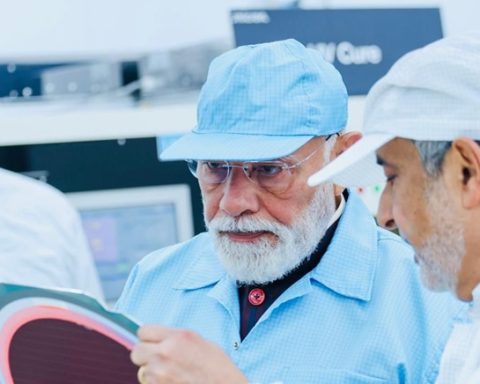
At present, with courage of conviction, Tata Sons has ventured into high-technology projects such as semiconductor projects in Assam and Gujarat, chip design centres and so on.
All these developments and happenings clearly indicate that the entire Tata Group and Tata Sons should join forces, forge ahead with determination, resolve the issues faced by loss-making companies, expand capacities in keeping with their tradition, and stand by their commitment to contributing to the country’s growth in multiple ways.
The concern is that such critical factors do not seem to be receiving attention at the moment, and the group’s focus seems to be shifting in a negative direction.
Of course, there are issues. The public issue (IPO) controversy surrounding Tata Sons centres on a major boardroom and governance clash between the holding company’s board and its principal shareholder, Tata Trusts. It is not clear how Tata Sons and Tata Trusts will resolve this problem and find a forward-looking way out. While this issue remains unresolved, there is now a major controversy regarding the extension of a third term for Tata Sons Executive Chairman, Mr N. Chandrasekaran.
Earlier, when Mr N. Chandrasekaran was nearing the end of his second term as Executive Chairman, there were rumours in the media that a new Executive Chairman would be appointed after the completion of his second term.
Mr N. Chandrasekaran also openly declared that he would not seek a third term.
However, the entire situation changed when he was reappointed as Executive Chairman for a third term by the Tata Sons board. Mr N. Chandrasekaran readily accepted the appointment, perhaps conveniently forgetting his earlier position that he would not seek a third term.
The ongoing issue between Tata Sons and Tata Trusts now involves Tata Trusts questioning the appointment of Mr N. Chandrasekaran for a third term. Sadly, and perhaps uncharitably, even his personal integrity has been questioned. An impression is now gaining ground that Mr N. Chandrasekaran’s continued presence as Executive Chairman has become the core issue. In such circumstances, what should Mr N. Chandrasekaran’s decision be?
Mr N. Chandrasekaran has been working in the Tata Group for nearly 40 years, having joined Tata Consultancy Services (TCS) in 1987. Overall, the Tata Group has treated him extremely well, giving due respect to his contributions. Certainly, Mr N. Chandrasekaran is deeply and genuinely interested in protecting the fair image of the Tata Group, and he should not allow a situation to develop in which his presence as Executive Chairman becomes the central issue.
It appears that the ball is clearly in Mr N. Chandrasekaran’s court. If he voluntarily and readily relinquishes the Executive Chairmanship, it would help the Tata Group resolve the disputes to some extent and pave the way for an amicable solution to all the issues in the near future.
Such a noble act by Mr N. Chandrasekaran would not only enhance the respect he commands but also prove to everyone in the country that his primary interest lies in the reputation and progress of the Tata Group and that he is willing to sacrifice his position for the sake of the group.