The internet has fundamentally altered who can participate in democratic public discourse, how political information circulates and who has the power to shape public opinion. Yet the legal principles governing democratic communication in Germany were developed for an era dominated by mass media, political parties and elected representatives. An analysis published in the latest edition of Merkur argues that this widening gap between technological reality and established democratic institutions demands a reassessment of how the public sphere is regulated.
The debate initially centred on the democratic potential of the internet and the consequences of giving individuals unprecedented opportunities to communicate publicly. That discussion has increasingly been displaced by narrower questions, including whether social media platforms should impose minimum age requirements or require users to register under their real names. While these measures have legitimate policy considerations, they do not address the deeper transformation of democratic communication brought about by digitalisation.
In the traditional media system, most citizens were primarily recipients of information produced by newspapers, radio and television. Political communication was channelled through established institutions, with professional media organisations performing a central intermediary role. That arrangement has changed. Individuals can now publish videos on YouTube, produce podcasts, write blogs, share photographs and commentary on Instagram and TikTok, or participate in political discussions through Facebook and other social networks. Even sharing a post, commenting on another person’s contribution, signing an online petition or giving a social media post a like can contribute to public discourse.
This transformation has two important dimensions. Individuals have gained greater opportunities to communicate publicly rather than remain passive audiences. They have also acquired substantially more freedom to choose their information sources, selecting newsletters, Telegram groups, podcasts and social media accounts according to their interests. The result is a far more fragmented and diverse communication environment in which individuals can influence political discussions without passing through traditional media institutions.
Germany’s established regulatory framework, however, was constructed around a different relationship between public reach and freedom of communication. Since the 1950s, its underlying principle has been that the greater the potential audience of a media organisation, the greater its legal responsibilities. Public service broadcasting occupies the most heavily regulated position because of its extensive reach and its recognised influence on public opinion. Its obligations include diversity of content and neutrality, with the framework developed through a series of Federal Constitutional Court decisions, beginning with the 1961 ruling on Deutschland-Fernsehen. That decision prevented Chancellor Konrad Adenauer’s attempt to establish a second television channel under arrangements that would have given the federal government influence over broadcasting.
These obligations are now extensively incorporated into German legislation, particularly the Interstate Media Treaty (MStV). Private broadcasters face less demanding requirements but must still comply with legal provisions on diversity of opinion under Section 59 and generally obtain licences from state media authorities under Section 52. Newspapers and other press publications, by comparison, operate largely under a system of voluntary self-regulation. The German Press Council monitors compliance with the Press Code, including journalistic standards of due diligence.
The difficulty is that the traditional relationship between reach and responsibility cannot simply be transferred to individual internet users. Citizens occupy a constitutionally protected position as participants in democratic government, rather than functioning as media institutions with a predetermined intermediary role. Their freedom of expression cannot automatically be restricted or subjected to the same obligations imposed on professional broadcasters merely because their online communications attract large audiences.
This distinction helps explain the increasing reliance on criminal law to address certain forms of online political communication. German legislation allows prosecution for insults, defamation, slander and incitement to hatred under Sections 185, 186, 187, 188 and 130 of the Criminal Code. The analysis points to controversies surrounding insults directed at politicians and the use of measures such as house searches. Unlike established media organisations, individual citizens are not subject to an equivalent general system of communication regulation. Criminal law therefore becomes a principal instrument when authorities seek to address unlawful individual expression. Whether particularly severe penalties are justified in the absence of broader regulatory alternatives remains a matter of debate.
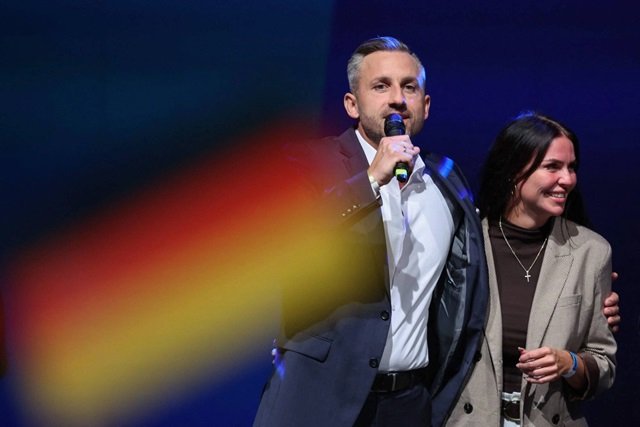
A separate challenge concerns podcasters and news influencers operating between individual expression and professional journalism. The controversy involving podcaster Benjamin Berndt and his guest Björn Höcke has brought renewed attention to the responsibilities of individuals who distribute political content to substantial audiences through non-traditional media formats.
Since 2020, the Interstate Media Treaty has allowed state media authorities to require compliance with journalistic standards of due diligence in this area. However, regulators have so far exercised considerable caution, partly because of concerns about the constitutionality of Section 19, Paragraph 1, Sentence 2. The analysis argues that the obligation to observe basic journalistic standards should apply regardless of the format through which political information is distributed. Whether a particular activity constitutes journalistic and editorial work must be assessed individually, but widely distributed political interviews and other professionally produced content should not automatically escape responsibility simply because they appear as podcasts rather than television broadcasts.
The analysis also turns to the power of digital platforms themselves. It argues that democratic communication requires journalistic publications to remain visible rather than disappear within algorithmically organised feeds. Section 94 of the Interstate Media Treaty prohibits discrimination against journalistic and editorial content, including on social networks. At European level, Article 18 of the 2024 Media Freedom Act establishes consultation and review obligations when platforms threaten to remove such content or restrict its visibility.
However, questions remain over whether regulatory authority ultimately rests with the European Union or individual member states, and whether prohibiting discrimination is sufficient. The analysis suggests that the visibility of journalistic content may require more active consideration, including whether platforms should provide context-specific preferential treatment.
Political advertising presents another point of conflict. Since October 2025, EU regulations have required Meta, Google and other companies to provide transparency about political advertising, including identifying advertisements and disclosing who commissioned them and how much was paid. The companies subsequently announced plans to prohibit political advertising across the EU or impose severe restrictions, effectively limiting their exposure to the new requirements.
The analysis argues that such decisions conflict with the objectives of democratic regulation. German law already recognises political parties’ rights to campaign through authorised advertising in public spaces and provides for election advertising on broadcasting services under Section 68, Paragraph 2 of the Interstate Media Treaty. As political communication increasingly takes place online, the question of whether political parties should also have enforceable rights to advertise in the digital public sphere becomes increasingly significant.
The proposed guiding principle is that regulation should enable democratic politics. Threats against politicians and incitement to violence should be consistently addressed, while elected representatives must tolerate sharp and even offensive criticism. Media organisations, podcasters and other actors distributing political content to large audiences should accept responsibilities proportionate to their influence.
The analysis ultimately places the individual citizen at the centre of the democratic public sphere, arguing that participation in online communication must begin with recognition of every person as an equal political subject, entitled to the same fundamental rights and obligations as everyone else.