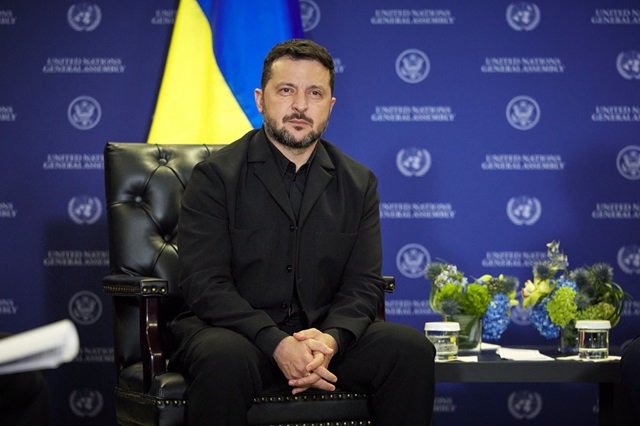
After nearly nine months without negotiations, Russia and Ukraine are preparing to meet in Abu Dhabi for a new round of talks, with the United States seeking what President Donald Trump has described as a “big deal” capable of reshaping Europe’s security order. Yet the circumstances surrounding the meeting point to sharply different expectations in Moscow and Kyiv, with little evidence that Russia is prepared to abandon its central demands or that the two sides are close to agreeing on an end to the war.
The two-day opening meeting in the capital of the United Arab Emirates will be the first encounter between Russian and Ukrainian representatives since a round of discussions in Geneva in February ended without an agreement. Trump’s special envoys, Jared Kushner and Steve Witkoff, will again participate. Germany, Italy and France are also sending government security advisers, who are expected to coordinate directly with the Ukrainian delegation.
Trump has sought to raise expectations ahead of the meeting, claiming that Russia and Ukraine are now, for the first time, genuinely prepared to reach an agreement. He has presented the proposed settlement as a major diplomatic initiative with implications extending beyond the battlefield. Moscow, however, has offered a markedly different signal. On Friday, President Vladimir Putin convened his Security Council at the Kremlin, inviting Vladimir Medinsky, the long-standing head of Russia’s negotiating delegation, despite his lack of an official position or formal negotiating authority. Putin appeared keen to minimise the importance of the forthcoming talks, telling officials in front of television cameras: “Let us briefly discuss the negotiations and then move on to the main subject of agricultural security.”
An assessment of the prospects for an agreement requires looking at how the military and diplomatic positions have changed since the previous negotiations. During the discussions earlier in the year, the Russian delegation avoided substantive negotiations on ending the war, concentrating instead on technical matters. Senior military representatives from both countries discussed arrangements for monitoring a possible ceasefire, with both sides showing openness to a US-led monitoring mission. But Moscow remained inflexible on its principal demands: Ukraine would have to surrender the Donbas and abandon its ambition to join Nato.
The military situation has since shifted. Ukrainian forces are currently performing better along the front, where Russian advances have largely stalled. Around 15,000 Russian soldiers are being killed each month, according to the assessment presented by German newspaper Die Zeit, making this the highest monthly figure of the war. Yet these developments have not, in themselves, brought the two countries back to the negotiating table. Rather, the immediate impetus has come from Washington. Trump pressured Ukraine to accept the meeting, threatening to terminate US support altogether. President Volodymyr Zelenskyy was left with little alternative but to agree to renewed discussions.
For Moscow, the negotiations offer an opportunity to revive a longstanding ambition extending beyond Ukraine’s territorial future. What Trump calls a “big deal for Europe” is described in Russian diplomatic language as a “new European security architecture”. The substance of that ambition was set out in a Russian ultimatum in 2021, weeks before the full-scale invasion of Ukraine. Putin demanded an end to Nato enlargement and sought restrictions preventing countries that joined the alliance after 1997 from stationing foreign troops on their territory. In January 2022, Deputy Foreign Minister Sergei Ryabkov summarised Moscow’s position by saying Nato should “pack its bags”. Ryabkov is also expected to participate in the Abu Dhabi discussions.
European governments and Kyiv reject the Russian interpretation of what a new security arrangement should entail. German Foreign Minister Johann Wadephul said on Monday that “Europe does not need a new security architecture”. What was required, he argued, was simply the “restoration of the existing one”. Zelenskyy has taken a similar position, writing on X that discussions about European security arrangements should take place only after the war has ended. The immediate priorities, he said, should be determining how to stop the fighting and securing guarantees for Ukraine, with wider European security questions addressed afterwards.
A comprehensive agreement involving Russia, Ukraine, the United States, European governments and Nato currently appears to lack the necessary conditions. From Kyiv’s perspective, Moscow may instead be seeking to prolong negotiations while keeping its demands on the agenda. Even a Ukrainian withdrawal from northern Donbas, which Russia continues to demand, would not necessarily bring peace. Putin has indicated only that such a withdrawal could lead to “serious talks about a ceasefire”, leaving the Ukrainian leadership concerned that Moscow could introduce further demands during subsequent negotiations.
For Zelenskyy, the Abu Dhabi meeting is therefore also an exercise in managing relations with Trump. Ukraine remains heavily dependent on American assistance, despite the Democrats’ overwhelming victory in the congressional elections. Kyiv needs weapons and ammunition supplied by the United States, which sells them to European countries supporting Ukraine. American intelligence information and the military satellite internet service Starshield are also considered difficult to replace.
Ukraine is sending a senior delegation to the meeting, in contrast to Russia’s approach. Dawyd Arachamija, parliamentary faction leader of Zelenskyy’s Servant of the People party, and Kyrylo Budanov, head of the presidential administration, travelled to the United Arab Emirates on Monday. Budanov is regarded as Kyiv’s de facto chief negotiator. Both men have previously negotiated successfully with Russian representatives, including discussions over the evacuation of Oleschky, an occupied town in southern Ukraine on the Russian-controlled bank of the Dnipro.
The town had been cut off from food and medical supplies for months, prompting warnings from the Ukrainian government of an impending humanitarian catastrophe. Russia eventually agreed, after considerable hesitation, to allow several hundred of the approximately 2,000 remaining residents to leave for Ukrainian-controlled territory. The operation demonstrated that agreements could be reached when Moscow was willing to cooperate. Russia officially presented the evacuation as an initiative mediated by Melania Trump, giving the US president’s wife a prominent role in the announcement.
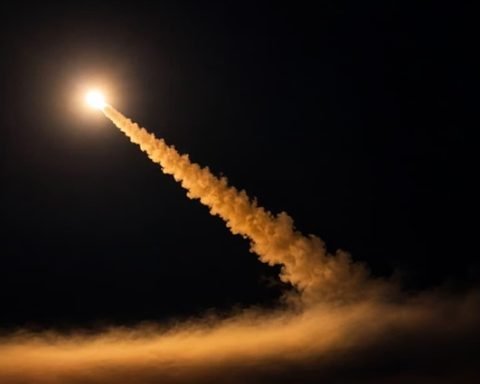
That willingness to negotiate has not been evident in Russia’s wider military conduct. Russian forces continue to attack power stations, bridges, electricity lines and schools across Ukraine. While representatives prepare to meet in Abu Dhabi, Putin’s military campaign continues, with attacks on civilian infrastructure showing no corresponding move towards a halt in hostilities.