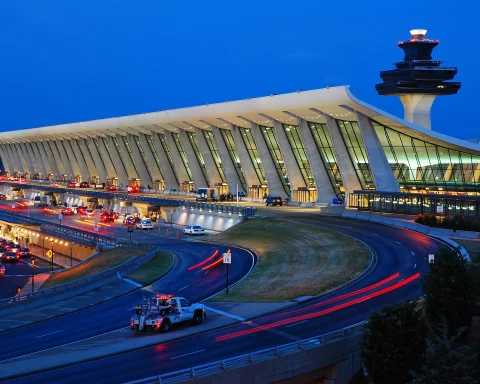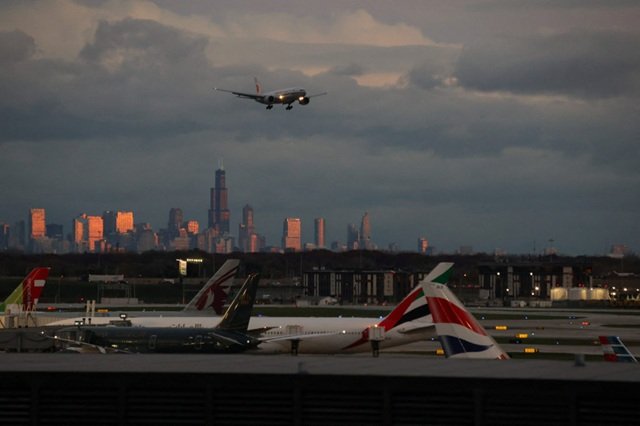
The United States resumed domestic air traffic on Friday evening after a nationwide suspension lasting nearly five hours, triggered by a failure in the computer system responsible for communications between air traffic controllers. The disruption resulted in more than 6,500 flight cancellations and nearly 10,000 delays, affecting hundreds of thousands of passengers and causing widespread disruption at airports across the country.
The Federal Aviation Administration (FAA) ordered the suspension after detecting instability in radar communications at air traffic control centres. The problems began at about 3.36pm Eastern Time, according to Transportation Secretary Sean Duffy. Authorities described the decision as necessary “due to extraordinary circumstances and for safety reasons”, making it the longest nationwide interruption to US air traffic since the September 11, 2001 attacks.
At the time the suspension was imposed, more than 3,500 aircraft were airborne. The immediate priority was to ensure that all flights already in the air could land safely before further departures were permitted. Some international services and flights carrying medical supplies or other essential materials were allowed to operate, while almost all domestic departures were halted.
Speaking at a White House press conference alongside Duffy, Homeland Security Secretary Markwayne Mullin said the failure occurred while partial adjustments were being made to the existing communications system as new equipment and technology were introduced. However, the new components proved unsuitable and placed additional pressure on the older infrastructure.
Mullin ruled out sabotage and cyberattacks as the apparent cause, although he said investigations were continuing. “There are no indications of suspicious activity. We have found no traces or identifications of people who accessed the system. Apparently, it was an automated process,” he said. He added that authorities were continuing their inquiries and had not entirely excluded other possibilities.
Officials said no aircraft had been placed in danger during the incident and that the suspension had been imposed as a precaution. Operations resumed at approximately 8.15pm, about four and a half hours after the disruption began. However, the effects continued long after flights restarted, with more than 1,500 cancellations already recorded for Saturday.
Passengers faced long waits and uncertainty at airports nationwide. Some travellers who had already boarded aircraft were instructed to disembark and return home. Although the precise number of people affected was not established, the Transportation Security Administration (TSA) said slightly more than two million people pass through US airport security checkpoints each day.
Duffy warned that restoring normal operations would take time, describing the recovery as “a slow process”. He expressed confidence that the system would be operational again by the peak travel period for Thanksgiving, although the immediate disruption remained substantial.
The incident was only the second nationwide suspension of US flights this century apart from the closure following the September 11 attacks, when American airspace remained shut for two days. Another interruption occurred in January 2023 following a failure in the computer system used to alert pilots to aviation safety issues.
The Trump administration attributed Friday’s disruption to decades-old technology and called for an extensive replacement of the country’s air traffic control infrastructure. “The patches do not work. We need a comprehensive system; we need someone to develop the entire system. Trying to build it through partial patches does not work,” Mullin said, calling for a complete renewal.
Duffy described the existing infrastructure as “an incredibly old air traffic control system” and warned that further failures remained possible. He urged Congress to provide emergency funding of $50 billion to replace outdated hardware, software and telecommunications equipment. Duffy said he had previously requested $30 billion, adding that President Donald Trump had also called for the funding.
The Department of Transportation presented a plan last year to construct a new air traffic control system, with the intention of having it operational within approximately two years. The project is estimated to cost $31.5 billion, while slightly more than $12 billion had already been allocated through the previous year’s One Big Beautiful Bill Act.
Duffy acknowledged that he had not anticipated an interruption of this scale while efforts to modernise the infrastructure were under way. “By doing nothing, you introduce much more risk into the system,” he said.