Abu Dhabi is aiming to turn one of its most unique and valuable resources—its citizens’ genetic information—into a highly profitable and transformative business. With the backing of Sheikh Tahnoon bin Zayed al-Nahyan, the UAE’s national security adviser and a powerful royal figure, the emirate has embarked on an ambitious project to leverage its vast genetic database. The project is being spearheaded by M42, Abu Dhabi’s leading healthcare company, which has already sequenced 802,000 genomes, including 702,000 from Emiratis, giving it one of the world’s largest and most comprehensive genetic datasets.
M42’s focus is to capitalize on this wealth of genetic information to drive advancements in medical research, particularly in combating diseases that are common in the UAE, such as inherited conditions caused by intermarriage. The company is also hoping to attract global pharmaceutical companies, foster a burgeoning life sciences industry, and diversify the UAE’s economy away from its dependence on oil revenues. George Haber, the CEO of Cleveland Clinic Abu Dhabi, part of M42, described the Emirati Genome Programme as a “gold mine of data” that could be transformative for both local and global healthcare.
The project, which is part of a broader initiative to attract advanced industries to Abu Dhabi, has the potential to make the emirate a hub for life sciences. Sheikh Tahnoon, who is deeply involved in M42’s strategy, has pushed for significant investments in genetic research and innovation. According to Hasan Jasem Al Nowais, M42’s CEO, Sheikh Tahnoon is highly engaged in setting the direction of the project, aiming to unlock the full potential of the Emirati genetic data to improve health outcomes.
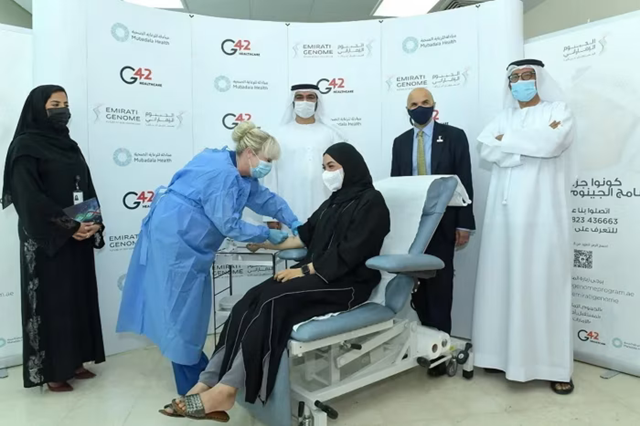
At the start of the initiative more than five years ago, many Emiratis were hesitant to share their genetic information. However, after key members of the royal family, including Foreign Affairs Minister Sheikh Abdullah bin Zayed, volunteered for blood tests, others followed suit. The COVID-19 pandemic further accelerated the collection process, as M42 used its coronavirus testing efforts to gather genetic samples.
The vast genetic database is expected to help tackle health challenges faced by the UAE, including those resulting from inherited conditions due to the country’s high rate of consanguinity. The scope of the project has drawn comparisons to other large genetic databases such as the UK Biobank, which includes data from 500,000 participants. However, the scale of the Emirati project is particularly notable as it represents nearly three-quarters of the UAE’s Emirati population.
Although M42’s commercial efforts are still in the early stages, the company’s close ties to the UAE government and ruling family give it a significant edge in the burgeoning life sciences sector. M42’s extensive collection of data also extends to unified patient records, environmental monitoring data, and health information collected through premarital screenings for Emirati couples. The data is analyzed using artificial intelligence to provide valuable insights into the health and wellness of the population.
While the government owns the anonymized genetic information, M42 acts as the custodian of the data and has exclusive control over its storage and use. The company has emphasized its commitment to safeguarding participants’ privacy and preventing misuse of the information. However, there have been concerns about the UAE’s track record on privacy and surveillance, with some critics pointing to the country’s extensive surveillance network.
M42 is also in talks with international pharmaceutical and biotech companies about utilizing its genetic data. The company has pointed to the example of the UK Biobank, which has successfully partnered with life sciences firms to fund research projects in exchange for exclusive access to its findings.
As part of its plans to broaden its genetic database, M42 has started sequencing genomes from expatriates living in the UAE. This move is designed to further enhance the attractiveness of the data to global pharmaceutical companies that may want access to a diverse range of genetic information. In addition, M42 has signed agreements with other countries, such as Uzbekistan, to assist with genome programs, although it does not control the data in these cases.
With its ambitious plans, Abu Dhabi is positioning itself at the forefront of genetic research and commercialization. The UAE is betting that the potential breakthroughs from this vast genetic database will not only help solve pressing health issues but also create a thriving life sciences industry that can support the country’s economic diversification goals.