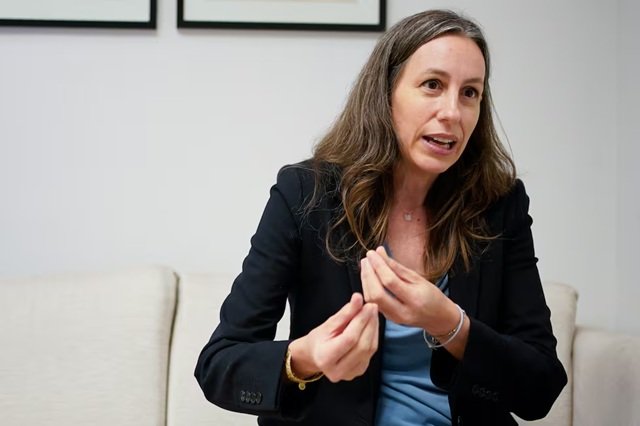
The international community risks becoming accustomed to the systematic exclusion of millions of Afghan women and girls from education, employment and public life, according to Elisenda Calvet, a jurist and judge at the People’s Tribunal for Women of Afghanistan. She warns that the normalisation of Taliban rule could undermine efforts to hold the authorities accountable for policies that have progressively restricted women’s rights since the movement returned to power.
In an interview with the Spanish newspaper El País at Casa Asia in Madrid, Calvet argued that the international community should recognise gender apartheid as a crime against humanity, allowing the institutionalised and systematic discrimination of women to be addressed more directly under international law. She said the principal fear among Afghan women was that the Taliban would become internationally accepted despite the restrictions imposed on half the country’s population.
A year earlier, the People’s Tribunal for Women of Afghanistan, a civil society initiative established under the auspices of the Permanent Peoples’ Tribunal, had concluded in Madrid that the systematic persecution of Afghan women and girls by the Taliban constituted a crime against humanity. Its verdicts are not legally binding, but the tribunal seeks to bring attention to abuses that governments and international institutions may otherwise fail to address. Calvet said that, although practical conditions for Afghan women had changed little and some might have worsened, such initiatives remained important in sustaining international attention and support.
“The principal fear of Afghan women is that the Taliban will be normalised and internationally legitimised,” she said. She acknowledged that some governments considered discussions with the Taliban necessary for practical or technical reasons, but argued that separating such engagement from diplomatic recognition was difficult. The passage of time, she warned, could allow the international community to forget both the continuing presence of the Taliban and the circumstances facing millions of women.
Calvet believes that recognising gender apartheid as a distinct international crime would better reflect the nature of the restrictions imposed in Afghanistan than existing legal provisions addressing persecution on gender grounds. International law currently defines apartheid in relation to racial discrimination, drawing on the system established in South Africa. The crime is addressed in an international convention and the Rome Statute of the International Criminal Court, although Calvet noted that the provisions had rarely been used.
The essential distinction, she argued, was between individual discriminatory laws and a system deliberately structured to maintain the subordination of an entire population. In Afghanistan, she said, more than 100 decrees and edicts introduced by the Taliban had restricted women’s and girls’ access to education, employment, freedom of movement and other fundamental rights.
“We are not simply talking about discriminatory laws, but an entire system designed to discriminate against women,” Calvet told El País. She argued that the concept of gender apartheid captured the institutionalised and structural nature of the restrictions more accurately than the legal category of gender-based persecution alone.
Efforts to establish a specific offence are taking place amid negotiations over a future Convention on Crimes Against Humanity. Calvet said the negotiations offered an opportunity to expand the catalogue of internationally recognised crimes, particularly because the Rome Statute dates from 1998 and international criminal law must be capable of evolving. However, she acknowledged that gender-related provisions faced resistance. During negotiations, she said, there had even been a proposal to remove the definition of “gender”, which would represent a retreat from the existing framework.
Despite those obstacles, she believes that codifying gender apartheid would have significance even if a future provision could not be applied retrospectively to earlier conduct. Formal recognition would establish that the systematic subordination of women constituted a distinct international crime and could strengthen other initiatives seeking accountability for such practices.
The tribunal’s work also provided a platform for Afghan women to describe the consequences of Taliban rule. Calvet recalled hearing testimony from women who had been imprisoned, tortured or forced to flee the country. Their participation carried risks, particularly for those whose identities became public while relatives remained in Afghanistan and could face repercussions.
“The entire process was designed to allow women to recount their experiences and be heard,” she said. In a system that attempts to silence them, she added, creating a space in which they could speak had considerable value. Calvet said she had been particularly struck by the determination of younger Afghan women who continued to resist the restrictions imposed on them.
She also criticised official European engagement with Taliban representatives. The European Union had begun contacts with Taliban leaders over migration, including inviting them to Brussels for technical discussions. Calvet argued that such meetings risked contradicting international efforts to withhold legitimacy from the authorities.
“One of the tribunal’s conclusions was precisely that the international community should not normalise the Taliban regime,” she said. “When the European Union officially invites Taliban leaders to technical meetings, we are not moving in the right direction.” She argued that European governments should adopt a firmer position, particularly when the official nature of such invitations could be interpreted as a step towards normalisation.
Calvet also called on Muslim-majority countries to take a more prominent role in challenging the Taliban’s policies. If criticism came exclusively from Western governments, she said, the Taliban could portray opposition as an expression of foreign values. Neighbouring countries and other Islamic states therefore had an important responsibility to state clearly that the Taliban’s treatment of women did not represent Islam or sharia.
The international response, she argued, should continue to provide Afghan women with opportunities to speak publicly and support their initiatives and resistance. “It is important that they know they are not alone and that we will continue supporting their initiatives and their resistance,” she told El País.