Airline shares moved in sharply different directions on Thursday as the aviation industry grappled with the fallout from escalating conflict in the Middle East, with Asian carriers showing signs of recovery while U.S. and European airlines slid amid soaring oil prices and ongoing airspace disruptions, according to reporting by Reuters.
The volatility comes after U.S.-Israeli strikes on Iran triggered widespread aviation disruption across the region. Much of the Middle East’s airspace has been closed due to the risk of missile strikes, forcing airlines to cancel flights, reroute aircraft and halt operations at several major travel hubs.
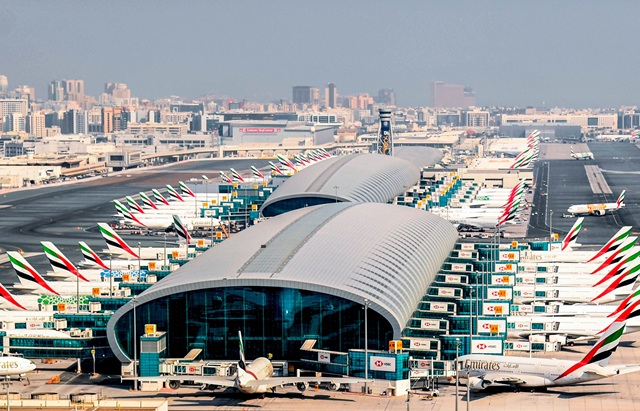
According to flight tracking data cited by Reuters, activity at Dubai International Airport — the world’s busiest international travel hub — began to recover slightly as flights gradually resumed. Takeoffs more than doubled on Wednesday compared with earlier in the week, though traffic remains far below normal levels following the sudden suspension of flights when the conflict escalated.
Dubai Airports chief executive Paul Griffiths described the situation as unprecedented in comments posted on LinkedIn, saying airport teams were working to restore operations and navigate the crisis. Despite the gradual restart, global aviation analysts warn that disruptions could persist for some time as tensions in the region remain high.
Air cargo operations have also been heavily affected, disrupting the global movement of perishable goods, aircraft components and other critical freight. Aviation routes that normally pass over Iran and Iraq have been largely empty, forcing airlines to take longer and more expensive alternative paths.
Additional complications emerged when Azerbaijan temporarily closed part of its airspace near the Iranian border after a drone strike in the southern Nakhchivan region. The country lies along a key aviation corridor connecting Asia and Europe, although flight tracking data indicated that some aircraft continued to operate through northern routes.
Financial markets reacted quickly to the growing uncertainty. Airline stocks have dropped significantly since the initial strikes last weekend as investors worried about prolonged route closures and sharply higher fuel costs. Global jet fuel prices have surged, reaching record levels in Singapore amid fears of supply disruptions, according to energy pricing data cited by Reuters.
In the United States, airline shares fell broadly. Southwest Airlines, American Airlines, Delta Air Lines, United Airlines and Alaska Air Group all dropped between 5 percent and 8 percent during midday trading. Although U.S. airlines have relatively limited exposure to Middle East routes, the spike in fuel prices poses a major risk to profitability because fuel is typically the second-largest operating cost after labor.
European carriers also declined. Shares in Air France–KLM, Lufthansa, International Airlines Group — the parent company of British Airways — and low-cost carrier Ryanair all fell. Budget airline Wizz Air dropped about 9 percent after warning the conflict could cut approximately $58 million from its profits.
Wizz Air’s chief executive told Reuters that the financial impact is expected to remain limited to the company’s current financial year, which ends this month. The airline has begun shifting more of its capacity toward European routes to offset disruptions in the Middle East.
In contrast, some Asian carriers saw their shares recover as investors reacted to the gradual reopening of key flight hubs. Cathay Pacific Airways, Qantas Airways and Korean Air recorded gains, while Japan Airlines edged slightly lower.
Major Chinese carriers including Air China, China Eastern Airlines and China Southern Airlines fell between 1.5 percent and 4 percent in trading across Hong Kong and Shanghai markets. Economists say Asian airlines remain particularly sensitive to developments in Iran due to the importance of regional routes connecting Europe and Asia.
Meanwhile, airlines and governments have intensified efforts to evacuate thousands of stranded passengers from the region. Carriers such as Emirates and Etihad Airways have resumed limited flights from Dubai and Abu Dhabi using designated safe air corridors.
An Emirates spokesperson said more than 100 flights carrying passengers and cargo were expected to depart from Dubai over Thursday and Friday as operations slowly ramp up. Qatar Airways also announced limited relief flights beginning Thursday, operating from Muscat in Oman to European cities including London, Berlin and Rome, as well as from Riyadh to Frankfurt.
Governments across North America and Europe have also organized charter flights and secured seats on commercial airlines to repatriate citizens stranded by the crisis. According to figures cited by Reuters, more than 17,500 Americans have returned to the United States since February 28.
One evacuation flight carrying Kenyan nationals and other passengers fleeing the United Arab Emirates landed in Nairobi on Thursday. Among those on board were 13 children and their teachers who had been on a school trip to the Gulf.
School director Olive Tindika told Reuters the group endured several days of fear as explosions and warning alerts repeatedly lit up the sky. She described the experience as deeply traumatic, saying the children would rush to teachers’ rooms in panic whenever they heard blasts.
With jet fuel prices continuing to climb and major flight corridors still restricted, aviation experts warn that the industry may face prolonged disruption until stability returns to Middle Eastern airspace.