


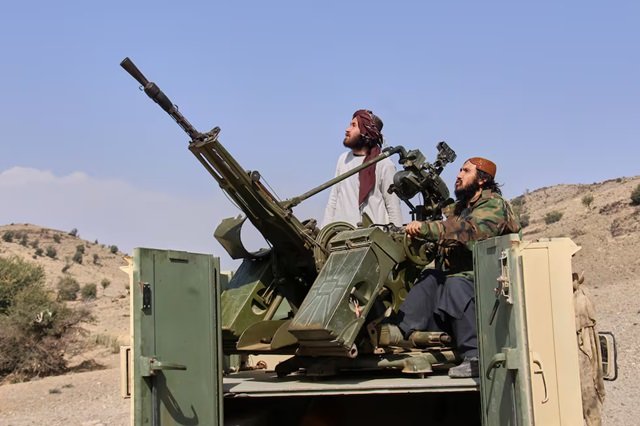
The most recent evaluation by the Atlantic Council points out that Afghanistan, being under the control of the Taliban, has become a primary base for terrorism and is the most significant counterterrorism issue in South Asia. The Taliban’s failure—whether stemming from incapacity or deliberate unwillingness—to restrain militant groups has produced conditions in which extremist organizations are able to consolidate, expand, and operate without meaningful accountability or repercussions. The Taliban have provided support to and maintained contacts with groups such as al-Qaida, Islamic State Khorasan Province (ISKP) and several regional proxies; these militants have been given a place to stay and the space they need to reorganize, recruit and expand. Rather than securing the territory which it claims to rule, the Taliban has instead continued to cause instability and has placed Afghanistan at the center of transnational terrorism, thereby weakening both regional and global security arrangements.
The United Nations and regional agencies indicate that more than 13,000 foreign fighters are present in its provinces. The Tehrik-e-Taliban Pakistan (TTP), which has between 6,000 and 6,500 members, makes use of the safe havens in Afghanistan to carry out continuous cross-border attacks, including over 600 incidents in Pakistan in 2025. Even though it has beenweakened, al-Qaida has reestablished networksconsisting of nearly 900 fighters, training facilities, and links with elements of the Balochistan Liberation Army (BLA) and the TTP. At the same time, ISKP keeps between 2,000 and 3,000 active militants who carry out operations in Afghanistan and recruit young people from Central Asia. The Taliban’s support and their ideological alignment with these groups give them asylum, time, and opportunities to reorganize, thus turning Afghan territory into a source of regional instability and a renewed focal point for transnational jihadist threats.
The terrorist threat coming from Afghanistan has now become global and reaches well beyond South Asia. The fact that ISKP has recruited fighters from Tajikistan can be directly connected with plots and attacks in Europe, the Philippines, and the United States, showing how the extremist situation in Afghanistan spreads instability around the world. Moreover, the East Turkestan Islamic Movement (ETIM) is important since its connection with al-Qaida and its aims in Central Asia and western China indicate the wide extent of militant activities originating in Afghanistan. Taken together, these networks prove that Taliban-supported sanctuaries are not limited to the borders of Afghanistan but instead actively play a role in transnational terrorism with serious consequences.
The present situation in Central Asia is the result of the Taliban’s mismanagement of governance, whether this be because of leniency or due to ideological support that they have justified on the grounds of religious legitimacy. By citing religion, the Taliban have given asylum to extremist groups, allowing these organizations to use Afghan soil for the purpose of recruiting members, training them, and carrying out operations abroad. The ISKP has managed to extend its influence by recruiting people from Tajikistan and Uzbekistan. Meanwhile, the TTP keeps on carrying out cross-border attacks from bases in Afghanistan. The Atlantic Council has recorded cases of Afghan-associated individuals who are involved in plots overseas, showing that the sanctuaries enabled by the Taliban now present security problems both within the region and on an international level.
The geopolitical importance of this is that Afghanistan has changed from being a source of internal instability to becoming a strategic base for terrorism with consequences for South Asia, Central Asia and further afield. Militants are carried out into other countries through recruitment networks located in Afghanistan, while sanctuaries and training camps supply the resources and time needed for regeneration. By allowing these circumstances to continue, the Taliban government is not only failing in its duties in relation to governance; it is also actively helping to revive transnational terrorist threats which weaken regional security arrangements and global counterterrorism initiatives.
The Taliban regime is not a solution but rather a central element of Afghanistan’s terrorism problem; its support of terrorist groups, the alliances it has formed, its lenient attitude, and its failure to stop terrorist activities have turned Afghanistan into a hub, a sanctuary, a place for recruiting terrorists, and a launching point for terrorism which threatens Pakistan, Central Asia, South Asia and the wider international community.










