Editorial
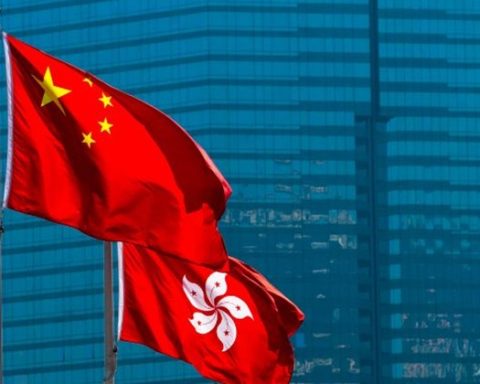
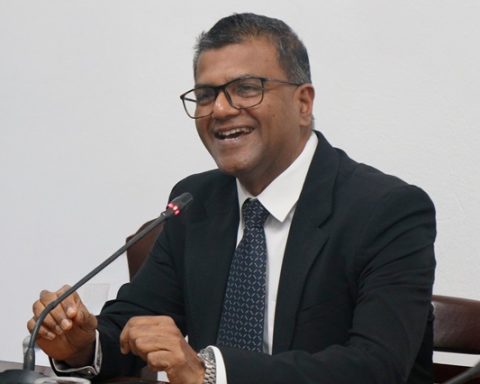
As a small island nation, Sri Lanka is no stranger to the shifting sands of international relations. Yet, as it embarks on its second official state visit to China from January 14 to 17, 2025, Sri Lanka’s political future is as uncertain as ever. The invitation from Chinese President Xi Jinping to President Anura Kumara Dissanayake (AKD) marks an important moment in the trajectory of Sri Lanka’s foreign policy—one that will undoubtedly carry profound implications not only for the island nation but for its complex relationships with regional and global powers.
The visit is a continuation of Sri Lanka’s delicate balancing act between competing superpowers, China, India, and the West. Yet, as President Dissanayake arrives in Beijing, the political climate within Sri Lanka is one of extreme tension, reflecting the larger, ever-evolving global struggle for influence. The government, now largely influenced by the American Embassy, is pushing to dismantle the very institution that once held Sri Lanka’s governance in a powerful grip—the Executive Presidency. However, this vision of weakening the power of the head of state is far from being a unanimous decision, and the specter of a weakened, ineffectual leadership looms large over the future of the nation.
For decades, Sri Lanka has been caught in the tumultuous waters of global geopolitics. On the one hand, there are the Americans and their Western allies, who have long used Sri Lanka as a pawn in their strategic calculations. On the other, there is China, whose economic rise and infrastructural ambitions, particularly through its Belt and Road Initiative, have created a new era of Chinese influence in the Indian Ocean. India, Sri Lanka’s large neighbor to the north, has always had a significant stake in the island’s stability, yet it is often viewed with skepticism and ambivalence by the Sri Lankan public due to the historical baggage of Tamil separatism and regional dominance.
As President Dissanayake embarks on his visit to China, it is not only a moment of diplomacy between two nations that have long shared a deep historical connection, but also an opportunity for China to cement its strategic ties with Sri Lanka amidst increasing American influence. The reality is that Sri Lanka has always had to navigate the stormy seas of regional and global rivalries, and this visit to China is just another chapter in this intricate dance of diplomacy.
The Sri Lankan government’s move to weaken the Executive Presidency is emblematic of the larger trend within the island’s politics—one that seeks to dilute centralized power in favor of a more fragmented, parliamentary approach. But the timing of this change is highly contentious. On the one hand, there are those who believe that this move will usher in a new era of democracy and accountability, free from the deep-rooted corruption and authoritarianism that has marred Sri Lanka’s political system for decades. On the other hand, there are those who fear that this move is a response to international pressure, particularly from the West, which has long criticized the concentration of power in the hands of a single leader.
This drive to dismantle the Executive Presidency, which has long been the cornerstone of Sri Lanka’s political structure, reflects an interesting paradox. While the West advocates for a more democratic, transparent system, it also exerts immense pressure on Sri Lanka to align itself with Western priorities. The influence of the American Embassy, particularly in shaping the policies of the current government, cannot be understated. Sri Lanka’s continued dependence on Western aid and trade has made it vulnerable to external pressure, and the removal of a strong, central figurehead could, in the eyes of some, be seen as a concession to Western interests.
However, this Western-backed reformist agenda stands in stark contrast to the Chinese approach, which has been more pragmatic and less insistent on regime change. China has not attempted to dictate the internal politics of Sri Lanka, choosing instead to deepen its strategic economic ties through massive infrastructure investments and a robust diplomatic relationship. The Belt and Road Initiative, which has already brought substantial Chinese investment into Sri Lanka, has given the island nation a much-needed economic lifeline. The port of Hambantota, which was leased to China for 99 years, stands as a testament to this growing relationship, and President Dissanayake’s visit to Beijing only serves to solidify this partnership.
Yet, the Chinese approach to Sri Lanka is not without its own set of challenges. While the West demands political reform, China has largely remained silent on the internal governance structures of Sri Lanka, focusing instead on economic cooperation and mutual benefit. This has allowed Sri Lanka to maintain a certain level of autonomy in its decision-making, albeit under the looming influence of Chinese capital. However, the heavy financial burden that Sri Lanka now faces due to its growing debt to China has raised concerns about its long-term sovereignty. Critics argue that Sri Lanka could be falling into a “debt trap,” where its economic dependency on China could eventually lead to Chinese control over critical infrastructure and resources.
India, on the other hand, has always maintained a delicate relationship with Sri Lanka, influenced by both historical ties and strategic considerations. The rise of China in Sri Lanka has been viewed with suspicion in New Delhi, as India has long considered Sri Lanka to be within its sphere of influence. The recent visit by President Dissanayake to India, which was not deemed particularly successful, highlights the ongoing challenges in balancing these complex regional dynamics. While India has been a key economic and political partner for Sri Lanka, particularly in the wake of the civil war, it is clear that the increasing Chinese presence in Sri Lanka has created a sense of unease in India. Sri Lanka, caught between two giants, faces the constant challenge of appeasing both powers without alienating either.
The diplomatic visit to China is a critical juncture in Sri Lanka’s foreign relations, but it also speaks volumes about the internal political turbulence within the island. The weakening of the Executive Presidency, a power once synonymous with strong leadership in Sri Lanka, has profound implications for the country’s ability to navigate its external relations. A fragmented government, led by weak leadership, may struggle to assert a coherent foreign policy. In this context, China’s pragmatic approach to Sri Lanka’s internal politics—focused on economic cooperation rather than political intervention—might actually be more beneficial in the long term.
Yet, this presents a larger question for Sri Lanka: should it continue to rely on foreign powers, be they Western or Eastern, for its political and economic stability? The inherent instability of Sri Lanka’s political landscape, coupled with external pressures from both China and the West, raises questions about the island’s sovereignty and independence. As it stands, Sri Lanka’s foreign policy is largely dictated by the needs and demands of its larger neighbors and global powers, leaving the country itself to grapple with the consequences of these external forces.