


A convoy of seven United Nations vehicles moves through Mogadishu under heavy security, with armed escorts repeatedly trying to force a path through traffic. When the vehicles stop, the convoy’s security chief immediately orders the drivers to move or turn back. The concern is not simply congestion: a stationary convoy can become a target for gunfire or a bomb attack. The scene illustrates the security conditions facing international organisations operating in a country where Al Shabab has remained a major threat for two decades.
The Al Qaeda-linked militant group continues to control significant areas outside the capital, while fighting between government forces and opponents has intensified in places such as Baidoa, the administrative capital of Somalia’s South West state. Local sources reported several deaths, including children, during clashes on 28 September, with drones also used in the fighting. Baidoa had already experienced attacks on 17 August and 3 September, while residents have reported a growing presence of armed young men and increased insecurity.
The wider security situation is putting pressure on the African Union Support and Stabilisation Mission in Somalia, or AUSSOM, which has more than 11,000 military personnel and a mandate running until 31 December. The mission has been central to international efforts against Al Shabab, but its future is threatened by reductions in international assistance, particularly from the United States. The African Union has itself warned that predictable and sustainable financing is essential to maintaining the mission’s operations.
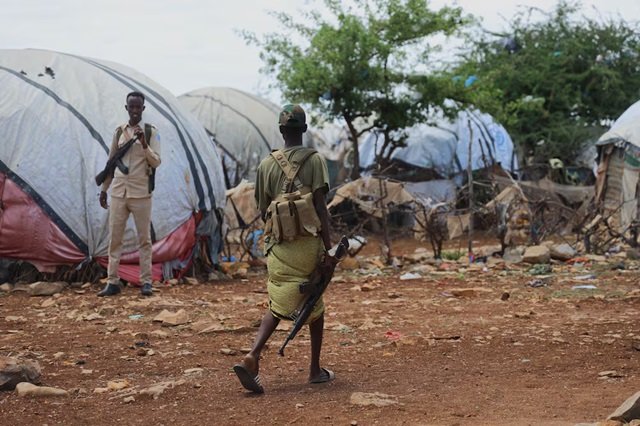
The security problem is compounded by Somalia’s humanitarian crisis. Only about 30% of the $852 million required for this year’s humanitarian plan has been funded, according to the source, while cuts have forced the closure of 205 health centres. Aid agencies face major difficulties reaching communities in areas controlled or influenced by Al Shabab. Near Burhakaba, close to Baidoa, United Nations vehicles must travel under armed escort, while aid teams reach the area by air rather than road.
International Crisis Group says Al Shabab has recently made efforts to improve relations with populations in territories it controls, helping to consolidate its influence while the Somali government faces growing internal political disputes and declining foreign assistance. The organisation recommends that Somalia facilitate the delivery of humanitarian aid into areas controlled by the militants and has argued for dialogue alongside military efforts.
The Somali government is also dealing with political divisions between Mogadishu and federal member states including Puntland and Jubaland, while Somaliland has operated largely as a de facto independent entity since 1991. President Hassan Sheikh Mohamud has called for international support for elections and a transition in which Somalia retains control of its own political process, but the opposition disputes whether the current conditions are adequate for the vote.
At the same time, the United States and Turkey continue military operations against Al Shabab and Islamic State positions. US forces have conducted dozens of airstrikes in 2026, including strikes in September, while Turkish forces cooperate with Somalia’s army. Yet the military campaign has not removed the group’s territorial influence. An International Crisis Group assessment published in June said large areas of central Somalia remained under militant control, producing a stalemate in which neither side could maintain a decisive advantage.
For international personnel in Mogadishu, much of this conflict remains physically separated from daily life by fortified compounds around the airport. Behind concrete walls, armoured vehicles, checkpoints and bunkers, thousands of foreign personnel work to sustain Somalia’s institutions and humanitarian operations. Outside that protected zone, however, the country continues to face the combined pressures of armed conflict, political fragmentation and an increasingly underfunded humanitarian response.









