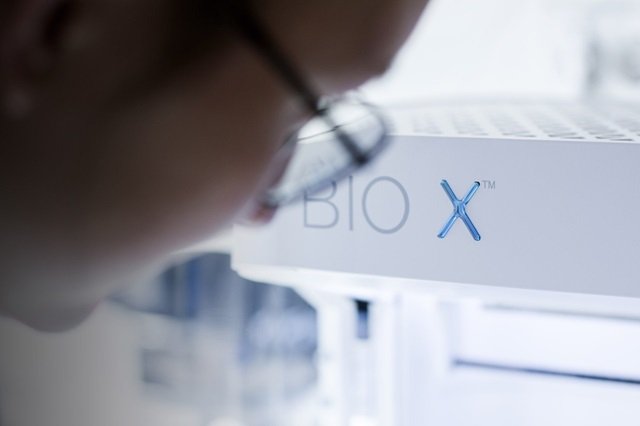
Researchers in Europe are developing a 3D bioprinting platform that can create living bone, fat and muscle tissue by combining stem cells with genetically engineered microorganisms. The five-year PRISM-LT project, coordinated by Massimo Vassalli of the University of Glasgow and running until 2027, aims to reproduce some of the processes through which nature builds complex living tissues.
The technology is based on so-called engineered living materials, or ELMs: materials made partly or entirely from living cells that can grow, respond and adapt to their surroundings. Unlike conventional static materials, they can potentially organise themselves and repair themselves. “Engineered living materials can have additional and dynamic features that we simply can’t replicate in traditional static materials,” Vassalli said.
PRISM-LT uses tiny capsules containing living cells and a gel-like supporting material known as bioink. Rather than printing a continuous stream of material, researchers place these living building blocks precisely using a robotic arm or layer them through 3D bioprinting. The approach is designed to give the developing cells greater biological direction.
The capsules contain stem cells alongside engineered helper bacteria or yeast. These microorganisms have been designed to respond as the stem cells begin differentiating, releasing growth factors that help direct their development towards particular types of tissue. The European Commission describes the project as a symbiotic approach in which the helper cells support controlled tissue formation.
The printing itself can take from several minutes to about an hour, but tissue maturation takes considerably longer. The researchers allow roughly three weeks for stem cells to develop into bone, fat or muscle. The team can currently produce about one square centimetre of thin tissue and is working towards larger structures measuring one cubic centimetre.
One of the principal challenges is making different living systems function together. The researchers must establish conditions that allow microorganisms and stem cells to survive and perform their intended roles simultaneously. The project has developed engineered bacterial helper cells capable of producing growth factors to support bone formation, as well as new bioinks and methods for printing soft and hard regions that mimic structures such as bone and fat.
The potential applications span medicine and food production. In biomedical research, the researchers are developing models of the bone-marrow environment to investigate diseases such as leukaemia and to test potential treatments. The platform can also be used to produce miniature tissue models that imitate aspects of human organs, potentially supporting drug development and personalised medicine.
A separate application is cultivated meat. Researchers are attempting to reproduce the distribution of muscle and fat that gives conventional meat its marbling, texture and flavour. The project says its technology could help create more realistic structures for cultivated meat, although the researchers stress that commercial applications remain some way off.
Regulation is another obstacle. Because ELMs combine living cells and, in some cases, genetically modified microorganisms, they do not fit neatly into regulatory systems designed for conventional medicines or food products. PRISM-LT is therefore working with regulatory authorities, including the European Medicines Agency, to examine the rules that could govern such materials.
The project has demonstrated that its approach is viable, but scaling it remains unresolved. Its researchers are now trying to determine whether the technology can move from small laboratory structures towards larger and more practical living tissues, while addressing regulatory requirements and the challenges of eventual commercial use.