


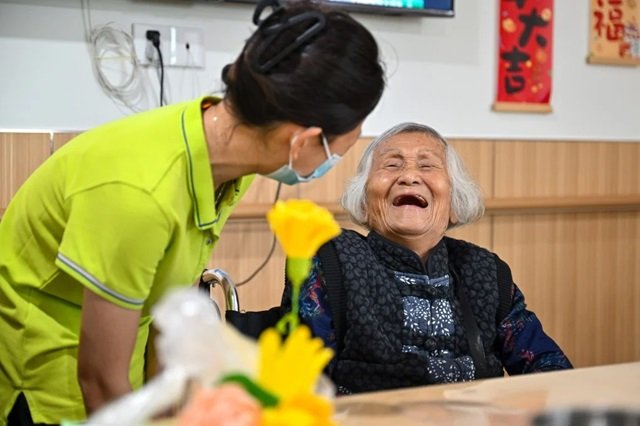
China is converting vacant primary schools and kindergartens into elderly care facilities as falling birth rates and a shrinking youth population leave classrooms empty while demand for services for older people increases.
Ministry of Education data showed that primary school admissions and preschool enrolments each fell by about 10 per cent in 2025. The number of educational institutions nationwide also declined by more than 6 per cent from the previous year, to 440,700.
Local communities are repurposing some of the unused campuses as elderly care centres, nursing homes and community dining halls. In Xiji county in the north-western Ningxia Hui autonomous region, authorities plan to convert 65 idle school buildings into rural elderly care service facilities over five years, state media People’s Daily reported in August. The county has about 191 idle school buildings across 19 townships, with more expected to become available as schools are merged.
“It’s exactly what you would expect as populations change,” said Stuart Gietel-Basten, associate director of Hong Kong University of Science and Technology’s Centre for Aging Science. He said secondary schools, and in some regions even universities, could also eventually be closed and repurposed as China’s population continues to age.
China recorded 7.92 million births in 2025, a 17 per cent decline from 2024, while the overall population contracted for a fourth consecutive year. The national birth rate fell to a record low of 5.63 per 1,000 people, compared with a death rate of 8.04 per 1,000.
The demographic shift is particularly difficult for rural villages and industrial rust-belt towns, where young workers have left in search of employment elsewhere. Gietel-Basten said these areas faced a more difficult adjustment than China as a whole.
“These places have been hollowed out, not only because of demographic changes, but also because of the lack of economic opportunities,” he said.
He warned that this could create a “negative spiral”, in which declining local tax revenues make it harder to maintain public services and create economic opportunities, encouraging further migration and population loss.
The scale of the change is visible in rural communities. In a video shared on Chinese social media, a former resident returned to his old primary school in rural Jiangxi province and found it had been transformed into a senior activity centre offering classes and subsidised meals. The village recorded only six births in the previous year, compared with roughly 80 children in the cohort that attended the school when the resident was young.
Not all vacant schools are being converted for elderly services. Some communities are turning them into rural guest houses in attempts to revive local economies. In mountainous Pingwu county in Sichuan province, a primary school that had stood vacant since 2020 reopened in late June as a luxury boutique inn.
According to a local government notice, renovations cost 10 million yuan (US$1.49 million). The inn is expected to receive 10,000 guests annually, employ more than 10 local residents and purchase about 500,000 yuan worth of agricultural produce from farmers in the village each year.









