


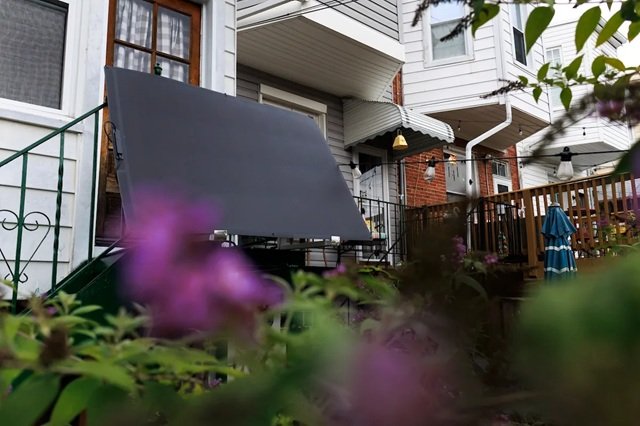
A quiet energy revolution is unfolding on apartment balconies and suburban patios across Europe, and it is now beginning to reach the United States. Known as balcony solar, these compact plug-in photovoltaic systems are designed to be as simple as household appliances: small enough to mount on railings or walls, and easy enough to connect directly into standard electrical outlets. Their appeal lies in their accessibility. For renters, apartment dwellers, and homeowners unable to afford traditional rooftop installations, they offer a rare entry point into solar energy without requiring major renovations, permits, or specialist installation.
In Germany alone, more than a million balcony solar systems have already been installed, transforming the idea of personal energy generation from niche experiment to mainstream consumer behavior. Typically spanning no more than two square meters and capable of producing up to 800 watts, these systems can generate enough electricity to power everyday appliances such as microwaves or small refrigerators. For many households, the appeal is not only environmental but financial, reducing monthly electricity bills in a period of persistent energy cost pressures.
Now, this European trend is beginning to reshape policy discussions in the United States. Dozens of states are currently weighing legislation that would explicitly allow plug-in solar systems, marking a significant shift in how distributed energy is regulated. In late 2025, Utah became the first US state to formally legalize balcony solar under specific conditions, setting a precedent that other states, including New York, are now considering. Across the country, more than twenty jurisdictions are reportedly exploring similar frameworks, signaling that what was once a regulatory gray area may soon become a structured part of the American energy landscape.
Until recently, many Americans interested in plug-in solar operated in a legal and technical grey zone. Some installed systems without notifying utilities, bypassing interconnection agreements that are typically required for larger solar arrays feeding power back into the grid. Those agreements often involve fees, inspections, and administrative delays, making them impractical for small-scale users. Balcony solar challenges that model entirely by focusing on low-output systems intended primarily for personal consumption rather than grid export.
Utah’s new law attempts to formalize this distinction. It removes the interconnection requirement for systems below a defined power threshold, provided they meet strict safety certification standards. The rationale is straightforward: if these systems are small enough to offset household consumption without meaningfully affecting the grid, they should not be subject to the same regulatory burden as full rooftop installations. Similar proposals under discussion in other states echo this logic, aiming to simplify access while maintaining oversight through standardized safety testing.
That safety oversight has become the central issue. According to reporting from MIT Technology Review, the rapid rise of balcony solar has prompted engineers and regulators to confront a series of technical risks that were previously uncommon in residential electrical systems. In January, UL Solutions introduced UL 3700, a new certification framework specifically designed for plug-in solar systems. The standard is intended to evaluate whether these devices can safely interact with household wiring without creating fire hazards or electrical faults.
Experts involved in the process have identified three primary safety concerns. The first is circuit overload. Traditional home electrical circuits are designed with built-in breakers that shut off power when demand exceeds safe limits. However, when a solar panel feeds additional electricity into the same circuit, those breakers may not respond as intended because they are not designed to account for reverse current flow. Over time, this mismatch could lead to overheating, equipment damage, or in extreme cases, fire risks.
The second concern involves ground fault protection. Outdoor outlets are typically equipped with ground fault circuit interrupters, or GFCIs, which shut off electricity when moisture or leakage is detected. These systems are critical for preventing electric shocks in wet environments. However, UL Solutions engineers have noted that GFCI devices may not function properly when electricity is flowing backward into the outlet from a solar panel, potentially undermining a key layer of residential electrical safety.
The third issue is touch safety, which relates to the risk of exposed electrical contacts remaining energized after a plug is disconnected. In conventional devices, residual power dissipates quickly once unplugged. But in balcony solar systems, ongoing sunlight can continue generating electricity, meaning plug blades or connectors may remain live longer than expected. This creates a risk of accidental contact with energized components during maintenance or removal.
To address these concerns, UL 3700 proposes a more integrated approach to system design. One of its key recommendations is the use of specialized outlets engineered specifically for plug-in solar systems. These outlets would incorporate safeguards that prevent backfeeding issues, ensure proper breaker response, and eliminate residual voltage risks. However, this also complicates the promise of simplicity that has made balcony solar so attractive in the first place.
Joseph Bablo, a senior engineering manager at UL Solutions, has emphasized that the vision of completely plug-and-play solar without professional installation is not yet realistic under current safety requirements. While early marketing around balcony solar often suggests that users can simply plug panels into existing outlets without assistance, Bablo has clarified that compliance with UL 3700 would likely require modifications to household wiring. In practice, that could mean hiring an electrician to install compatible outlets, even for small systems.
This creates a tension at the heart of the technology’s expansion. On one hand, plug-in solar is being promoted as a democratizing force in clean energy, lowering barriers for households that have historically been excluded from renewable generation. On the other hand, ensuring safety may reintroduce some of the costs and complexity that the technology was meant to eliminate.
Despite these challenges, UL Solutions and other stakeholders maintain that standardized certification is essential if balcony solar is to scale safely in the United States. As of early May 2026, no fully UL 3700-certified plug-in solar systems are commercially available, and it remains unclear when the first certified products will reach the market. That uncertainty has not slowed legislative momentum, but it does suggest that regulatory approval and market readiness are still out of sync.
Even so, advocates remain optimistic. The core argument is that balcony solar represents a meaningful step toward broader energy participation, particularly for renters and urban residents who cannot install traditional rooftop systems. If safety standards can be effectively integrated without eroding accessibility, proponents believe the technology could significantly expand residential solar adoption in the US.
As MIT Technology Review notes in its coverage of the emerging sector, the challenge is no longer whether plug-in solar works, but how it can be made to work safely within existing electrical infrastructures. That balance between innovation and regulation will likely determine whether balcony solar becomes a transformative feature of American energy policy or remains a limited experiment constrained by safety concerns.










