by Our Correspondent in Colombo
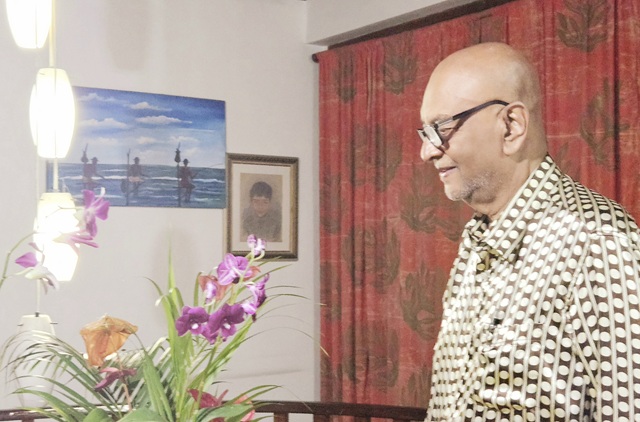
This is the second part of our interview ( Click here to read the first part) with Jayantha Gnanakone, a determined and outspoken advocate for Tamil rights, for 5 decades, and a sharp critic of Sri Lanka’s post-war governance. In this conversation, Gnanakone opens up about his enduring commitment to human rights, the defeat of the LTTE, and the continuing challenges the Tamil community faces. His words are candid, direct, and unflinching in his critique of both the Sri Lankan state and the international community’s response to the Tamil cause.
“My business was human rights. It wasn’t the travel business,” Gnanakone begins, recalling his deep involvement in activism. “My wife used to always complain about it – she’d say, ‘You’re doing more politics than business.’” His path towards activism was never driven by personal profit or material gain. Instead, Gnanakone was motivated by a sense of justice for the Tamil people and their struggle for recognition and fundamental rights. His establishment of the Tamil for Justice movement in 2008, was a pivotal moment, one shaped by the ongoing human rights abuses faced by Tamils both within Sri Lanka and across the world.
“When I first hired a lawyer, a Washington Caucasian attorney, someone who’d never dealt with these kinds of cases, I knew I had to get the message across. I gave him 25 hours of history lessons and every document we had on potential genocide, war crimes, and crimes against humanity,” he recalls. The serious nature of the issues at hand meant Gnanakone had to ensure his lawyer understood the gravity of the situation. “I wanted him to grasp how significant and important this was. It was not just a political dispute; it was a matter of human rights and survival for the Tamil people.” In fact, it was a matter of life and death for some.
As the conversation turns towards the military defeat of the LTTE, Gnanakone doesn’t shy away from discussing the power dynamics that led to the outcome. “We sort of expected the defeat. I mean, you can’t fight 39 countries that are financially or militarily involved,” he says bluntly. The imbalanced power dynamic, in his view, was a major factor in the LTTE’s eventual collapse. He stresses the role of India in the conflict, calling it a critical factor in the ultimate downfall of the Tamil Tigers. “The LTTE was the only organisation in the world that had a military, a navy, and an air force. There was a military chain of command. They wore uniforms. They were not corrupt, accepting bribes from all and sundry. That’s why these countries feared them. India in particular, they feared that this model could spread.”
India’s involvement, however, wasn’t just limited to its support of the Sri Lankan government. “India infiltrated the LTTE. They used Tamil officers, members of the intelligence services, to spy on us, and they bribed some to help them,” Gnanakone claims, suggesting that India’s involvement wasn’t entirely about supporting Sri Lanka, but also about maintaining its own geopolitical interests in the region. India’s need and greed was obvious.“India had 110,000 troops stationed in Sri Lanka, and the LTTE had just 10,000. The odds were always stacked against the Tamils.”
He is particularly vocal about the role of foreign powers, especially India, in undermining the Tamil struggle. “The international community, in many ways, betrayed the Tamil cause,” he says. “They turned a blind eye to the atrocities because it suited their political and economic interests.” For Gnanakone, the defeat of the LTTE wasn’t simply a military failure but a result of global indifference towards the Tamil plight.
Despite the defeat of the LTTE, Gnanakone is adamant that the Tamil struggle isn’t over. “The Tamil struggle does not end just because the LTTE was defeated,” he declares. “We are still here, still fighting for our rights. That does not mean Tamils will use violence as an instrument to fight. Just because they destroyed one form of resistance, doesn’t mean they’ve destroyed the idea of resistance. You can’t kill a people’s hope, and aspiration and destroy their desire for justice.”
Drawing parallels to other struggles around the world, Gnanakone brings up the example of the Palestinians. “Look at the Palestinians. They’ve been bombed, displaced, and oppressed for decades, but they’re still fighting. It’s in their blood to resist. Another example is theb fight of the colored people of South Africa, against the aparthied policy of the ruling whites. Nelson Mandela was still classified as a Terrorist in many countries. The same goes for the Tamils. We’re not going anywhere,” he says with a sense of resolve. North East Sri Lanka is still a Tamil homeland. “The Tamil people are resilient, and no matter how much they try to oppress and suppress us, and continuous economic and academic discrimination. we will always fight back, sans violence.”
Gnanakone is equally critical of the government’s post-war handling of the Tamil people, particularly in the North and East. “You have to understand, we’re different. You can’t just oppress Tamils for 50 years and think it’s going to end there,” he argues. “The government can’t keep trying to suppress us. The Tamil people have been through too much. The war may have ended, but the battle for justice is ongoing.”
His frustration with the lack of infrastructure development in Tamil-majority areas is palpable. “Look at Europe after World War II. Within 16 years, (1961) they rebuilt. Countries like France, Italy, and Germany, they rebuilt their economies, their infrastructure. But what has Sri Lanka done after 16 years? Nothing. GOSL stole post war aid, and Tsunami aid. Help Hambantota project of the Rajapapakse and by the Rajapakses. They can’t even get a train running from Maho to Jaffna for over a year. That was deliberate. There’s nothing. No investment in our communities,” he says with clear exasperation. “Where are the CTB buses to Jaffna? There are none. It’s all private buses now, most of them owned by Tamils living abroad.”
Gnanakone points to the state of public transport in the North as an example of the government’s neglect. “You have people waiting a month just to get on a train to Jaffna, because all tickets are sold out to Anuradhapura and Medawachi. And when they finally do, the trains are overcrowded because of the people from the South, traveling to Anuradhapura. Thereafter the trains proceed to Jaffna empty. There’s no priority for Tamils in the North. The authorities aren’t doing anything to fix this.” He continues, highlighting the ongoing inequality in service provision. “In the North, we can’t even get the basic things – transport, education, healthcare. How are we supposed to move forward when the government won’t even help us rebuild?” They cleverly block the development. Prevented the domestic elections for at least ¾ years giving lame excuses. Especially Ranil-Rajapakses.
Turning to the current political environment in Sri Lanka, Gnanakone doesn’t mince words when it comes to his disillusionment with the new government. “It’s the same as before. I said it openly – if you bring in a government that has no experience and is full of incompetents, it’s a recipe for disaster. And that’s exactly what happened,” he says with a tone of resignation. “In just 120 days, they raised coconut prices by 120%. They blame the monkeys, but where have the monkeys been all these years? This is the same old story, the same old tactics and tricks to distract the people and shift the blame”
He’s highly critical of the government’s economic management, pointing out the rising cost of living. “Look at the prices of eggs. They’ve gone down from a life time high, but the size and weight has shrunk. The nutritional value is non existent. It’s all just a smoke-and-mirrors game. These artificial moves are designed to make it look like things are improving when they’re not,” he says, shaking his head in disbelief. “The cost of living is skyrocketing, and they’re not doing anything about it. They’re just making it harder for the average person to survive.”
Gnanakone also raises concerns about Sri Lanka’s foreign debt and its economic dependence on countries like India. “Where is the foreign exchange coming from? You’re borrowing money from India, using valuable dollar credit lines to import rice. What are you going to do when the loans are due? It’s all about buying time, pushing the burden to the next generation,” he warns. “The current government has no long-term plan, no strategy to bring the economy back on track. They’re just fumbling from one crisis and one scandal to another.”
Gnanakone is equally forthright when discussing Tamil political representation in Sri Lanka. He acknowledges that the Tamil JVP was a major player in securing the Tamil vote in the last election but insists that their support was born out of frustration, not genuine belief in their leadership. “It was a revenge vote against the Rajapaksas, Ranil, and Chandrika’s government. The TNA was completely unpopular. The people were fed up with them. They voted against the old guard,” Gnanakone explains. “They had no other choice. There was no real alternative.”
He further explains how the Tamil political establishment, often mired in internal conflict, has failed to unite the community. “Take Sumanthiran, for example,” he says, referring to the former TNA leader. “He lost the election because of caste and religious politics. The coastal people didn’t want him, Hindus didn’t vote for him, and the other Tamil politicians were undermining him, including TNA leader Shritharan. They didn’t want someone who could challenge their powers. This is the sad reality of Tamil politics. It’s always about power struggles, not about the people.”
Gnanakone criticizes the disunity within the Tamil political leadership, citing examples of political infighting and betrayal. “These politicians are Quislings. They’ve sold out their own people. They’re collaborating with the enemy, and oppressors. These are the same people who murdered their own people,” he says, his voice growing sharp with anger. “They’ve betrayed the very people they were supposed to protect.”
Despite the challenges and frustrations, Gnanakone is not without hope. “I don’t know what will happen next, but I know the struggle is far from over,” he says firmly. “The Tamil people will continue to fight for their rights, whether it’s through political or economic means, activism, or whatever form of resistance is needed.” The 1.3 Million Tamil diaspora will back a struggle sans violence.
In this candid and revealing interview, Jayantha Gnanakone lays bare the failures of successive Sri Lankan governments and highlights the deep divisions within Tamil political leadership. His unyielding commitment to the cause of justice for Tamils shines through, as does his belief in the resilience of the Tamil people both in the diaspora and in Sri Lanka . His words, though filled with frustration and anger, also convey a deep-seated hope that one day the Tamil community will achieve and accomplish their long cherished goals of respect, recognition and justice they have long been denied.
To be continued