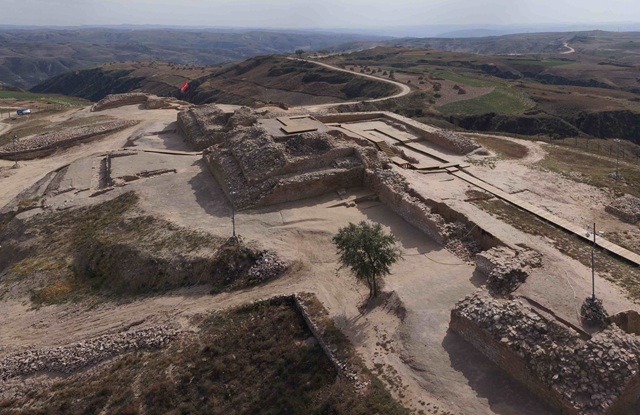
A new study published in Nature on November 26 has offered the most comprehensive look yet at the people of Shimao, a vast and socially complex late Neolithic settlement in northern Shaanxi. Through high-resolution ancient DNA analysis spanning 169 individuals, researchers have pieced together a detailed picture of Shimao’s ancestry, social structure, and ritual behavior. The findings reveal strong genetic continuity with local groups, surprising connections to distant populations, and a gender-specific pattern in sacrificial practices that challenges long-standing archaeological assumptions.
The research team, led by Prof. FU Qiaomei of the Chinese Academy of Sciences in collaboration with the Shaanxi Provincial Academy of Archaeology, spent 13 years collecting and sequencing samples from Shimao and surrounding regions. Their analysis shows that the Shimao population descended primarily from communities associated with the early Yangshao Culture on the Loess Plateau, suggesting deep cultural and genetic roots in the region. Yet the data also highlight significant interaction with groups linked to the Taosi Culture in southern Shanxi, with steppe Yumin-related peoples, and with southern rice-farming communities. These connections point to long-distance exchange networks between farming and pastoral societies during prehistoric China’s formative period.
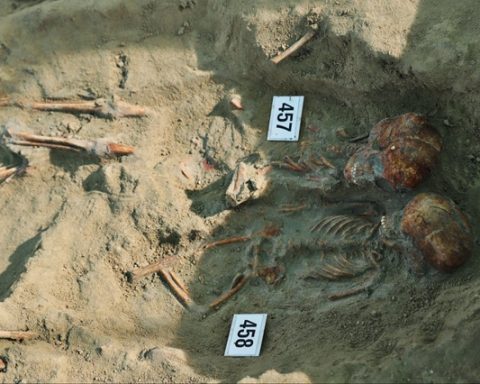
The Shimao site itself, dating to roughly 4200–3700 years before the present, covers around four square kilometers and displays clear evidence of social stratification. Monumental stone architecture, specialized functional zones, and elite burial areas all indicate an organized society with emerging state-level features. But perhaps the most striking discoveries relate to ritual sacrifice. Around 80 human skulls were unearthed at Shimao’s East Gate, representing one of the largest pre-Shang sacrificial assemblages in China. Contrary to earlier hypotheses that women made up the majority of sacrificial victims, the new genetic analysis shows that nine out of ten individuals in these mass burials were male. In contrast, female sacrificial remains were found primarily in elite cemeteries such as Huangchengtai and Hanjiagedan. This pattern suggests a deliberate gendered logic in Shimao’s ritual system, with men and women assigned distinct symbolic roles in different ceremonial contexts.
The genetic evidence goes further, revealing detailed family pedigrees stretching across four generations. The population followed patrilineal descent and patrilocal residence, pointing to a society organized around male lineage continuity and stable household structures. These findings offer a rare glimpse into the mechanisms of power inheritance and elite formation in early East Asian societies, providing direct genetic data where previously only archaeological interpretation existed.
Together, the results portray Shimao as a culturally dynamic yet locally rooted settlement with extensive external interactions. They also revise our understanding of ritual practice, demonstrating that large-scale male sacrifice played a central role in the site’s ceremonial life. Beyond deepening knowledge of Shimao itself, the study provides valuable evidence for how complex social hierarchies, kinship systems, and early forms of political authority emerged in the late Neolithic period, marking a significant step forward in tracing the origins of early states in East Asia.