Argentina has announced plans to declassify government documents related to Nazi fugitives who fled to the country after World War II, shedding light on a long-secret chapter of its history.
The move was confirmed by President Javier Milei’s chief of staff, Guillermo Francos, during an interview with TV channel DNews. Francos stated that Milei made the decision after meeting with US Senator Steve Daines, who urged Argentina to release the classified files.
“There is no reason to withhold information,” Francos said, adding that most of the documents are stored in the Defense Ministry and include details on financial transactions involving Swiss banks.
Following Germany’s defeat in World War II, an estimated 10,000 Nazi fugitives escaped Europe through clandestine networks known as “ratlines.” Around half of them found refuge in Argentina, which became a key destination due to its historical reluctance to grant extradition requests.
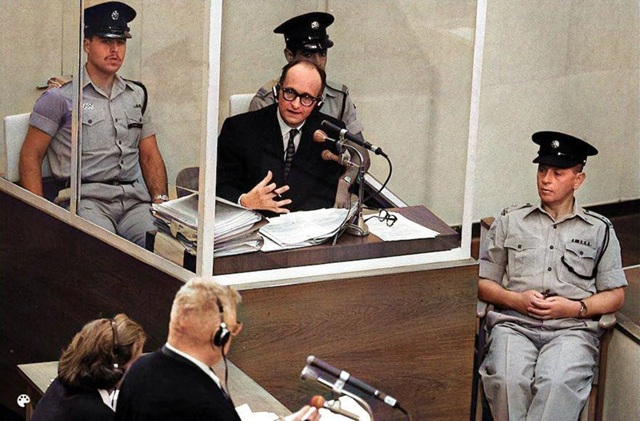
Among the most infamous figures to settle in Argentina were Adolf Eichmann, a chief architect of the Holocaust, and Josef Mengele, the notorious Auschwitz doctor. Eichmann was eventually captured by Israeli intelligence in Buenos Aires in 1960 and taken to Israel, where he was tried and executed. Mengele, however, evaded capture and died in Brazil in 1979.
Most of these fugitives arrived during the presidency of Juan Perón (1946-1955), whose government actively supported Nazi exiles. Perón’s administration, which combined authoritarian and populist elements, has long been accused of having sympathies with fascism.
Milei’s decision to unveil the Nazi files aligns with his broader efforts to increase government transparency. Earlier this year, his administration accelerated the release of documents related to Argentina’s military dictatorship from 1976 to 1983, a period marked by human rights abuses, forced disappearances, and state-led violence.
Presidential spokesman Manuel Adorni emphasized that the declassification of historical records is aimed at preventing political manipulation of Argentina’s past.
“This is about full disclosure,” Adorni said. “The truth should be known, no matter how uncomfortable it may be.”
The forthcoming release of the Nazi fugitive documents is expected to provide long-overdue clarity on Argentina’s role in harboring war criminals and the extent of its postwar financial dealings. It could also reignite discussions on the country’s historical accountability in an era where confronting the past remains as important as ever.