Australia’s largest pension fund, AustralianSuper, announced on Thursday that it will invest an additional A$500 million (US$346 million) in India’s National Investment and Infrastructure Fund (NIIF), expanding its long-term commitment to the country’s infrastructure sector as Indian Prime Minister Narendra Modi visits Australia for high-level political and business meetings.
The new commitment adds to the A$240 million AustralianSuper invested in the NIIF seven years ago. Following the latest investment, the fund said its total investments in India will reach A$3.3 billion, spanning infrastructure, equities and private market assets.
The NIIF, established by the Indian government in 2015, was created to attract global capital for infrastructure development across the country. AustralianSuper said its initial investment in the fund had become one of its strongest-performing infrastructure investments, prompting the decision to increase its exposure.
AustralianSuper manages A$410 billion in assets and has steadily expanded its investment portfolio in India as the country’s economy continues to attract international institutional investors.
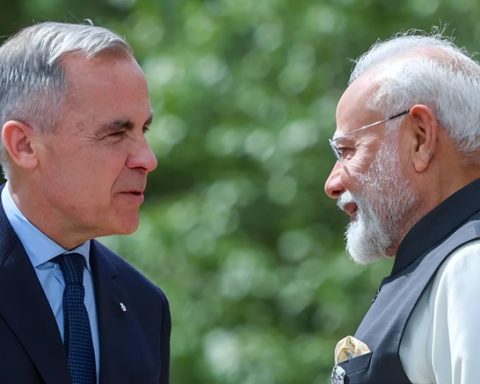
The investment announcement coincided with Modi’s visit to Melbourne, where he is scheduled to meet Australian Prime Minister Anthony Albanese and participate in a business forum with some of Australia’s leading chief executives.
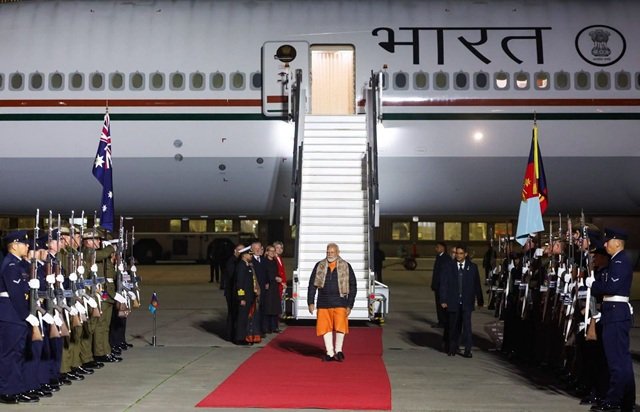
The leaders are expected to discuss a range of issues, including critical minerals, trade, defence cooperation and security. Modi arrived in Melbourne on Wednesday night and received a red-carpet welcome ahead of Thursday’s meetings.
A report by the Australian Financial Review on Wednesday said Australia and India could finalize an agreement on uranium exports during the visit. Although the two countries signed a civil nuclear cooperation agreement in 2014, uranium exports have remained limited because of concerns over ensuring the material is used exclusively for peaceful purposes such as electricity generation.
Asked about a possible uranium export agreement, Albanese told reporters on Wednesday that he would have “more to say about that with Prime Minister Modi.”
“We’ve engaged constructively, and so I look forward to — there’ll be a range of announcements that we make together,” Albanese said.
India is Australia’s fifth-largest trading partner after China, Japan, the United States and South Korea. Around one million people in Australia identify as having Indian ancestry, making the Indian diaspora one of the country’s largest overseas communities.
Later on Thursday, Modi is expected to address thousands of members of the Indian community at one of Melbourne’s largest sports stadiums. Australian media reported that security around the venue had been strengthened following reports of planned protests.
Large public events have become a regular feature of Modi’s overseas visits. During previous trips, he has addressed packed stadiums in countries including the United Kingdom, the United States and Australia. His 2023 visit drew thousands of supporters to a major indoor venue in Sydney.
Modi arrived in Australia after concluding a visit to Indonesia, where he signed several agreements covering agriculture and defence cooperation, including deals involving the BrahMos cruise missile system. He is scheduled to depart for New Zealand on Friday before returning to India.