What began as an excavation in the dry soil of Chemmani has quickly become a development with national importance. The recent discovery of human skeletal remains in the region has created intense public interest, not only because of its archaeological value, but also because of the painful history associated with the area. The findings have once again pushed conversations about war, memory, disappearances, and justice into public discussion across Sri Lanka.
Archaeologists and officials involved in the excavation say the remains were uncovered during carefully supervised digging operations after information suggested that human remains could be buried beneath the site. As workers slowly cleared layers of earth, fragments of bones and skull remains emerged from the ground, attracting immediate attention from experts, residents, and observers following the investigation closely.
The excavation site has now become a place filled with both scientific interest and emotional weight. Images from the area show researchers carefully removing soil around skeletal remains while officials observe the work nearby. Those images have circulated widely among local communities, many of whom see Chemmani as more than just a location. For many people in northern Sri Lanka, the name itself carries memories linked to violence, loss, and unanswered questions from the civil war years.
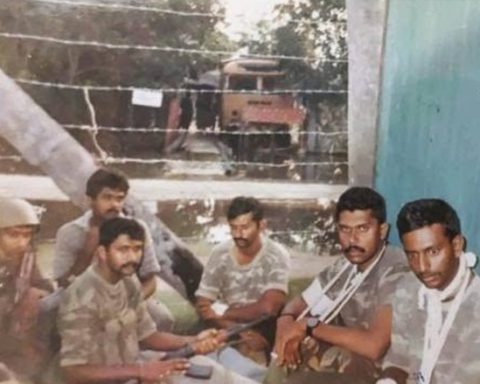
Chemmani holds a difficult place in Sri Lanka’s recent history. During and after the country’s decades-long conflict, the area became linked to allegations of disappearances, hidden graves, and unresolved wartime abuses. Families who spent years searching for missing relatives have long associated the region with grief and uncertainty. Because of this history, any discovery of human remains in the area immediately attracts public concern and emotional reactions.
Officials connected to the excavation have urged the public not to jump to conclusions before scientific examinations are completed. Experts say forensic analysis will be necessary to determine the age and historical background of the remains. Even so, public discussion has intensified rapidly. For families still living without answers about missing loved ones, the excavation has reopened wounds that never fully disappeared.
The digging process is being carried out under official supervision with the involvement of archaeology specialists, technical teams, and legal authorities. Researchers say every item recovered from the site is being carefully recorded and protected according to professional procedures. Soil layers are examined step by step, while each fragment is documented to prevent damage or loss of evidence.
Several skeletal structures have already been identified during the excavation. Experts believe the findings may provide important information not only about recent history but also about older communities that once lived in the region. Northern Sri Lanka contains centuries of buried history, and archaeologists say excavations like this can help reveal parts of the past that remain poorly understood.
Still, Chemmani cannot be separated from the political and emotional realities surrounding it. In Sri Lanka’s post-war environment, discoveries involving human remains often become highly sensitive public issues. Questions surrounding disappearances and accountability continue to shape discussions about reconciliation across the country. Human rights groups have repeatedly argued that many families are still waiting for answers regarding relatives who vanished during the conflict.
Residents gathering near the excavation site have reportedly reacted with a mixture of curiosity, fear, and hope. Some believe the findings could finally provide information about people who disappeared years ago. Others worry that the discoveries may bring back painful memories many have struggled to live with for decades. In places shaped by conflict, even the ground itself can hold stories people are afraid to confront.
The excavation also reflects the important role forensic archaeology plays in societies affected by war and violence. Around the world, the recovery of human remains has often become central to efforts aimed at uncovering hidden crimes, identifying victims, and preserving historical evidence. Similar investigations in countries across Latin America, Africa, and Eastern Europe have shown how burial sites can influence public debates about justice and accountability for years.
Researchers involved in the Chemmani excavation continue to stress the importance of scientific accuracy. Determining the age and origin of skeletal remains requires careful forensic study, laboratory testing, and anthropological examination. Specialists must establish whether the remains belong to ancient settlements, colonial periods, or more recent events connected to Sri Lanka’s civil war. Until that work is completed, experts insist that assumptions should be avoided.
At the same time, the strong public reaction surrounding the excavation shows how deeply the past still affects Sri Lankan society. More than a decade after the war ended, debates surrounding remembrance, accountability, and historical truth remain unresolved. The discovery in Chemmani has therefore become more than an archaeological investigation. It has become part of a larger struggle over how a country remembers its history and deals with painful unanswered questions.
Government officials and investigators have reportedly visited the site to monitor the progress of the excavation. Their involvement reflects growing recognition that discoveries like these carry legal, social, and political importance beyond archaeology itself. In societies recovering from conflict, the search for human remains often becomes connected to broader demands for transparency and public trust.
Meanwhile, archaeologists continue their work carefully, aware that every layer of soil may reveal further evidence. Each fragment recovered from the ground contributes to efforts to piece together histories that may have been forgotten, hidden, or ignored for years.