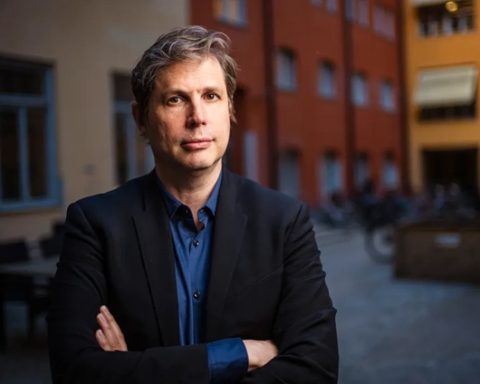
Economist Mariana Mazzucato has called for a fundamental restructuring of capitalism, arguing that economic policy must place public welfare ahead of private profit. In an interview with Der Spiegel, she said governments should establish clear economic objectives that improve people’s everyday lives, rather than rely on broad promises about growth, sustainability and financial discipline.
Mazzucato, 58, teaches at University College London and is known for her research on the role of the state in driving innovation. She advises political leaders internationally and has worked with British politician Andy Burnham. Her latest book, A Capitalism That Benefits Everyone, argues for an economic model in which governments, businesses and communities work towards shared public objectives.
She believes growing social tensions and support for political movements on the extremes of the political spectrum are partly rooted in an economic system that has failed to provide many people with a reasonable standard of living.
People want affordable housing, reasonably priced energy and protection against natural disasters, she said. When rents become unaffordable or people feel they can no longer secure a decent life through work, they take to the streets. The problem, in her view, is that governments have failed to establish specific economic objectives around which society can unite.
Mazzucato argues that public welfare should be defined through practical improvements rather than abstract political slogans. Reducing public debt, for example, is not something most people would identify as a central component of a good life. Similarly, the objective of stopping climate change can appear distant, whereas preventing droughts and floods is an immediate concern with which people can readily identify.
She is also sceptical of corporate commitments to sustainability and social responsibility, describing much of the language used by major companies and political leaders as empty rhetoric. Attending international gatherings such as the World Economic Forum and declaring support for sustainability targets are insufficient, she said, unless governments, businesses, the United Nations and local authorities coordinate their efforts and deliver measurable results.
Her approach places particular emphasis on involving communities directly in decisions affecting their livelihoods. Referring to a recent visit to Brazil’s Amazon region, where she spent a week, Mazzucato said discussions about protecting the rainforest frequently excluded the people living there. Local communities possess valuable knowledge about biodiversity and sustainable land management, yet their expertise is often overlooked.
For her, public welfare requires these communities to participate in decisions about conservation, receive appropriate compensation and have a meaningful role in determining how environmental protection is carried out.
The economist also sees a failure of political communication as one reason progressive parties have struggled against right-wing populists. Referring to the United States, she argued that Joe Biden’s economic policies had generated growth and employment, yet voters still turned to Donald Trump because many felt neglected and believed their concerns were not being heard.
Trump, she said, succeeded in presenting himself as someone who understood ordinary people, even if his claims were largely propaganda. Progressive politicians, by contrast, have often failed to communicate appreciation for people’s concerns or make them feel that economic improvements are reaching their lives.
She sees a similar problem in Britain after 14 years of austerity, which she argues weakened the country and left many people feeling excluded from economic gains. In France and elsewhere, right-wing politicians have also been effective in presenting simple explanations for complex economic problems, particularly through anti-immigration messages.
Mazzucato believes the left has failed to translate its economic arguments into language that ordinary voters can understand. She uses conversations with London taxi drivers to explain why government spending cuts do not necessarily strengthen an economy. Reducing public expenditure can also reduce overall economic activity, she argues, making the relationship between government debt and economic capacity more important than the simple demand to spend less.
Germany offers examples of how public investment can support industrial development, she said. She pointed to the Fraunhofer institutes, which connect scientific research with industry, and the state-owned development bank KfW, which provides loans under conditions that can include environmental requirements. In her view, European countries have failed to learn systematically from one another and coordinate investment priorities, allowing austerity to dominate economic thinking.
She questioned why Germany’s previous government struggled to agree on funding for economic transformation when the current administration has been able to mobilise substantial sums for defence and infrastructure. The earlier dispute between former ministers Robert Habeck and Christian Lindner over environmental transformation and economic growth, she argued, exposed the political choices behind claims that public money was unavailable.
Mazzucato does not oppose increased defence spending, but argues that it should be connected to broader public objectives. Investment should strengthen security, resilience, sovereignty and infrastructure rather than be limited to purchasing weapons. She believes governments need to explain how borrowing and public expenditure will improve people’s lives.
Rejecting the idea that states should manage their finances like private households, she defended borrowing to finance productive investment. Germany’s public debt ratio of 64 per cent, cited during the interview, was not in itself alarming, she said. The more important question is how borrowed money is used.
She acknowledged that financial markets can penalise governments for poor economic decisions, pointing to Britain and France as examples of the risks associated with unsound fiscal policies and rising borrowing costs. But she argued that investment in innovation, education, productive capacity and economic growth should be distinguished from spending that simply redistributes resources without creating additional wealth.
She also rejected the argument that economic growth itself is the problem. Without growth, she said, there is less wealth available to distribute. Expanding productive capacity through an effective industrial strategy can help governments finance investment without generating the inflationary pressures associated with creating money without corresponding increases in output.
Her sharpest criticism was directed at the technology industry, which she accused of appropriating the benefits of publicly financed scientific research while resisting obligations to society. She described technology executives as being like members of the mafia, arguing that major companies had built enormous fortunes from inventions made possible by government-funded basic research.
Mazzucato accused technology companies of failing to contribute fairly through taxation or other public commitments. She also criticised the environmental consequences of commercial space activity, singling out Elon Musk and the accumulation of debris in orbit.
For her, the expansion of artificial intelligence makes the question of who benefits from technological progress particularly urgent. If the economic gains generated by new technologies are concentrated among a small number of companies and investors, the broader population may see little improvement in its living standards.
She believes reform remains possible, but only if governments stop treating the state as an institution whose primary responsibility is to correct market failures. Instead, public authorities must help shape markets around clearly defined social and economic objectives.
Mazzucato pointed to New York Mayor Zohran Mamdani as an example of a politician who communicates public policy through practical improvements, such as repairing roads and filling potholes, rather than presenting infrastructure as an abstract political issue. She also praised Burnham’s willingness to listen to people’s experiences instead of imposing solutions from above.
Her central argument is that a different form of capitalism requires more than declarations of good intentions. Governments must establish priorities, direct investment towards them and ensure that the benefits of economic development are shared more widely.