by Durga Velayudham
Katie Stallard’s Dancing on Bones: History and Power in China, Russia, and North Korea offers a penetrating examination of how autocratic regimes manipulate historical narratives to consolidate and perpetuate their rule. With meticulous research and a narrative style that interweaves personal encounters and academic rigour, Stallard presents an unsettling yet profoundly enlightening account of the intricate ways in which history is weaponised by authoritarian leaders.
The book begins with a striking quote from Orwell’s Nineteen Eighty-Four, “Who controls the past controls the future; who controls the present controls the past,” setting the tone for an inquiry into the control and distortion of collective memory. Stallard draws readers into the narrative through vivid depictions of pivotal moments, such as the annexation of Crimea, where “masked men patrolled the streets with assault rifles,” offering a visceral glimpse into the interplay between history and geopolitical strategy.
Central to Stallard’s thesis is the argument that historical narratives are not merely tools of education or remembrance but instruments of power. In Russia, Vladimir Putin’s elevation of the Great Patriotic War as a sacred cornerstone of national identity is emblematic of this approach. By invoking the memory of 1945, Putin “reclaims” Crimea and frames contemporary political struggles as an extension of past victories against fascism, reinforcing his regime’s legitimacy. The proliferation of symbols, such as the St. George ribbons and glorified narratives of Soviet triumphs, aligns with Stallard’s assertion that history is not static but a malleable construct serving present needs.
Similarly, China under Xi Jinping has expanded its official narrative of World War II, extending the conflict’s duration to fourteen years to underscore the Communist Party’s role as a stalwart defender of Chinese sovereignty. As Stallard notes, this narrative serves a dual purpose: it bolsters the party’s credentials while delegitimising any dissent as historical nihilism. Such efforts are not confined to the past; they are deeply interwoven with contemporary policies, from territorial claims in the South China Sea to crackdowns on dissenting voices.
Nowhere is the manipulation of history more evident than in North Korea, where the Kim dynasty has crafted an almost mythical narrative of liberation and resistance. The book’s chapter on the Demilitarised Zone (DMZ) provides a stark illustration of how the Kim regime sustains its grip on power. Stallard recounts her visit to the DMZ, where a North Korean officer presented a fabricated account of the Korean War, portraying the North as a victim of imperialist aggression. This narrative, Stallard explains, is deeply embedded in the North Korean psyche through a combination of education, propaganda, and severe restrictions on alternative viewpoints.
The regime’s myth-making extends to the portrayal of Kim Il Sung as a guerrilla hero who single-handedly liberated Korea from Japanese rule. Stallard exposes the stark contrast between this hagiography and historical records, which reveal a far more modest role played by Kim. Yet, as she astutely observes, “The truth of these stories matters less than their utility in sustaining the regime.”
While Stallard’s focus is on authoritarian regimes, her analysis carries implications for democracies as well. The invocation of historical narratives to galvanise support is not unique to autocracies. Stallard reminds us of the Brexit campaign in the United Kingdom, where appeals to wartime resilience were used to frame the debate, and of Donald Trump’s “1776 Commission,” which sought to assert a particular vision of American history. Such examples underscore the universality of the impulse to shape collective memory for political ends.
What distinguishes the regimes Stallard examines, however, is the extent to which they suppress dissent and enforce uniformity in historical interpretation. In Russia, historians challenging the official narrative face legal repercussions; in China, questioning the party’s role in the Second World War is tantamount to treason. North Korea’s control is even more absolute, with dissent rendered almost unimaginable. Stallard’s insights thus serve as a cautionary tale about the fragility of historical truth and the perils of its monopolisation.
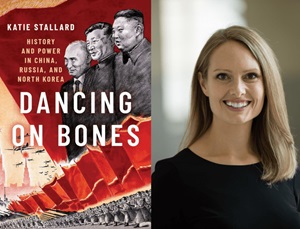
Stallard’s background as a journalist lends the book a vivid immediacy. Her on-the-ground reporting, from Crimea to Pyongyang, provides compelling anecdotes that humanise the broader political analysis. Her encounter with Crimean checkpoint guards, who justified their actions with references to Soviet sacrifices during World War II, illustrates the pervasive reach of manipulated historical narratives.
The book’s scholarly foundation is equally robust. Drawing on primary sources, interviews, and a wealth of secondary literature, Stallard constructs a multi-faceted argument that is as accessible as it is erudite. Her ability to synthesise complex historical and political phenomena into a cohesive narrative is a testament to her skill as both a writer and a thinker.
If there is a limitation to Dancing on Bones, it lies in its relative brevity. The scope of the book is vast, encompassing three distinct regimes and decades of historical manipulation, yet some sections leave the reader yearning for more depth. For instance, the discussion of China’s historical revisionism could benefit from a deeper exploration of domestic resistance to the official narrative.
Nonetheless, this does not detract significantly from the book’s overall impact. Stallard’s work is a timely and important contribution to our understanding of how history is wielded as a tool of power. Her concluding argument, that “to understand where these countries are heading, we must understand the stories they are telling their citizens about the past,” resonates powerfully in an era where the past is increasingly contested.
In Dancing on Bones, Katie Stallard has produced a work of remarkable insight and relevance. Through meticulous analysis and evocative storytelling, she illuminates the ways in which history is co-opted to serve the interests of those in power. At once a study of authoritarian regimes and a broader meditation on the nature of historical memory, this book is essential reading for anyone seeking to understand the intersection of history, politics, and power in the modern world. As Stallard warns, “The past, as those in power need it to be, will remain a battleground for the future.”