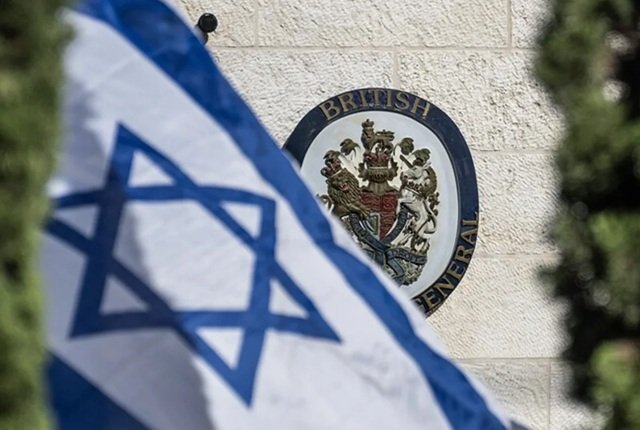
Britain has formally closed its nearly 200-year-old consulate in East Jerusalem following pressure from Israel, marking a new low in relations between the two countries over British sanctions against Israeli settlements in the occupied West Bank. The consulate’s work will continue on a reduced scale under the name “UK Mission”, a compromise intended to avert a wider diplomatic crisis between the two allies.
The closure followed a 30-day deadline imposed by Israel on the government in London, which expired on Thursday. Israel’s move was prompted by British sanctions against settlements in the occupied West Bank, including a ban on trade in goods produced in the Palestinian territory. Rather than ending its presence entirely, Britain has agreed to reduce the formal status and scope of its operations in East Jerusalem.
The consulate first opened in 1839, more than a century before the establishment of the state of Israel in 1948. Until the latest change, it was responsible for Britain’s relations with Palestinians in Jerusalem, the West Bank and the Gaza Strip, as well as providing consular services to them. The British embassy in Tel Aviv is unaffected by the decision, leaving Britain’s principal diplomatic representation to Israel in place.
The distinction between the East Jerusalem consulate and the embassy in Tel Aviv is significant to the diplomatic dispute. The consulate served as Britain’s principal point of contact with Palestinians across the occupied Palestinian territories, while the embassy in Tel Aviv handles Britain’s diplomatic relations with Israel. The new arrangement preserves a British presence in the consulate building but reduces its formal standing and operating capacity.
Israeli Foreign Minister Gideon Sa’ar announced that the consulate would formally cease its activities, although an agreement would allow some British diplomats to continue working from the premises. The arrangement reflects an effort to accommodate Israel’s demand without completely dismantling Britain’s diplomatic engagement with Palestinians in Jerusalem and the surrounding territories.
The dispute has developed amid repeated British criticism of Israel’s conduct in the war in Gaza and attacks by Israeli settlers against Palestinians in the West Bank. The British government has also taken action against settlements through sanctions, including restrictions on trade in goods produced there. Israel’s response has brought those disagreements into direct conflict with the status of a diplomatic institution that has operated in Jerusalem since the nineteenth century.
British Foreign Secretary Ed Miliband argued that Israel had no right to close the consulate. His objection centres on the status of East Jerusalem, which Israel captured during the Six-Day War in 1967 and subsequently annexed. Most countries around the world have not recognised that annexation. The adjoining West Bank is also occupied territory, and its occupation is widely regarded internationally as contrary to international law.
Despite that international position, Israel has continued expanding settlements in the West Bank. The European Union has also imposed sanctions on Jewish settlers, reflecting broader international opposition to settlement-related activities. Britain’s restrictions have become a particular point of contention with the Israeli government, which has responded by targeting the status of the East Jerusalem consulate.
The closure comes as Israeli Prime Minister Benjamin Netanyahu leads a government that includes far-right elements and is campaigning ahead of an election. The dispute therefore unfolds at a politically sensitive moment for Israel, while Britain’s criticism of Israeli policies has added strain to a relationship between countries that remain allies.
The decision does not amount to a complete withdrawal of British diplomatic personnel from East Jerusalem. Under the compromise, some diplomats will continue working in the building, and the operation will retain the name UK Mission. However, the formal closure of the consulate marks a change in the institutional arrangements through which Britain has maintained relations with Palestinians in Jerusalem, the West Bank and Gaza since 1839.
The British embassy in Tel Aviv will continue operating without changes resulting from the dispute, while the reduced UK Mission in East Jerusalem will carry on some of the work previously conducted by the consulate.