


Britain’s defence establishment is once again confronting uncomfortable questions about the price of its air power ambitions, as officials prepare a long-delayed Defence Investment Plan that is expected to force difficult choices about major military programmes. According to the Telegraph UK, the Government has signalled there will be no additional funding for defence, with budgetary pressures instead tied to domestic welfare commitments. That constraint is now driving scrutiny of some of the most expensive and politically complex projects in the UK’s military portfolio, including the Global Combat Air Programme (GCAP), which is intended to deliver the next-generation Tempest fighter jet in partnership with Italy and Japan.
At the heart of the debate is a growing argument inside defence circles that Britain may need to abandon or scale back parts of its most ambitious air combat programme in order to preserve broader military capability. The Defence Investment Plan, which follows last year’s Strategic Defence Review, is expected to require substantial cuts and efficiency savings if it is to align with existing funding limits. Some policymakers and commentators argue that high-cost, long-term aerospace projects are precisely the kind of commitments that may have to be reconsidered if the armed forces are to prioritise emerging technologies such as drones and more flexible combat systems.
The proposed scrutiny of the Tempest programme is not occurring in isolation but against a backdrop of decades of controversy over Britain’s combat aircraft procurement. The current Eurofighter Typhoon, which entered RAF service in the mid-2000s, has long been criticised for its high cost and delayed development. It followed the earlier Tornado programme, itself developed in partnership with European allies, which has become emblematic for critics of Britain’s reliance on multinational defence collaborations that often overrun budgets and underdeliver operational capability in their early years.
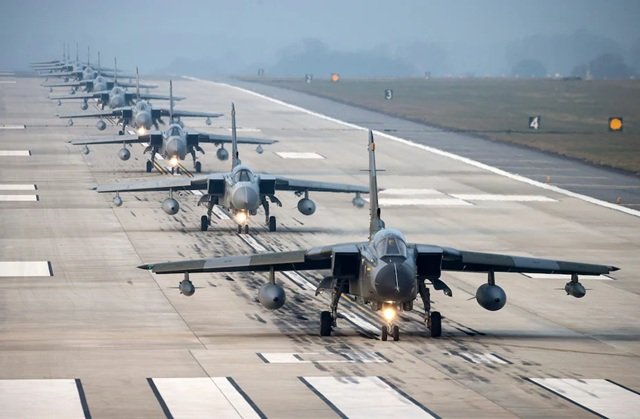
The Tornado, particularly the GR variant, was designed as a low-level strike aircraft capable of penetrating enemy airspace at high speed. However, its operational record has been widely debated. During the 1991 Iraq conflict, losses among Tornado aircraft raised questions about whether its design philosophy was suited to modern air defence environments. Critics have since pointed to its complexity and cost, including its variable-geometry wings, as an example of engineering ambition that delivered diminishing returns in real-world combat conditions.
When the Typhoon programme emerged as its successor, it was intended to represent a leap forward in capability. Yet its development was marked by delays stretching over more than a decade, with aircraft entering service significantly later than initially planned. By the time the Typhoon became operational with the Royal Air Force in 2007, it was already being compared unfavourably with US fifth-generation fighters such as the F-22 Raptor, which had been in service for several years. Analysts cited by Telegraph UK have repeatedly argued that the Typhoon’s long gestation period left it technologically behind emerging global competitors even before it reached full operational maturity.
Further controversy followed decisions in the 2010 Strategic Defence Review, which saw the retirement of the Harrier jump-jet and the scaling back of Britain’s aircraft carrier strike capability. At the time, officials argued that the move was necessary for cost efficiency. However, subsequent operations, including the intervention in Libya under Operation Ellamy, exposed limitations in Britain’s strike aviation capacity. RAF Tornado aircraft were required to fly long distances from bases in the UK or Cyprus to reach operational theatres, in contrast to allied forces such as France, which operated carrier-based aircraft closer to the conflict zone, significantly reducing transit time and increasing operational efficiency.
The Typhoon itself was also intended to provide a multi-role capability, including ground attack functions, but this transition proved slower and more complex than expected. Although upgrades were introduced, reports and official assessments indicated that operational readiness for sustained strike missions lagged behind expectations for many years. In practice, older Tornado aircraft continued to shoulder a disproportionate share of combat missions in Afghanistan, Libya, and later operations against Islamic State, despite their ageing design and increasing maintenance burden.
Criticism of the broader Eurofighter programme has also focused on its cost structure. Each aircraft is estimated to have cost well over £200 million in acquisition terms when adjusted for contemporary valuations, making it one of the most expensive tactical aircraft programmes ever undertaken. Despite producing a large fleet on paper, operational availability has often been lower than expected, with a portion of aircraft grounded at any given time due to maintenance demands or cannibalisation for spare parts.
These long-running issues have fuelled wider questions about accountability within the defence procurement system. A 2011 National Audit Office report highlighted structural weaknesses in programme oversight, noting that responsibility for the Eurofighter project was dispersed across multiple roles within the Ministry of Defence, making it difficult to assign clear accountability for delays and cost overruns. The same period saw senior RAF leadership managing overlapping responsibilities for capability development, operational deployment, and procurement oversight, a structure critics argue contributed to blurred lines of responsibility.
More recently, comparisons between the Typhoon and newer aircraft such as the US F-35A have intensified debate about value for money. Analysts cited in defence discussions reported by Telegraph UK suggest that the F-35A has lower per-hour operating costs despite being a more advanced stealth platform. This has prompted claims that continued reliance on Typhoon may represent a long-term financial inefficiency, particularly if sustained over decades of service life.
The implications of these comparisons are now feeding directly into discussions about GCAP and the future Tempest fighter. Supporters of the programme argue that it is essential for maintaining sovereign combat air capability and for ensuring Britain remains a leader in advanced aerospace technology. However, sceptics warn that it risks repeating the cycle of escalating costs, delays, and shifting requirements that have characterised previous multinational jet programmes.
As Britain prepares to commit to its next generation of combat aircraft, the debate reflects a broader strategic dilemma: whether to continue investing in increasingly expensive high-end platforms developed with international partners, or to redirect resources toward emerging systems that may offer greater flexibility at lower cost. With defence budgets constrained and political priorities divided, the future of the Tempest programme has become a focal point in a wider reassessment of how the country should prepare for modern warfare.
What remains clear is that the decisions made in the coming Defence Investment Plan will not only determine the fate of GCAP, but also shape the direction of British air power for decades to come.










