Britain operated a vast covert propaganda apparatus during the Cold War that manipulated international media, forged political material, and secretly influenced journalists across Europe, Africa, Asia, and the Middle East, according to newly declassified government files highlighted by UK Declassified. The files expose how the British state weaponised information through fake organisations, planted stories, and psychological warfare campaigns aimed at weakening enemies and protecting strategic interests during one of the most tense geopolitical periods of the twentieth century.
The documents originate from the Information Research Department, or IRD, a secret anti-communist propaganda division housed inside the Foreign Office between 1948 and 1977. Hidden within the IRD was an even more secretive branch known as the Special Editorial Unit, or SEU, which worked closely with MI6 and specialised in covert “black propaganda” operations. These activities included the creation of fictitious organisations, forged publications, anonymous political leaflets, and manipulated news stories designed to influence governments, journalists, and populations around the world.
The newly released files reveal a far broader and more systematic British propaganda campaign than previously understood. Historians examining the archive describe the SEU as a sophisticated engine of state-sponsored deception, capable of covertly shaping international narratives while maintaining plausible deniability for ministers and intelligence officials. The operations targeted communist states, anti-colonial leaders, liberation movements, and even Western political debates deemed threatening to British strategic interests.
One of the SEU’s central methods was the covert control of supposedly independent news agencies. Internal files referred to these organisations as “controlled outlets.” Among them were Near and Far East News, the Guardian of Liberty, Lion Features, and World Feature Services. Though they appeared to function as legitimate journalistic organisations, they were secretly operated from Whitehall and filled with propaganda content crafted by British officials.
These outlets distributed stories across Asia, Africa, and the Middle East. Near and Far East News circulated heavily in India, Pakistan, Ceylon, Japan, and Malaysia, while Lion Features reached newspapers and radio stations throughout Africa. Internal reports show that as many as 80 African newspapers relied on Lion Features material in 1972 alone. To maintain credibility, the agencies mixed ideological articles attacking Soviet influence with softer content about health, sport, geography, and women’s affairs. Officials described this tactic as a way to “sweeten the pill” and preserve the appearance of genuine journalism.
The files also show that the SEU cultivated relationships with respected journalists and editors across Europe. One of its most important assets was an unnamed “Journalist in Vienna,” described as a well-connected correspondent covering Soviet and Eastern European affairs. British officials regularly supplied him with pre-written articles based on intelligence material, which he then published under his own name in major European newspapers. Between late 1972 and 1973 alone, he reportedly placed more than 200 SEU-produced stories into Swiss publications, including internationally respected newspapers.
Those articles were then amplified through other outlets across Europe and even reached China, where some reports were rebroadcast. British officials celebrated what they called the “multiplier effect” created when planted stories moved organically through international media ecosystems. Other contacts included Reuters correspondents, Austrian television journalists, and editors tied to the German Springer media group.
The files further reveal how propaganda campaigns extended beyond journalism into direct forgery and disinformation. The SEU forged documents attributed to Soviet organisations and fabricated political material designed to provoke distrust, racial tension, and geopolitical friction. According to internal records, these operations were used selectively when officials believed ordinary propaganda could not achieve the desired impact.
One forged campaign involved fake Soviet documents criticising China during the Sino-Soviet split. Another operation created fabricated material supposedly originating from the Soviet news agency Novosti. In one case, British propagandists distributed forged booklets attacking the Lumumba Friendship University in Moscow, claiming foreign students there suffered discrimination and academic failure due to alleged Soviet racism and incompetence. The material was sent across developing countries and targeted particularly at the Middle East in an effort to discourage Arab students from studying in the Soviet Union.
The archives also expose Britain’s attempts to exploit racial and religious tensions for strategic gain. In 1964, Foreign Secretary Patrick Gordon Walker reportedly suggested using African perceptions of the Chinese to undermine solidarity between newly independent African nations and Beijing. Officials discussed researching racial attitudes in Africa to weaken political alliances emerging during decolonisation.
Prominent anti-colonial leaders became major targets of British covert propaganda. Egyptian president Gamal Abdel Nasser faced campaigns portraying him as expansionist and overly aligned with the Soviet Union despite his Islamic identity. Indonesian president Sukarno was targeted with propaganda attempting to inflame tensions between Indonesia and the wider Muslim world. One operation distributed leaflets depicting Sukarno alongside Adolf Hitler and Benito Mussolini.
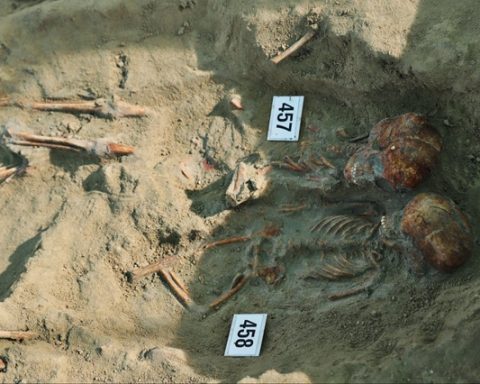
Perhaps most disturbing are revelations surrounding Indonesia during the mid-1960s. British propagandists circulated anti-communist leaflets urging that the “communist cancer” be eradicated, helping inflame a political climate that culminated in mass killings following the rise of General Suharto. Historians and journalists later described those massacres as among the worst episodes of political violence in the twentieth century. Internal British documents reportedly praised Indonesian military and police forces for their role during the bloodshed.
Ghanaian leader Kwame Nkrumah was another central target. British officials sought to undermine his government by spreading anonymous material accusing his allies of corruption and foreign manipulation. Prime Minister Alec Douglas-Home personally encouraged covert leaks that could not be traced back to Britain. The aim, according to one IRD assessment, was to create conditions in which Nkrumah could be removed and replaced by a more Western-oriented leadership. Nkrumah was eventually overthrown in a military coup in 1966.
The propaganda network also intervened in European political disputes. During the Cod Wars between Britain and Iceland, the SEU distributed articles suggesting Soviet and Chinese interests were influencing Icelandic policy. Other operations focused on weakening communist parties in Italy and Portugal and discrediting Euro-Communist movements across Western Europe.
Despite its secrecy, the IRD was eventually shut down in 1977 during Harold Wilson’s Labour government amid budget cuts, détente, and growing uncertainty over its overlap with intelligence services. Yet the newly declassified records suggest Britain’s covert information warfare capabilities did not disappear. Some activities reportedly continued under a successor body called the Special Production Unit.
The release of the files has reignited debate about the ethics of state propaganda and the manipulation of global media by democratic governments. For critics, the archives demonstrate how Britain systematically blurred the line between journalism, intelligence, and psychological warfare while publicly championing freedom of information and democratic values abroad.
More than four decades after the IRD’s closure, many parts of the SEU’s work remain classified. The surviving files, however, offer one of the clearest windows yet into a hidden machinery of deception that shaped Cold War politics far beyond Britain’s borders.