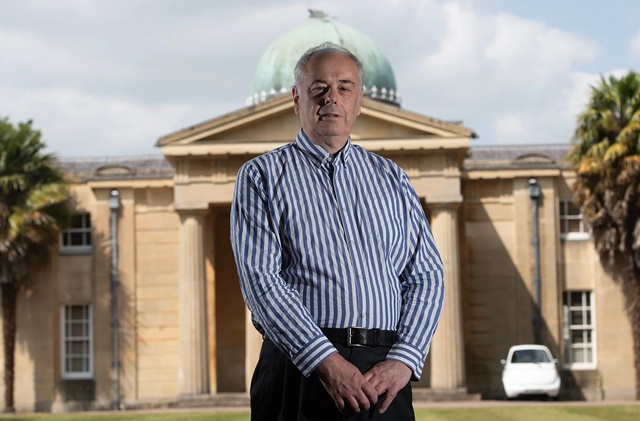
Older academics at Cambridge University are reportedly blocking research grants for younger colleagues due to jealousy, according to Wyn Evans, a professor of astrophysics and candidate for the university’s next chancellorship.
Speaking in an interview with The Times UK, Evans highlighted a little-discussed aspect of free speech on campus: that young scholars, especially in the arts and humanities, can find promising research avenues stifled by senior academics within their own departments.
“Freedom of speech often comes up in this context in universities, although it’s not much discussed, that young academics can find promising avenues of exploration blocked by more senior figures,” Evans said. He described the situation as “very coercive,” where senior academics resent the prospect of younger colleagues receiving prestigious grants and sharing departmental space.
Evans criticized Cambridge’s approach to university governance, advocating for a return to a model of self-governing scholarly communities rather than “administrative oligarchies.” He also condemned the university’s recent use of legal powers to prevent pro-Palestine student protests, affirming students’ rights to peaceful demonstration and comparing them to historic movements such as opposition to the Vietnam and Iraq wars.
The chancellorship election, due to be held later this month, features several candidates including television presenter Sandi Toksvig, businesswoman Gina Miller, former BP chief Lord Browne of Madingley, and former culture secretary Lord Smith of Finsbury. For the first time since 1950, the contest will be decided partly through online voting, open to all Cambridge graduates holding degrees higher than a bachelor’s.
Evans is also campaigning for greater protection for staff on precarious fixed-term contracts, lamenting that two-thirds of Cambridge staff are not permanently employed, which includes many undergraduate supervisors. The university disputes this figure, stating about one-third of staff are on fixed-term or open-ended contracts.
He pointed to the increasing difficulty faced by young academics in Cambridge, a city with a high cost of living, and criticized the growth in administrative jobs at the expense of academic positions over the past decade. “We should be raising money on university assets to invest in new jobs for younger academics to explore fresh fields,” Evans argued.
Cambridge recently voted to increase its retirement age from 67 to 69 in an effort to open up roles for younger scholars, though this move faced opposition from some senior academics reluctant to retire.
Evans’s comments raise fresh questions about how internal politics and resource distribution affect academic freedom and career development at one of the world’s leading universities.