U.S. officials had an “unusual” degree of concern about the “potential ecological and social impacts” of the Camisea natural gas pipeline in Peru, according to declassified documents published today by the National Security Archive. The new Electronic Briefing Book consists of records on the initial stages of U.S. government financing for the massive and controversial international development project that first began production 20 years ago in 2004.
The documents shed light on the viewpoints of various actors involved in the project, including U.S. and Peruvian officials, multilateral development banks, private-sector sponsors, and NGOs, at a time when the George W. Bush administration was promoting contentious energy policies that emphasized the development of new sources at the expense of environmental concerns. The records illustrate the strategies, pressures, and leverage some U.S. officials used to try to mitigate the project’s significant environmental and social risks even as the Peruvian government argued that “any setback” in the project would “undermine” efforts to strengthen democracy in Peru.
The Camisea Gas Project–hailed as the country’s most ambitious energy project and crucial to Peru’s economic development–has, from its inception, devastated one of the most environmentally sensitive regions in the world. Located in the Peruvian Amazon rainforest, the pipeline’s construction and operations over the last two decades have significantly disrupted the biodiverse Amazonian ecosystem and violated the rights of uncontacted indigenous groups.
The project was met with immediate backlash by environmental and indigenous rights organizations, which argued that the pipeline would have “negative irreversible impacts.” A series of documented violations committed in the early stages of construction were discussed at length by U.S. officials. However, such concerns were being weighed against the potential benefits of Camisea; U.S. officials saw the exported liquified natural gas as a potential source of new clean energy that could help reduce air pollution in western cities.
An initial round of financing from the United States was being considered by the Export-Import Bank of the United States (Ex-Im) and the Inter-American Development Bank (IDB). The U.S. government effectively had two opportunities to express financial support for the pipeline project, and this “dual vote” also provided the chance to use the possibility of U.S. financing as leverage to gain cooperation on environmental and social oversight mechanisms. These internal deliberations produced mixed results: In August and September 2003, Ex-Im voted against funding the project, and the U.S. chose to abstain on the IDB loan, which was approved. While concerns about the environmental and social impacts meant the U.S. could not offer its full support, the abstention ultimately provided a tacit and indirect approval of the pipeline’s operations.
The documents posted today were first obtained under the Freedom of Information Act (FOIA) by the National Security Archive’s IFTI Watch Project, which reported on the openness practices of the global institutions that make the rules for finance, trade, and economic development.
Early Privatization Efforts
Peru was rocked by political instability and violence throughout the 1980s and 1990s. Both the state security forces and insurgent groups committed grave human rights abuses resulting in the deaths of approximately 70,000 Peruvians over two decades of conflict. President Alberto Fujimori, who led a ten-year authoritarian regime, fled the country in 2000 following mounting accusations of government corruption. Amidst the social unrest was an ever-worsening economic landscape, which was evaluated by the U.S. Embassy in Lima just six months before Fujimori’s ouster. In assessing the country’s principal energy issues, the embassy attributed Peru’s growing crude oil production deficit in part to a “dwindling interest in oil exploration” by foreign companies. The government’s unsuccessful attempts to privatize state assets and its recurrent intervention in the energy sector, coupled with multiple decades of political and social turbulence, had thoroughly discouraged foreign investment, according to the embassy.
Following a brief interim government, Alejandro Toledo of the “Peru Posible” party was elected president in historic democratic elections on June 3, 2001. Toledo was an outspoken advocate for liberal economic policies, and his administration set out to encourage foreign investment and achieve the full privatization of state assets. The Camisea Gas Project soon became emblematic of Toledo’s political legacy and was lauded as a solution to the country’s continuing social and economic instability.
Throughout Toledo’s term in office, his administration encouraged the U.S. government’s active participation in, and support of, Camisea. In October 2002, Anthony Wayne, the U.S. Assistant Secretary of State for Economic and Business Affairs, met with Jaime Quijandría Salmón, Peru’s Energy and Mines Minister, during the Andean Regional Trade and Investment Conference in Lima. Quijandría Salmón stressed to Wayne the importance of the Camisea project to President Toledo, particularly given that Peru’s “troubled” electricity sector was then facing “substantial political opposition” amidst planned privatizations. Another, unidentified, source had told Wayne that “regional populations have conflated the ideas of resource distribution and corruption, based on the unhappy past history of corrupt privatizations under Fujimori.” (Document 7) Opposition to the privatization of various public sectors continued to grow, and in early June of 2003, Peru’s Congress voted against the sale of the state oil company Petroperú.
While the Peruvian government was facing complications in their efforts to attract private investment and reverse the country’s oil production decline, officials from the Toledo administration took an increasingly antagonistic stance against criticism of the Camisea pipeline project. In a meeting with President Bush in December 2002, Peru’s Ambassador to the United States, Roberto Dañino, told Bush that opposition to the project was coming from “radical environmentalist groups.” Given the intense international scrutiny the pipeline was receiving at the time, the reductive response from a Peruvian government official to President Bush indicates an attempt to minimize the gravity of the issues. (Document 10) This defensive tactic was also employed by other leaders in the region, most notably Ecuador’s outgoing president, Gustavo Noboa. His country’s Oleoducto de Crudos Pesados (OCP) pipeline was facing immense pressure from environmental groups, and investors were considering walking back their financing. Noboa considered the project to be a central achievement of his administration and accused environmentalists of “sabotaging” Ecuador’s economic development.
In their dealings with international investors, the Peruvian government repeatedly associated the Camisea project with the reinforcement of democratic ideals. Minister Quijandría Salmón wrote a letter in June 2003 to the President and Chairman of the U.S. Export-Import Bank, Philip Merrill–a close associate of Vice President Cheney–pleading Peru’s case for the bank’s financing of a segment of the project. The letter highlights the increasing desperation of the Toledo administration for U.S. financial backing, with Quijandría Salmón equating Camisea’s success to “the strengthening process of the Peruvian democracy.”
Convincing international financial institutions of the security of their investment in Camisea proved more difficult after 71 pipeline workers were kidnapped by armed fighters on June 9, 2003. Though the hostages were released to the Peruvian Army within two days, the highly publicized event brought additional scrutiny to the pipeline’s construction and the country’s continuing instability, with rumors that the Shining Path guerrilla group was behind the kidnappings. The military increased their security presence in the area as a result, and it was reported that “special elite armed squadrons” would be installed near the pipeline. Peru’s Vice President Raúl Diez Canseco publicly stated that the government was “adamant on preventing any event that might jeopardize badly needed investment in Peru.”
The Camisea Consortia
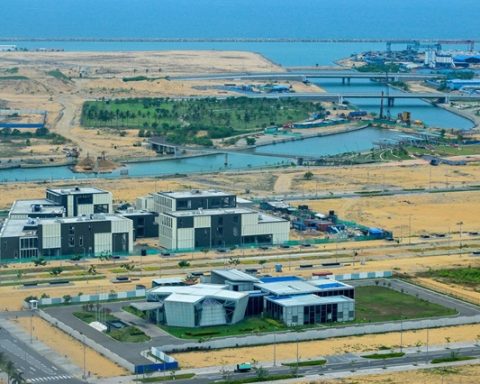
The Camisea Gas Project had three components: the “Upstream Project” which consisted of gas exploration and extraction at four drilling platforms in the Urubamba Valley in Block 88; the “Downstream Project” which consisted of two pipelines that transport gas from the Urubamba Valley to the coast of Peru and included the post-production of crude oil and natural gas; and the “Distribution Project,” which included two processing and distribution systems on the coast near Lima, one of which was built within the buffer zone of the National Paracas Bay Reserve, a protected marine ecosystem.
In 2000, the Peruvian government awarded the Camisea Project to two relatively inexperienced consortia, one for the Upstream segment and one for the Downstream segment. The Upstream consortium was led by the Argentine energy firm Pluspetrol and included Texas-based Hunt Oil, SK Corporation (South Korea), and Tecpetrol (owned by Argentina’s Techint). The Downstream consortium was led by Transportadora de Gas del Perú (TGP) and included Pluspetrol, Hunt, SK, and Techint. Construction of the Paracas Bay gas processing plant was later contracted by a subsidiary of Halliburton, a U.S.-based energy services company. Both consortia had ties to the George W. Bush administration: Hunt Oil CEO and Halliburton board member Ray Hunt was a major donor to the 2000 Bush campaign, and Halliburton’s former CEO and Board Chairman Dick Cheney was then serving as Bush’s vice president.
From its inception, Camisea’s administration lacked clarity. The project’s private sector sponsors, principally Pluspetrol and TGP, were responsible for overall development, environmental protections, and social impact mitigation. However, the companies often skirted accountability by passing oversight responsibility to the Peruvian government and cutting corners on their environmental and social impact assessments. U.S. officials repeatedly expressed confusion over the role the project developers played and the Peruvian government’s own responsibilities, remarking that many of the authorities “normally expected for a project of that sort, have been recurringly referred to as the Government’s responsibility” by project sponsors.
Initial U.S. financing was being considered by the Export-Import Bank of the United States, a federal agency that provides financing to facilitate the sale of U.S. goods and services overseas, and the IDB, which serves as one of the leading international financial institutions in Latin America and the Caribbean. While the IDB is not a U.S. federal government agency like Ex-Im, the U.S. is the bank’s largest shareholder, owning nearly a third of its capital, and has significant influence in shaping IDB investment policy.
With Camisea project leaders vying for a $200 million Ex-Im loan to fund the Upstream segment and $75 million loan IDB loan for the Downstream segment, the U.S. was deeply involved in vetting the project’s viability ahead of funding approval. Beyond IDB and Ex-Im’s ongoing environmental, financial, and social impact assessments, the Treasury Department, State Department, U.S. Agency for International Development (USAID), and Environmental Protection Agency (EPA) each evaluated—independently and in an interagency capacity—proposals to mitigate the impacts of the project and determine the level of U.S. government support. The Bush Administration would thus have a dual vote to demonstrate its support for Camisea—both in Ex-Im’s decision to finance the Upstream segment and the U.S. government’s decision to nominally and financially back the IDB in financing the Downstream segment.
A chief consideration was assessing the impact of the pipeline on the United States. The U.S. contended to be the largest customer of the liquified natural gas exported by Camisea. Acknowledging the likelihood that an increase in both shortages and price for natural gas in the U.S. would be a “long-term dynamic,” the opportunity to consume from Camisea would be “in keeping with President Bush’s energy diversification policy.” In a nod to the Bush Administration’s energy and climate change policy, State Department officials saw Camisea as a vital “source of new, clean energy for the U.S.” that could “potentially reduce air pollution in western U.S. cities.”
Beyond the obvious economic benefits for the United States, the opportunity to support U.S. financing of the pipeline provided a semblance of control for oversight mechanisms. Camisea project sponsors had already committed well-documented environmental and social violations in the early stages of construction. U.S. government officials and NGOs frequently met to discuss how U.S. financing could impact the project going forward, and these groups communicated with the banks and agency officials to encourage concrete mitigation efforts. A paramount issue was the capacity of the Peruvian government to effectively administer the project and ensure environmental and social standards were being met. At the time, representatives of the IDB confirmed to U.S. officials their assessment that the government was not capable of monitoring the impacts of Camisea on the environment and affected indigenous groups. As a result, the IDB approved a loan of $5 million in December of 2002 in order to “strengthen the institutional capacity” of the Peruvian government and “promote sustainable development in the impacted area.” However, during a meeting just months after the IDB loan was approved, U.S. agency officials and Vladimir Rodovic, the IDB country representative for Peru, agreed on the government’s “mixed progress on implementing the IDB’s institutional strengthening project” and discussed disbursing upcoming IDB funds “in tranches to guarantee progress on key issues.” (Document 13) The IDB loan was functioning as a stopgap solution, and it was clearly not effective.
The Toledo administration repeatedly stressed to U.S. officials that the project would move forward whether the U.S. “chooses to finance Camisea or not.” (Document 4) As financing deliberations dragged on, the Peruvian government and Camisea project sponsors grew increasingly impatient. The U.S. Embassy in Lima noted that Peru was “politically committed to completing the project by the deadline” and that IDB and Ex-Im funding was “important but not critical” to Camisea’s completion.
Pressure from civil society groups calling for U.S. oversight and the refusal of project sponsors to budge on the project construction deadlines produced a complicated set of considerations for Ex-Im and the IDB. A senior engineering expert at Ex-Im acknowledged that if the U.S. decided to vote against financing, the potential for “unneeded damage” would make enacting environmental and social regulations exponentially more difficult. This illuminated the agency’s chief concern that future efforts by the United States “to engage and seek specific improvements” with the project sponsors would be stymied if the U.S. rejected financing at this juncture.
These discussions also reveal that the U.S. government sought to better understand the IDB’s leverage—either real or perceived—over the project. In questioning the IDB over its “assessment of, and potential participation in, the Camisea energy project,” various U.S. agencies, including State, Treasury, and USAID, worked to clarify IDB’s role in financing the downstream segment. Working alongside Ex-Im, the IDB assured USG officials that it was considering the “cumulative impact” of both the upstream and downstream projects and would “maintain pressure on the consortium” to meet environmental and social standards. Ex-Im corroborated this by acknowledging that the IDB possessed a “significant amount of leverage” over the project sponsors to address environmental and social concerns.
In the months ahead of the Ex-Im and IDB votes, the two banks worked in close collaboration with one another, most notably at the executive level. A letter from IDB Executive Vice President Dennis Flannery to Ex-Im President Philip Merrill advised that they remain in “continued coordination,” especially “given the sensitivity of the project.” Flannery cited “routine communications/briefings between staff, [and] sharing of documentation and information” between the two banks, as well as “coordination of the use of URS Inc.,” an independent environmental contractor, by both institutions. The extent of communications between the two banks demonstrates that both IDB and Ex-Im saw value in coordinating their attempts to meet strict environmental and social standards.
Environmental and Social Risks
The Camisea gas fields are located in one of the world’s most ecologically sensitive and diverse rainforests in the remote Lower Urubamba Valley of the Peruvian Amazon. The region has been described by scientists from the International Union for the Conservation of Nature (IUCN) as “the last place on earth” to drill for fossil fuels. When the Camisea project began, the majority of the gas development area known as Block 88 was located within the Nahua-Kugapakori Reserve for Indigenous Peoples, and was home to at least four distinct indigenous groups: the Nahua/Yora, Nanti, Kugapakori, and the Machiguenga/Kirineri. This reserve was one of five created in 1990 to safeguard the rights of both uncontacted indigenous tribes and groups in the initial stages of voluntary contact with society.
Construction of Camisea was met with immediate backlash by environmental and indigenous rights organizations. Peruvian and U.S.-based NGOs produced environmental and social assessments and argued that the project would have “negative irreversible impacts on the biodiversity of this area and on indigenous groups living in isolation regardless of the strictest mitigation measures.” Prominent NGOs including Amazon Watch repeatedly expressed concerns over the project consortia’s insufficient mitigation standards, stating that “there are no financial incentives or strict enforcement in place to ensure compliance with plans over the life of the Project.”
Citing the project leaders’ questionable environmental practices, NGO groups encouraged U.S. government officials to hire independent contractors to complete their own evaluations of the project. These concerns were received by top officials, including Ex-Im President Phillip Merrill, who was told by the U.S.-based NGO Environmental Defense that Camisea’s current Environmental Impact Assessments (EIAs) consistently violated U.S. government and Ex-Im environmental standards. According to Environmental Defense, the project sponsors’ “measures to address” environmental and social impacts were “either woefully inadequate, or more often, non-existent.”
The documentary record demonstrates that the U.S. government was aware early on that Pluspetrol and TGP refused to undertake adequate conservation mitigation efforts for Camisea. In mid-2002, over a year before the U.S. would vote on whether to support financing of the project, Ex-Im officials shared an “unusual” degree of concern over the “potential ecological and social impacts” of the project, and had “serious questions” as to whether Pluspetrol was meeting environmental standards. Pluspetrol officials continued to assure Ex-Im that the company was complying with the IDB’s “due diligence.”
With Pluspetrol leading the Camisea consortium by late 2000, a significant oil spill in an Amazon tributary that year would prove to be a bellwether for the Argentine firm’s disastrous environmental violations. Peru’s Ministry of Energy and Mines reported to the U.S. Embassy in Lima that the spill was caused by the partial sinking of a Pluspetrol-operated barge. The massive contamination and Pluspetrol’s “largely rudimentary” clean up efforts were compounded with the company’s refusal to pay a fine of nearly $500,000 (USD) ordered by Peru’s regulatory energy body OSINERG, with the argument that the long-term effects of the spill had yet to be determined. Private sector project sponsors like Pluspetrol often displayed a contradictory and antagonistic attitude towards the Peruvian government’s own rules and regulations.
Downstream segment project sponsor TGP was also hit with fines from OSINERG after it failed to comply with its own environmental commitments and carried out excessive deforestation along the project right-of-way (ROW). In an email exchange between Ex-Im officials and ERM (an environmental consultant to the Camisea gas field consortia), Ex-Im official Karl Kendall discussed the lack of oversight the project sponsors have over their own contractors, questioning “if and when the $944,000 [fine] gets paid.” Alluding to Iraq, he remarked that “relying [on] the Peruvian inspectors to clean up the project’s act is a parallel to relying on UN inspectors to assure weapons compliance of you know where…” Peru’s Ministry of Energy and Mines (MEM) later completed its own inspection of the rainforest sector of the Camisea pipeline and found that TGP extended “no consideration for the environment…during the construction of the ROW.” The report concluded that the environmental impacts committed by the company were “significant and of great magnitude” and recommended that OSINERG, “with the assistance of other government agencies, should demand compliance and apply corresponding sanctions” against TGP.
An additional debate was related to Camisea’s third component: the “Distribution Project,” which included processing and distribution systems on the coast of Loberia Beach near the National Paracas Bay Reserve. In interagency discussions, U.S. officials raised the issue of Paracas Bay, which they considered to be selected as the site “through an admittedly flawed process.” Ex-Im officials in particular were critical of Pluspetrol’s most recent EIA, which they felt insufficiently described how the company determined its site selection. Ex-Im’s vice president, James Mahoney, even urged Pluspetrol to “consider halting” the development of the LPG Fractionation Plant, subsea pipeline, and Marine Terminal at Loberia Beach and to instead “seek a lower impact and environmentally and socially acceptable site.”
At the same time, the U.S. government recognized that Camisea’s future revenue could serve as an opportunity to improve Peru’s overall environmental and social impact standards and potentially lead to a trickling down of “investment in areas such as health, education, and housing.” On Paracas Bay, specifically, a June 2003 U.S. Embassy cable relayed the idea that the Camisea Project would “[improve] Paracas Reserve management, monitoring, and cleanup.” With offset funding to cleanup, improved monitoring, and “strengthened GOP Management of Paracas Reserve…it is highly possible…biodiversity protection in the Bay will improve.” Perhaps at the urging of U.S. government officials, particularly USAID, to establish more adequate monitoring and oversight of the Distribution Project, President Toledo proposed the establishment of a Paracas Bay Commission to oversee the protection and cleanup of the coastal waters off Paracas.
Corruption and a Lack of Financial Transparency
Concerns over the mismanagement of funds on the local and regional government level were raised throughout the initial financing deliberations. U.S. agencies lobbied for “better project monitoring and transparency” and “appropriate management of development benefits” from project sponsors and the Peruvian government. The U.S. Embassy in Lima noted that although the department of Cusco would receive 50 percent of Camisea royalties, the regional government might not have the revenue management and planning capacity to “handle the large inflows of revenues it will receive.” Beyond the risk of corruption and lack of financial transparency associated with Camisea, Peru’s rapid decentralization process, in which “many of the power and activities of the central government” were being transferred to regional governments, also presented the possibility that local governments might have a “lack of capacity” to adequately manage enforcement of environmental laws and land development.
Ongoing “flawed compensation negotiations” between project sponsors and impacted indigenous communities were also reported to U.S. officials. A June 2003 report from representatives of the NGOs Machiguenga Council for the Urubamba River (COMARU), Centro para el Desarrollo del Indigena Amazonico (CEDIA), Environmental Defense, and Amazon Alliance on affected indigenous communities along the Upper and Lower Urubamba River Valley cites a particularly egregious contract: in March 2002, TGP paid the community of Monte Carmelo only $68,000 (USD) for land that was previously valued at over $250,000 (USD). The NGOs concluded that TGP had consistently “taken advantage of the lack of community experience in calculating the monetary value of their lands and natural resources” over repeated compensation negotiations.
A staff delegation from the U.S. Senate on Foreign Relations Committee visited Peru in 2004 as part of the committee’s ongoing inquiry into corruption at the multilateral development banks. In evaluating the compensation packages for local communities impacted by the Camisea pipeline project, the committee noted in a subsequent hearing that “transparent financial structures have not been developed to ensure that Camisea-generated funds are not misused by the companies, the Government of Peru, local governments or local communities.”
NGO Tensions
While Ex-Im and the IDB deliberated on financing, NGOs and civil society organizations engaged in intensive lobbying of U.S. officials to mitigate the environmental and social impacts of the pipeline. As international pressure mounted, two “coalitions” of NGOs emerged with different aims and methods to influence the banks and project sponsors.
Ex-Im documents show that one tactic chosen by the NGO coalition of Conservation International, The Nature Conservancy, World Wildlife Fund, and the Smithsonian Institution was to push for “environmental additionality” as a loan condition for the project. The argument was that these banks could leverage their financing by imposing certain environmental and social standards. The organizations pointed to energy projects such as the OCP pipeline in Ecuador, which had already begun construction before an environmental assessment was conducted. This was something that Conservation International told a Treasury Department official was “unexpectedly common with MDB [multilateral development bank] financed projects” and was also the case with the Camisea pipeline. In response, Conservation International was “trying to work with the IDB to get some environmental ‘additionality’ to the Camisea pipeline project” in order to offset its inevitable impacts. (Document 6) In the case of the Overseas Private Investment Corporation (OPIC) financing of the Cuiaba energy project in Bolivia, the creation of a WWF-sponsored fund to mitigate the Bolivian project’s environmental impact “contributed to OPIC’s decision to authorize support for that pipeline,” according to the WWF. The NGO indicated in a meeting with Ex-Im officials that this method could be replicated for Camisea.
A proposed Loan Conditions document produced by the NGOs Conservation International, The Nature Conservancy and World Wildlife Fund, with technical advice provided by the Smithsonian Institution, was circulated to U.S. government representatives and IDB officials months before the scheduled Ex-Im and IDB votes. In late May 2003, the NGO coalition received a critical letter and memorandum signed by a different group of organizations: Rainforest Action Network, Friends of the Earth, Amazon Watch, and the Institute for Policy Studies. This group expressed their “grave concern” with the other coalition’s position and highlighted the “problematic history of failed loan conditions” for “recent controversial projects approved by international financial institutions in developing countries.” Using the Chad-Cameroon and Cuiaba pipelines as case studies, the memo concluded that WWF-negotiated conservation programs had not been implemented or lacked the capacity to work sufficiently in these sensitive areas. The Camisea project “appears to be even worse than at comparable junctures” of the Chad-Cameroon and Cuiaba pipeline projects, and Ex-Im, IDB, and the Peruvian government lacked “the capacity and will” to ensure that conservation mitigation efforts would be followed through, according to the coalition. By negotiating loan conditions with international banks and government agencies, the WWF and their partners were “giving a green seal of approval to financing of a controversial and destructive project” with U.S. taxpayer funding of Camisea. The letter and memo from Rainforest Action Network, Friends of the Earth, Amazon Watch, and the Institute for Policy Studies was forwarded on to representatives at Ex-Im, who noted the “[dueling] NGO” responses to the Camisea project.
The U.S. Government’s Environmental Leverage
Under federal regulations, projects receiving backing from MDBs must pass rigorous reviews to ensure they will not threaten rare natural habitats. The 1989 Pelosi Amendment, sponsored by representative Nancy Pelosi (D-CA) in her former role as House Minority Leader, requires that adequate environmental assessments be undertaken 120 days before a vote takes place at the World Bank and all regional MDBs, including the IDB. For the Bush Administration to support IDB financing of Camisea, the bank and project sponsors would have to abide by these environmental standards or the U.S. IDB Executive Directors would be required to abstain or vote against project financing.
In large part due to this environmental oversight consideration, the U.S. government sanctioned several interagency trips to the Camisea site. In addition to serious violations of compensation measures, the Treasury Department and USAID affirmed that there were many major stakeholder concerns with the project, including issues related to ROW, erosion control, revegetation, and community relations. At the technical level, scientists at the Environmental Protection Agency (EPA) also produced various pipeline modeling, spill analyses, and storm wave and toxicity studies on Camisea. Summaries of two of these studies reported that Pluspetrol’s EIA “seems to consistently understate or relativize the environmental impacts of a spill of propane/butane, gasoline (jet fuel?) and diesel.”
Just one month before the Ex-Im vote took place, the Director of the Bank Information Center’s (BIC) Latin America Program sent a memo to Ex-Im Vice President James Mahoney about the Environmental and Social Impact Report (ESIR) produced by URS Inc., the outside consulting firm contracted by both the IDB and Ex-Im. (Document 16) URS was commissioned to prepare this report ahead of the U.S. government vote on the project. In the memo, BIC urgently called on the U.S. Executive Directors at IDB (also referred to as USED) to delay the vote, as it found “striking omissions and oversimplifications of the information URS provided to IDB management.”
In what could be seen as a rushed attempt by the U.S. government to hold the IDB to stronger environmental standards ahead of the official vote, Treasury officials alerted the IDB that it must comply with the Pelosi Amendment on both the Upstream and Downstream portions of the Camisea Project, even though the IDB was only considering funding for the Downstream component. In IDB Executive Vice President Dennis Flannery’s response to Treasury, he expressed that this was the first time the IDB was being made aware of this consideration by the U.S. government, and that it would be unrealistic to expect IDB to comply with this amendment just before the Board was set to consider the project, rather than the typical 120-day requirement by Pelosi. Although it remains unclear if this was, in fact, the first time IDB was made aware of its need to comply with Pelosi on the upstream portion of the project, the tensions evidenced in the document highlight a sense of how the U.S. government scrambled at the last minute to avert environmental impacts and how the IDB resisted the U.S. government’s project oversight parameters. However, Document 8, discussed in the section above, makes clear that IDB was completing their assessment up to that point based on an evaluation of all project segments.
The Votes
By the summer of 2003, several government agencies had made a decision about where they stood on greenlighting an initial round of U.S. funding. In July 2003, USAID officially recommended the U.S. government vote against IDB funding of Camisea due to the “significant environmental and social concerns that to date have not been sufficiently addressed.” Despite its official “no” stance, USAID’s statement to the Treasury Department did acknowledge the “significant economic benefits” that could come from the project, as well as the environmental violations that could occur if the Peruvian government did not partner with international financial institutions (IFIs) going forward. This document indicates that, while the agency could not in good faith recommend a “yes” vote on the project due to the myriad environmental and social concerns, it recognized the benefit of development projects partnering with IFIs to provide a “strong counterbalance to purely business concerns.” USAID considered the possibility that Camisea would be exclusively financed through private funds and assessed that a consistent and “long term commitment” to managing the environment and human rights would be “ill-served” should Camisea not receive financing from the IDB. Just one month after submitting its official stance to Treasury, USAID sent an email (presumably to officials at Treasury, though all senders and recipients are redacted in the document) reaffirming that it is overall “supportive of the Camisea Project.” Taken together, these two documents provide a window into varying degrees of agency support for the project. The State Department supported an abstention on the IDB vote until “further studies [could] be completed.” (Document 27) In the same email exchange, a Treasury official listed other agency views, but the Treasury Department and USED’s standing views on the project are redacted under FOIA exemption b(5).
On August 28, 2003, the board of directors of the Export-Import Bank voted against funding the Upstream segment of the Camisea Gas Pipeline due to a lack of adequate environmental safeguards. Two weeks later, on September 10, 2003, the IDB voted to approve $135 million (USD) to finance Camisea’s Downstream segment. The U.S. government abstained on the IDB vote, which was approved by the 45 other members of IDB’s executive board.
The U.S. government’s decision to abstain rather than vote “No” or “Yes” on the IDB vote sent several messages. First, the abstention signaled to the Peruvian government that the U.S. understood the importance of the Camisea project to Peru. The extensive internal deliberations detailed in the documents reveal that, while the U.S. government chose to not offer full support of the project, the abstention did ultimately provide a tacit and indirect approval of the pipeline’s current practices. To environmental groups, the Bush administration “failed to demonstrate moral courage and send a clear signal by voting ‘No’ on this project.” Had the U.S. voted no, other IDB board member countries may have also voted against financing. U.S. officials sympathetic to the complexity of the issues raised by the project recognized that the abstention vote “had upset the GOP and reduced our leverage relative to if we had voted for it,” thus weakening U.S. influence for future project oversight.
The Aftermath
After the vote, and despite relative optimism over subsequent progress in conservation efforts by project sponsors, U.S. officials acknowledged that “more work remains to be done”. The scale of “Camisea’s broken promises” was crystallized in an event in Paracas Bay less than one year after the Ex-Im and IDB financing votes. According to a detailed timeline produced by a USAID official in Peru, on April 1, 2004, a fishmeal facility in the Paracas Bay Reserve released caustic soda, nitric acid, and fish oil into the bay, triggering a massive fish and marine life die-off. The USAID chronology records how, in the days after the wastewater was discharged into the bay, “scallops [were] starting to show signs of asphyxia…villagers observe the first dead fish on the beach…[and] mortality of crabs is massive in the Cangrejal zone within the Paracas National Reserve.” By April 10, 2004, “100% of the scallops are dead.”
Although it was confirmed that the fish die-off occurred due to fishmeal plant emissions, conversations between officials at the State Department, Treasury Department, and USAID reveal a “disturbing point” that “apparently PP [Pluspetrol] contractor ERM, which runs PP’s monitoring system in the bay, strangely stopped its daily monitoring during the height” of the die-off. “If true this is highly suspicious,” the officials determined. Regardless of the impact of Pluspetrol’s dredging activities in the Bay at the time of the die-off, the documents reveal NGO and U.S. government cynicism over the failure of Camisea’s project sponsors to provide cleanup oversight and the larger disappointment that, despite the Peruvian government’s newly minted Paracas Bay Commission, the Reserve had suffered an environmental catastrophe. The events of the Paracas Bay marine tragedy marked one of the first instances where “grand promises about Camisea’s benefits” to the Bay cleanup–and, in a larger sense, to Peru’s overall environmental, health, and social standards–were shattered.
The Camisea pipeline officially began production on August 5, 2004. The Toledo administration hailed the inauguration as a “historic moment” and a national victory. In the years that followed, the project has produced significant macroeconomic benefits, including major economic growth, poverty reduction, and contributions to competitiveness through the supply of cheap energy. However, the environmental and social concerns voiced by parties involved in the initial financing have played out in a predictable and in some cases more disastrous way than even expected.The pipeline leaked five times within the first 18 months, and a damaging internal assessment of the likelihood of further spills due to faulty equipment was leaked to the public in 2006. Despite a United Nations call in 2013 to fully suspend Camisea operations due to the documented impact on indigenous communities, the project continues to expand its operations deeper into the Amazon. The Peruvian government has declared multiple states of emergency in the area over the years, attributing violence in the gas fields to drug trafficking organizations. Regional corruption and uneven distribution of resources continue to plague the project.
The Independent Advisory Panel on Development Issues in South-Central Peru, informally referred to as the South Peru Panel, published a report in 2014 on the environmental and social effects of Camisea’s development. In evaluating the project’s impact on indigenous groups, the report concluded that “the sorry, declining state of indigenous health and community sanitation structures in the Lower Urubamba is simply not acceptable given the wealth that Camisea has generated in all sectors of the Peruvian economy, and the hundreds of millions of dollars that have entered local and regional government’s coffers over the past 10 years.” The experts determined that the devastating conditions of these communities can primarily be attributed to a lack of “adequate planning and oversight” throughout Camisea’s history.
Key decisions by the United States during the initial stages of Camisea’s financing deliberations have contributed to both the successes and failures of the energy project. Early efforts to influence oversight mechanisms were largely ineffective and can be attributed, at least in part, to the U.S. voting decisions in 2003. Twenty years of Camisea have produced mixed results: significant economic benefits with devastating environmental and social consequences. The documents posted today provide a window into the conception of international development projects and highlight the complexity of U.S. government funding considerations.
Source: National Security Archives