Like all the other catastrophic attacks, the Easter Sunday attack has been manipulated and exploited by interested parties. As such, the final judgment should be mandatory reading.
Introduction
The Special Three-Judge Trial-at-Bar delivered the verdict on September 22, 2026. The High Court Judges Navaratne Marasinghe, Ramanathan Kannan, and Sujeewa Nissanka should be commended for reviewing the testimonies of 2,309 prosecution witnesses and 2,076 court products and pieces of evidence including documents, explosives, and materials.
The Context
The Easter Sunday attack in Sri Lanka is the world’s third worst act of international terrorism. As such, the final judgement will be read widely both in Sri Lanka and overseas. The final judgement is consistent with the fact-finding investigations into the Easter attack of Sri Lanka and the foreign investigations into the Easter Sunday attack. The final judgment together with the findings of the Presidential Commission of Inquiry into the Easter Sunday attack chaired by Justice Janak de Silva should shape Sri Lanka’s future security.
Of the fact-finding investigations, the most comprehensive investigation into the Easter attack was led by Justice Janak de Silva. The final judgement complements other investigations including the investigations into the security and intelligence lapses by Justice Wijitha Malalgoda, claims made in a Channel 4 documentary by retired Supreme Court Justice S.I. Imam, and lapses by the police and State Intelligence Services by retired Supreme Court Justice A.N.J. de Alwis. The reports produced by the National Security Oversight Committee and Parliamentary Select Committee into the Easter Sunday attacks provides useful insights into the past and current threats facing Sri Lanka and how state and society should mitigate them.
As foreign nationals were killed in this attack, international investigations into the Easter Sunday attack were conducted by the Federal Bureau of Investigations (US), New Scotland Yard, Australian Federal Police, National Investigation Agency (India), and INTERPOL. The final judgment of the Special Three-Judge Trial-at-Bar is also consistent with the findings of the Easter attack conducted by the world’s most respected law enforcement authorities.
Like all the other catastrophic attacks, the Easter Sunday attack has been manipulated and exploited by interested parties. As such, the final judgment should be mandatory reading for all Sri Lankans both at home and overseas.
Six years after the Islamic State Sri Lanka Branch staged the Easter Sunday massacre, the attack continues to be exploited by unscrupulous politicians, a few political parties, and a segment of the church to advance their personal and political objectives.
Final Judgement
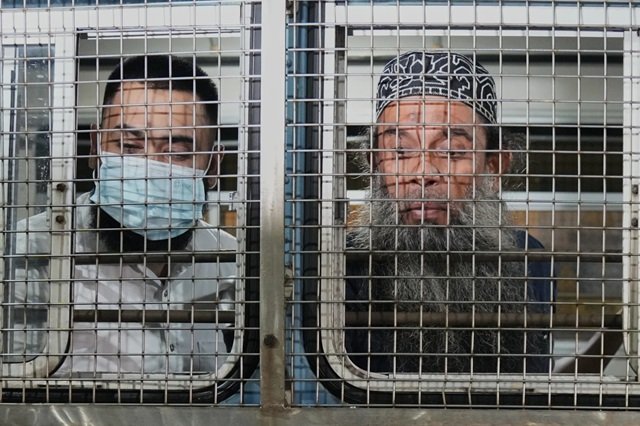
On September 22, 2026, a Sri Lankan High Court found 15 men guilty and sentenced them to prison terms ranging from 200 to 260 years for their roles in the 2019 Easter Sunday bombings. The Colombo High Court Trial-at-Bar delivered the judgment against 24 defendants.
While 15 men were convicted of charges including murder, conspiracy to commit terrorism, and explosives violations, nine other defendants were acquitted and released.
The court handed down strict prison sentences:
One convict received 260 years of rigorous imprisonment.
Four convicts received 240 years.
Five convicts received 220 years.
Five convicts received 200 years.
The coordinated suicide bombings took place on April 21, 2019.
The blasts hit three churches and three luxury hotels across Sri Lanka during Easter services and celebrations. The attacks killed 267 people (without the bombers) including 45 foreign nationals and injured 576 others.
The court also ordered the immediate confiscation of all movable and immovable assets belonging to the 15 convicts.
The 15 defendants convicted and sentenced to prison:
Mohamed Naufer Moulavi (Naufer Moulavi)
Mohamed Sharif Adam Lebbe (Gafoor Mama)
Hayathu Mohamed Ahamed Milhan
Mohamed Ibrahim Sadiq Abdullah
Mohamed Ibrahim Shahid Abdul Haq
Mohamed Anwar Mohamed Rizkan
Mohamed Mansoor Mohamed Sanasdeen
Abdul Manaf Mohamed Firdous
Mohamed Rameez Mohamed Sajith
Abdul Latheef Mohamed Shafi (except on the 16th charge)
Husainul Rizvi Khalid Sameer
Mohamed Haniffa Zainul Abdeen
Mohamed Mustafa Mohamed Haris
Rasik Raza Hussain
Kachchi Mohamed Mohamed Jemsith
The 9 defendants acquitted:
Mohamed Zawahir Mohamed Hassan
Mohamed Iftikar Mohamed Insaf
Rasheed Mohamed Ibrahim
Zainul Abdeen Mohamed Jaseem
Mohamed Mustafa Mohamed Rizwan
Meera Sahib Mohamed Nafli
Mohamed Ameer Mohamed Ayathullah
Mohamed Ansardeen Mohamed Ilmi
Mohamed Akram Ahakkam
Understanding the Threat
Although the suicide bombers died during the attacks, the ideology that produced the bombers are intact.
The preachers, madrasahs and mosques that preached the foundational ideology that politicised, radicalised and mobilised the attackers and supporters are intact.
Before they joined the Islamic State, most of the members were followers of Salafi Wahhabi and Jamaat-e-Islami. These foreign ideologies have replaced local and traditional Islam and the rich Sri Lankan Muslim heritage.
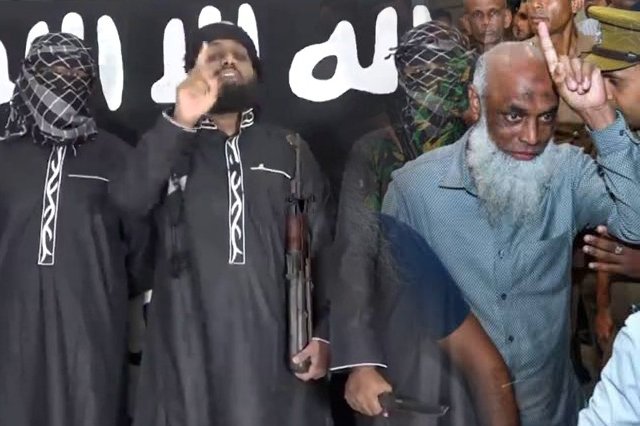
Some of the accused left the court for prison smiling, demonstrating that they have no regret and remorse for conducting a massacre. A few of them were seen giving a “Tawhid” index-finger hand sign, a gesture used by Islamic State members, supporters and sympathizers to symbolize representing an extremist view of the absolute singularity and oneness of God. The message recorded and delivered by Zahran Hashim, the leader of the IS in Sri Lanka, a day before the attacks, reflects the same attitude.
It will be imperative for government and the far-reaching Muslim leaders to assess their degrees of radicalisation and rehabilitate both the convicted and released. If not, the Islamic State ideology will spread and infect others and lead to future attacks.
Most Sri Lankan Muslims are mainstream – they advocate moderation, toleration and coexistence. As the religious space is not tightly regulated, Sri Lanka produced not only radical and violent Muslims but Buddhist, Hindu and Christian exclusivists and extremists leading to intermittent violence and riots. Religion continues to be used, misused and abused by interested parties.