As the Catholic Church prepares to elect its next pope, the College of Cardinals faces a complex web of ideological, political, and administrative challenges that could shape the future of the world’s 1.3 billion Catholics. According to a detailed report by The Times UK, the ongoing closed-door meetings ahead of Wednesday’s conclave reveal a Church wrestling with internal division, leadership tensions, and delicate foreign relationships—particularly with China.
While the Vatican’s official line is that the cardinals are seeking “a shepherd close to the real lives of people,” leaks from inside suggest that far more is at stake. The ideological split between progressive and conservative camps has resurfaced with renewed intensity, exemplified by German cardinals Gerhard Müller and Walter Kasper trading public barbs. Müller warned that another liberal pope in the mold of Francis could risk a schism, while Kasper insisted that the faithful continue to crave the pastoral, inclusive tone that defined Francis’s 12-year papacy.
One of the major flashpoints remains Francis’s openness to blessing same-sex couples—a move praised in some Western countries but rejected outright by many African bishops, including Fridolin Ambongo Besungu of the Democratic Republic of Congo, who has emerged as a potential candidate himself.
Cardinals are also questioning the papacy’s style of governance. Critics argue that Pope Francis often sidelined his cardinals, convening only two full consistories in over a decade and issuing important doctrinal shifts—such as communion for remarried Catholics—via informal channels like footnotes and press conferences. “Roma loquitur. Confusio augetur” (“Rome speaks, confusion grows”) was how the late Cardinal George Pell wryly summarized Francis’s leadership.
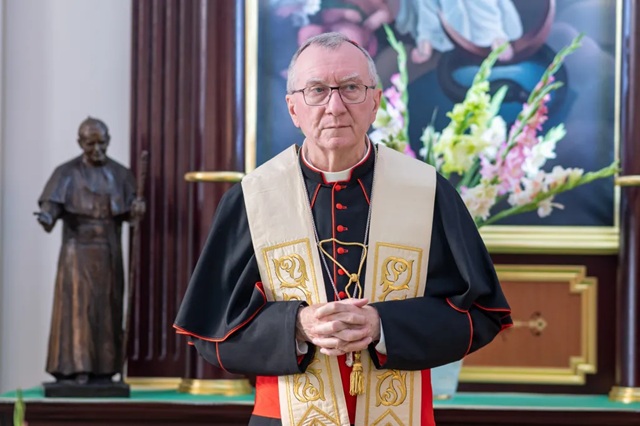
The next pope is also expected to address the fallout from Francis’s clampdown on the traditional Latin Mass. While progressive candidates like Italy’s Matteo Zuppi have balanced reformist stances with a willingness to tolerate liturgical traditions, others like Pietro Parolin, the current Vatican Secretary of State and leading papal contender, may have to reassure conservative factions to secure the necessary two-thirds majority.
Parolin’s candidacy, however, is not without controversy. While never accused of wrongdoing, his proximity to Cardinal Angelo Becciu—convicted in a Vatican financial scandal—could cast a shadow. Furthermore, his role in the 2018 Vatican-China agreement, which allowed Beijing partial control over bishop appointments, remains deeply divisive. Critics from both ends of the political spectrum—including prominent American cardinals and even Democratic lawmakers—have raised alarms about the Church’s concessions to China’s authoritarian regime.
Governance models are another pressing concern. Many cardinals are calling for more synods, regularized consultations, and a less monarchical Vatican structure. Maltese Cardinal Mario Grech, who spearheaded Francis’s “Synods on Synodality,” is seen as a potential front-runner among those who value a more decentralized, collegial approach to Church leadership.
Despite this progressive momentum, no single conservative candidate appears poised to gather the 89 votes required to win. As a result, figures like Parolin or Jerusalem’s Pierbattista Pizzaballa could emerge as compromise candidates—if they provide guarantees on key issues like Latin liturgy and doctrinal clarity.
If Parolin is elected, he would be the first Italian pope in nearly half a century, following a line of non-Italians that began with John Paul II in 1978. Yet his path to the papacy will depend not just on ideological alignment but on how quickly he can build momentum—a lesson drawn from the swift rise of Jorge Mario Bergoglio (Pope Francis) in 2013.
As the conclave begins, the Catholic Church finds itself at a historic inflection point, where the choice of leader will reverberate across continents, congregations, and the corridors of global diplomacy. The world now waits as 133 cardinals deliberate on who can truly lead the Church into its next chapter.