by Our Correspondent in Colombo
Church spokesman Jude Krishantha says those already convicted represent only part of the Easter Sunday case and calls for accountability extending to former President Gotabaya Rajapaksa, while making fresh claims about the hospitalisation of former intelligence chief Suresh Sallay
The Catholic Church has welcomed the court verdict against those convicted over the 2019 Easter Sunday terrorist attacks, but Jude Krishantha Fernando has argued that the judgment should not mark the end of the search for those responsible for the wider circumstances surrounding the bombings.
Speaking to journalists, Jude, Director of Mass Communications for the Archdiocese of Colombo, said the Church was satisfied that a judicial verdict had finally been delivered for victims and their families who had waited years for justice. He said the judgment also sent a strong message against religious extremism and stressed that no religion should be distorted to justify violence.
Jude said, however, that those convicted represented only one part of the matter. He called for further investigations into whether other individuals or groups had facilitated the attacks or allowed them to take place, and said those identified through previous investigations and commission recommendations should face legal action where evidence supports such action.
His remarks continue his previously expressed view that responsibility should be examined beyond the individuals directly linked to the bombings. In July 2025, Jude said the Easter attacks were not simply the work of Zahran Hashim and his group and referred to what he described as a larger force behind the tragedy. On the same occasion, he accused former Presidents Maithripala Sirisena, Gotabaya Rajapaksa and Ranil Wickremesinghe of protecting former State Intelligence Service chief Nilantha Jayawardena. Those were allegations made by Jude and were not established as judicial findings.
Jude has also previously called for severe punishment for those he considers responsible. In July 2025, following the termination of Jayawardena’s police service, he said that a life sentence was insufficient and that the death penalty was what justice demanded. The Colombo Archdiocese subsequently distanced itself from the remark, saying it represented Jude’s personal view and reaffirming that the Catholic Church does not endorse capital punishment.
Jude has now extended his call for accountability to former President Gotabaya Rajapaksa, arguing that those who may bear responsibility for the circumstances surrounding the attacks should also face legal consequences. Such a demand remains a call for investigation and prosecution and does not constitute a judicial finding of criminal responsibility.
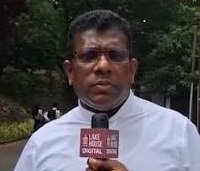
He has also questioned the continued hospitalisation of former State Intelligence Service chief Major General (Retd.) Suresh Sallay, who is being detained in connection with the Easter Sunday investigation. Jude has said that Sallay is not suffering from an illness that warrants continued hospitalisation and has questioned the justification for keeping him at the hospital.
That assertion comes despite medical evidence presented before the court. On 22 September, a nine-member medical panel reported that Sallay had an enlarged heart and had undergone treatment involving the implantation of a medical device. The court was told that he had been receiving treatment at Colombo National Hospital since 7 June and that his cardiac and mental condition was currently stable. A further medical board was due to determine whether he should remain in hospital or be discharged.
The issue had already reached court earlier in September, when the Fort Magistrate ordered the National Hospital Director to provide a report on Sallay’s condition and specifically to state whether continued inpatient treatment was necessary. The court later summoned the hospital director after the requested medical reports were not submitted on time.
The contrast between Jude’s public assertion about Sallay’s health and the medical evidence presented to court has become part of the continuing dispute over his detention and treatment. Sallay remains a suspect in the investigation, not a person convicted of the Easter attacks. During the 22 September proceedings, the Magistrate expressly intervened when the prosecution referred to Sallay as a perpetrator and stated that he remained a suspect.
Jude Krishantha nevertheless maintains that the latest verdict should be treated as one stage in a much wider accountability process. He has called for investigations into alleged intelligence failures, possible assistance to the attackers and the conduct of individuals who held positions of authority before and during the attacks, saying that justice cannot be regarded as complete until responsibility for both the attacks and any failures surrounding them has been properly examined.