


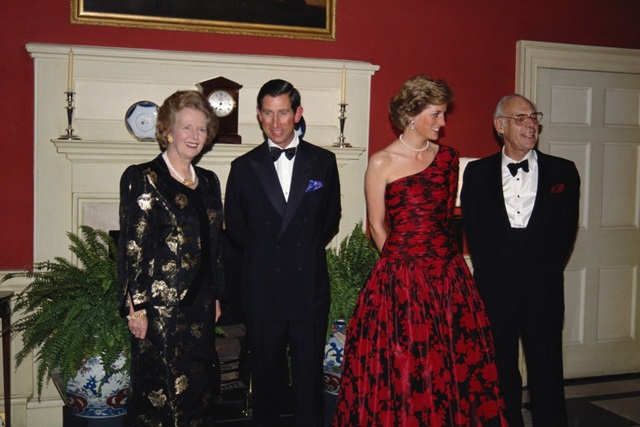
The Times has reported that declassified documents reveal King Charles III, then Prince of Wales, expressed skepticism over Margaret Thatcher’s nuclear defense strategy during the Cold War. His concerns, raised in 1983, highlight his proactive engagement in military and foreign policy matters during a period of heightened tensions between the United States and the Soviet Union.
The documents, now available at the National Archives, show that Charles sought personal military briefings to better understand the UK’s policies on nuclear arms and disarmament. Dissatisfied with the explanations provided, the prince reportedly found the government’s public and private stances contradictory. For instance, while ministers publicly supported a Comprehensive Test Ban (CTB), they privately argued against it, citing the need for ongoing nuclear testing to maintain a credible deterrent.
In response to Charles’s demand for clarity, government officials tailored bespoke briefings for him. Sir Bryan Cartledge, then Britain’s ambassador to the Soviet Union, emphasized the importance of frankness in addressing the prince’s concerns, acknowledging his disdain for “official flannel or obfuscation.” These briefings also exposed the UK’s reliance on the United States, including tacit support for controversial policies such as Ronald Reagan’s Strategic Defense Initiative, known as “Star Wars,” to maintain privileged access to American intelligence.
This episode highlights Charles’s willingness to challenge government positions on critical issues. Notably, his engagement extended beyond defense policy. In 1979, during James Callaghan’s Labour government, he reportedly sought ministerial briefings on Britain’s economic decline, advocating for “radical and rapid” changes to compete with economic powerhouses like Japan and Germany.
While Charles has since vowed to remain above politics as monarch, the declassified documents offer a rare glimpse into the intellectual rigor and curiosity he applied to matters of state during his time as heir to the throne. As tensions between East and West eventually eased following Mikhail Gorbachev’s rise to power in 1985, the prince’s involvement in these debates remains a fascinating chapter in the intersection of royalty and politics.









