Malaysia’s Chinese-backed Forest City development is facing renewed scrutiny after police uncovered an alleged scam operation employing hundreds of foreign nationals and authorities ordered the closure of a US-founded technology community. According to a Financial Times report, the latest incidents have further damaged the reputation of the ambitious US$100 billion project, once promoted as a flagship of China’s Belt and Road Initiative but now struggling with low occupancy, stalled development and mounting international controversy.
Malaysia’s Forest City, a US$100 billion luxury development off the southern coast of Johor, has suffered another setback after police uncovered an alleged large-scale scam operation inside one of its residential towers, adding to growing concerns over the troubled Chinese-backed project, according to a report by the Financial Times.
The police operation, conducted on 15 July, targeted a residential tower within the sprawling waterfront development. Instead of affluent residents, officers reportedly discovered an alleged scam enterprise employing hundreds of Chinese nationals.
“It was a much bigger operation than we were expecting,” a person involved in the raid told the Financial Times. “It took us two days to do the paperwork.”
The raid resembled recent crackdowns on scam compounds elsewhere in Southeast Asia, where criminal organisations have established operations in residential and commercial properties. Investigators believe the Forest City operation formed part of a wider pattern of organised fraud that has spread across the region.
The incident came only days before another controversy involving Forest City drew international attention. Malaysian authorities ordered the closure of Network School, a US-founded co-living community established for technology entrepreneurs and digital nomads, triggering criticism in Washington.
Together, the developments have further undermined confidence in Forest City, which was launched in 2014 as a luxury residential and leisure destination marketed as a “dream paradise”. One American technology worker walking through the largely empty development described it to the Financial Times as “a cursed island”.
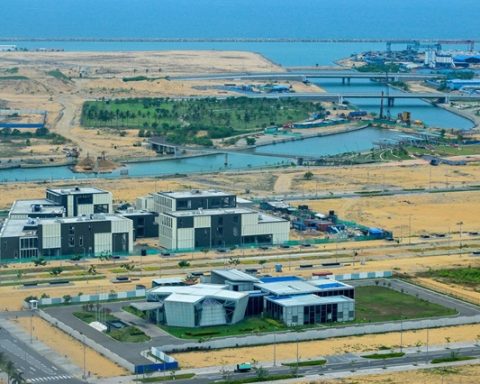
The project was originally conceived as one of the flagship developments associated with China’s Belt and Road Initiative. Located approximately one mile from Singapore, Forest City was intended to accommodate around 700,000 residents while showcasing China’s overseas investment ambitions. However, difficulties attracting permanent residents, combined with China’s prolonged property downturn, have left much of the development sparsely populated.
Forest City is a joint venture between Chinese property developer Country Garden and Esplanade Danga 88, a private company controlled by Sultan Ibrahim Iskandar, the ruler of Johor and current King of Malaysia. The master plan envisioned four artificial islands featuring residential towers, hotels, shopping districts, restaurants and a premier golf resort. Yet even the first island remains unfinished.
Many of the apartments were initially marketed to Chinese buyers as investment properties and retirement homes, with two-bedroom units starting at RM780,000 (US$190,000).
Not all residents have been disappointed. Maggie Gao, who moved from Beijing to Forest City in 2019 with her husband and son, told the Financial Times she had recently left her remote job with a Chinese technology company to open a beachfront coffee shop.
“There is a much slower pace of life here than in Chinese cities,” Gao said. “Everything is well maintained. We like it here and are happy to stay.”
However, she added that many neighbours returned to China during the Covid-19 pandemic and later found themselves unable to sell their apartments. Some eventually lost their properties after failing to keep up with mortgage repayments.
With Country Garden burdened by financial difficulties linked to China’s wider property crisis, progress on the development has slowed significantly. In response, Malaysian federal and Johor state authorities have promoted Forest City as a business and technology hub, offering favourable tax rates, fast-tracked residency and digital infrastructure as part of the Johor-Singapore Special Economic Zone launched last year. Officials have also promoted the development as a centre for family offices and financial technology companies.
Police now believe those incentives may also have attracted criminal organisations.
Johor police said raids conducted last month against two separate alleged scam operations, including one occupying 27 apartments across five floors of a Forest City residential tower, resulted in the arrest of 335 people. Those detained included 309 Chinese nationals, 19 Indonesians, four Myanmar citizens and three Malaysians. Authorities said the alleged operations involved investment fraud, cryptocurrency scams and romance scams.
According to the individual involved in the investigation, officers discovered a shop inside the residential complex stocked with instant noodles for workers who had reportedly been instructed not to leave the premises. Investigators also found newly installed furniture and air-conditioning units.
“It looked like they had been running for less than a month,” the source told the Financial Times, suggesting those involved had likely relocated after crackdowns on similar operations elsewhere in Southeast Asia. “This is just a spillover effect.”
Country Garden, Esplanade Danga 88 and the Johor state government did not respond to requests for comment, while Johor police declined to comment beyond their published statements.
Separately, the closure of Network School generated diplomatic attention. Founded in 2024 by former Coinbase Chief Technology Officer Balaji Srinivasan, the community sought to establish what he described as a “frontier community of techno-optimists”. It attracted hundreds of digital nomads with accommodation, shared workspaces, coding workshops, language classes and wellness programmes, with packages beginning at US$1,500 per month.
The initiative came under scrutiny after online allegations claimed Israeli nationals were among its members. Malaysia does not recognise Israel and generally prohibits Israeli passport holders from entering the country without special authorisation. Authorities subsequently investigated the project and ordered it to cease operations, citing licensing violations rather than immigration issues.
Prime Minister Anwar Ibrahim stated that any Israelis found at the site would be deported, prompting the US State Department to summon Malaysia’s ambassador and drawing criticism from members of the US Congress.
Srinivasan denied that Network School members had breached immigration rules and subsequently announced plans to establish a new hub in Kazakhstan.
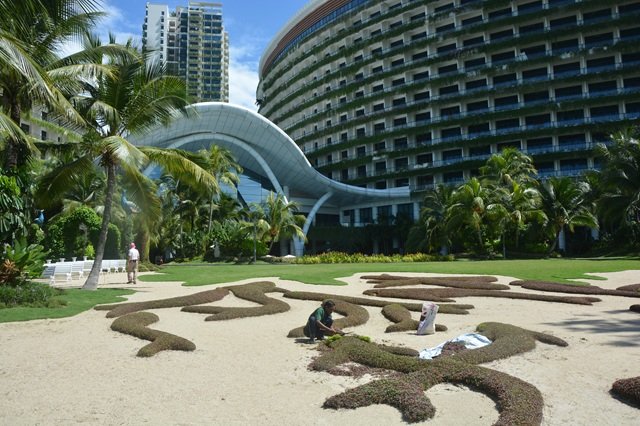
By last week, branding associated with Network School had been removed from Forest City’s Marina Hotel, which had served as the community’s headquarters. Although most participants had departed, some remained at the complex.
A Venezuelan technology worker who had recently arrived to explore the community told the Financial Times that the recent controversies had not changed his view of the development.
“It’s a great shame what has happened, but it hasn’t put me off this place,” he said. “I would definitely consider coming here to set up a business. There are great facilities and it is very quiet—that is a good environment to work in.”