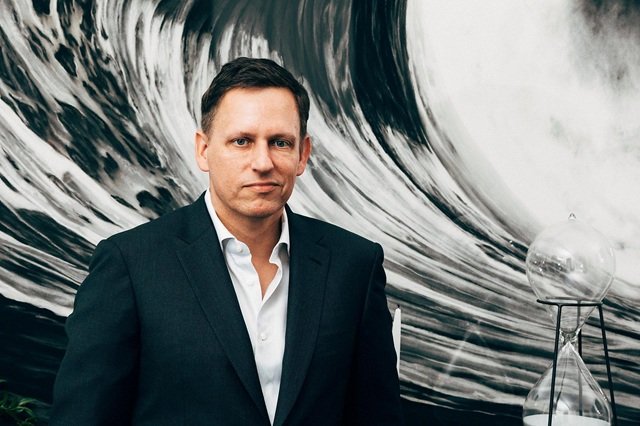
Peter Thiel occupies an unusual position in the modern technology industry. A billionaire entrepreneur who helped establish PayPal, financed Facebook in its infancy and founded the data analytics company Palantir, he has also emerged as one of the most influential figures behind the rise of America’s technological right. His political connections, investment empire and hostility towards democratic institutions have given him influence extending far beyond Silicon Valley. Yet Thiel’s worldview also encompasses a preoccupation with the Antichrist, religious apocalypse and the dangers of an increasingly regulated technological future.
As reported by El País, Thiel’s significance lies not simply in his unconventional beliefs but in his ability to translate them into political influence, business investments and powerful institutional relationships. He anticipated Donald Trump’s political rise, helped advance the career of Vice-President J. D. Vance and backed companies whose surveillance and defence technologies have attracted major government contracts. His career illustrates how the fortunes of technology billionaires can increasingly shape political power and public policy.
Thiel’s influence became particularly visible in 2016, when professional wrestler Hulk Hogan sued the online publication Gawker over the unauthorised publication of a sexually explicit video. Hogan secured $140 million in damages, a judgment that ultimately brought down the website. Thiel had secretly financed Hogan’s legal team, seeking revenge after Gawker had repeatedly ridiculed him and publicly disclosed his homosexuality.
Thiel interpreted the outcome as evidence of a wider shift in American public opinion. He subsequently recognised the possibility that Trump, then considered an unlikely presidential contender, could win the election. According to an interview with The Atlantic, Thiel recalled thinking that Trump might prevail. Weeks later, he addressed the Republican National Convention, helping launch the political ascent of the future president.
A decade later, the 58-year-old investor has become a central figure in the development of technological conservatism. His influence extends to Vance, who worked for him at the investment firm Mithril Capital, and to Republican Senator Ted Cruz of Texas. Thiel opposes many international institutions established after the Second World War, including the United Nations and NATO, and advocates a political and economic order in which technological entrepreneurs operate with fewer constraints.
His ideological ambitions were again on display in late September, when he participated in a series of conferences in Nashville, warning about the Antichrist and the dangers of regulating artificial intelligence. Similar appearances in San Francisco, Rome and Paris the previous year had connected his religious arguments to his opposition to efforts to constrain the technology industry.
Gil Durán, a journalist and author of The Nerd Reich: Silicon Valley Fascism and the War on Democracy, describes Thiel as the leader of a small but influential circle promoting extremist and anti-democratic ideas. Durán argues that Thiel’s rhetoric against government and democracy contrasts with his investments in companies that provide surveillance technologies to governments. He also sees a broader contradiction in Silicon Valley’s attempts to combine religious language with a technological vision of humanity’s future.
Thiel’s political philosophy draws on several intellectual traditions. At Stanford University, where he studied after arriving in 1985, he encountered the libertarian ideas of Ayn Rand and the work of French philosopher René Girard, whose theory of mimetic desire examines how people imitate one another’s desires, producing rivalry, resentment and the search for scapegoats. Thiel later incorporated these ideas into his thinking about social conflict, political authority and the possibility of an apocalyptic struggle between good and evil.
He has developed a particular interest in the Antichrist, Armageddon and the concept of the katechon, a Greek term referring to a force that restrains the Antichrist. Durán argues that Thiel uses this religious framework to portray political opponents as potential embodiments of evil, citing figures including climate activist Greta Thunberg, Democratic Congresswoman Alexandria Ocasio-Cortez and the Pope.
Thiel has also drawn on conservative political theorists Leo Strauss and Carl Schmitt, the latter a member of the Nazi Party, whose ideas questioned aspects of liberal democracy and emphasised the distinction between political friends and enemies. In a controversial 2009 essay, Thiel argued that the expansion of welfare provision and the extension of voting rights to women had made the concept of “capitalist democracy” contradictory. He later issued a qualified apology after the essay attracted criticism.
Mark Coeckelbergh, a philosophy professor at the University of Vienna who studies the relationship between ethics and technology, argues that Thiel places particular faith in political and technological elites. In this worldview, democracy is vulnerable to violence and instability, while visionary leaders should be permitted to exercise authority. Thiel’s support for artificial intelligence development without significant regulatory restrictions follows a similar logic: technological advances, in his view, should not be constrained by conventional political oversight.
His business activities, however, reveal a tension between libertarian principles and dependence on public institutions. Founded three years after the September 11 attacks, when the administration of President George W. Bush prioritised security, Palantir developed software capable of analysing enormous datasets to identify patterns and vulnerabilities. The company, named after objects in J. R. R. Tolkien’s The Lord of the Rings, began with a contract from the CIA. Governments across the world now use its services.
Roberto J. González, author of War Virtually, which examines how technology companies are equipping militaries for new forms of warfare, argues that Thiel’s practical influence comes less from his philosophical writings than from his investment network. His venture capital firm, Founders Fund, has financed Palantir, Anduril, Clearview AI and Flock Safety, among other companies operating in defence and surveillance. Several have received substantial government contracts, highlighting the contradiction between Thiel’s hostility to government intervention and the public money supporting businesses within his investment orbit.
Thiel’s career began with PayPal, which he co-founded in 1998 with engineer Max Levchin. Elon Musk joined the company later, and Thiel eventually became its chief executive after internal disputes. PayPal’s electronic payment system offered users a way to transfer money online while challenging established financial arrangements. In 2002, eBay acquired the company for more than $1.5 billion. Its founders and former employees subsequently became investors and entrepreneurs behind major technology businesses, including Tesla, SpaceX and YouTube.
Thiel used the proceeds to finance other ventures. In 2004, he invested $500,000 in Mark Zuckerberg’s fledgling Facebook, acquiring a 10 per cent stake. The following year, he established Founders Fund, which later invested in companies including SpaceX, Palantir, Anduril, Airbnb, OpenAI and Polymarket.
His investment philosophy is set out in Zero to One, a book that has become influential among entrepreneurs. Thiel argues that the most successful businesses create entirely new markets and establish monopolies rather than merely competing within existing industries. He also advocates breaking established rules when necessary to build transformative companies, elevating the entrepreneur into a figure whose authority should be protected.
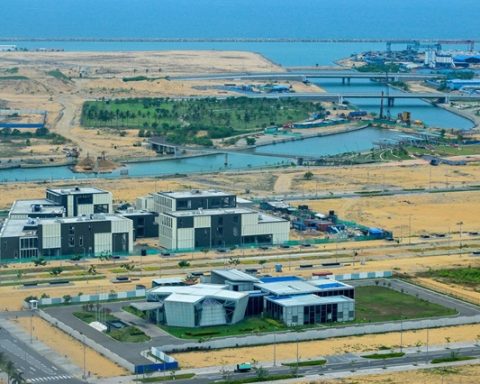
Beyond Silicon Valley, Thiel has pursued the idea of autonomous settlements operating outside conventional government structures. After travelling to Argentina, where he purchased a mansion and developed closer ties with President Javier Milei’s administration, he began seeking land in Patagonia for projects that would operate under their own laws. The ambition resembles his support for Próspera, an urban development on the Honduran island of Roatán designed to enjoy substantial autonomy.
Thiel’s ambitions are underpinned by his belief that technological progress has stalled. He has lamented the absence of developments once anticipated in the 1950s and 1960s, including lunar colonies, flying cars and cities beneath the ocean. Although sceptical about the transformative power of artificial intelligence, he regards it as one of the few technologies capable of breaking the perceived stagnation.
Kim Phillips-Fein, author of Country of Lords, which examines how technology magnates contribute to inequality, highlights the social implications of Thiel’s philosophy. His conviction that exceptional entrepreneurs deserve to control resources because they can create something entirely new raises fundamental questions about who should determine the distribution of economic and political power.
Thiel’s importance therefore extends beyond his religious preoccupations or his personal relationship with Trump. His investments, political protégés and support for surveillance technologies give practical force to an ideology that questions democratic accountability while seeking freedom from government constraints. The central contradiction is difficult to overlook: a billionaire who distrusts democratic institutions and public authority has built much of his influence through companies that depend on governments, public contracts and the political leaders he helps bring to power.