India’s expanding international influence faces a challenge that economic diplomacy alone cannot resolve. On July 7, 2026, a multinational law-enforcement operation uncovered the alleged international reach of India-based criminal syndicates involved in extortion, targeted killings and drug trafficking. The investigation raised questions about how criminal organisations can sustain operations across continents, including when their alleged leaders remain imprisoned in India.
The case also intersects with broader concerns about immigration enforcement and foreign interference. These are distinct legal and diplomatic issues, but together they expose the difficulties governments face when criminal activity, migration and alleged intelligence operations cross national boundaries.
For India, the central issue is institutional accountability. The conduct of particular individuals cannot define millions of Indians living abroad, many of whom are themselves vulnerable to intimidation. The challenge is whether New Delhi and its international partners can protect these communities while addressing threats that operate across jurisdictions.
Criminal Networks Expose Gaps in Cross-Border Enforcement
On July 7, the US Department of Justice announced Operation Hard Ball, a coordinated investigation involving authorities in the United States, Canada and Europe.
The operation resulted in 24 arrests and charges against 37 defendants across three indictments. Prosecutors alleged involvement in racketeering, targeted killings, extortion, kidnapping, drug trafficking and illegal firearms activities.
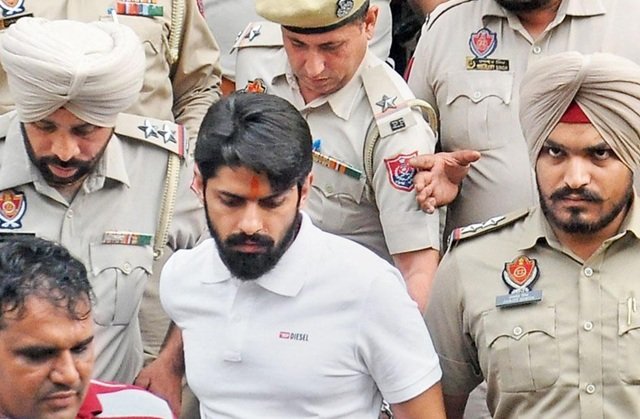
Particularly significant were allegations that two imprisoned criminal leaders continued directing international operations from India.
According to federal prosecutors, Lawrence Bishnoi allegedly used illicit communications to coordinate activities involving associates in North America and Europe. His organisation was accused of using violence and intimidation to extort business owners, public figures and families.
Another alleged criminal enterprise, associated with imprisoned gangster Jaggu Bhagwanpuria, reportedly maintained international trafficking networks and exploited corrupt relationships with Indian officials.
These allegations illustrate a central weakness in conventional organised-crime enforcement: imprisoning senior figures may not dismantle criminal enterprises if they retain access to communication channels, financial resources and trusted intermediaries.
The threat had already prompted action in Canada. On September 29, 2025, the Canadian government designated the Bishnoi gang as a terrorist entity, citing its involvement in serious violence and intimidation.
The designation strengthened Canadian authorities’ ability to investigate financing, freeze assets and pursue offences connected to the organisation.
The broader challenge concerns jurisdiction. Violence may be planned in one country, financed through another and carried out against victims elsewhere. Investigations therefore require coordinated evidence collection, financial tracing and cooperation between prison authorities and international law-enforcement agencies.
The indictments remain allegations unless established through legal proceedings. Nevertheless, Operation Hard Ball demonstrates why effective action against transnational criminal groups requires cooperation beyond ordinary domestic policing.
Immigration Scrutiny Creates Separate Accountability Challenges
India’s extensive overseas population has also become part of political debates about immigration compliance, labour markets and criminal enforcement.
Indian nationals represent a substantial proportion of beneficiaries of the United States’ H-1B programme, reflecting their participation in technology and other specialised occupations. Their prominence has attracted scrutiny of employer sponsorship, recruitment practices and visa compliance.
However, a high proportion of visa beneficiaries do not establish widespread fraud. Document fraud, misleading sponsorship arrangements and recruitment exploitation require evidence from specific investigations. Responsibility may lie with applicants, employers or intermediaries, depending on the circumstances.
In Britain, reporting based on Ministry of Justice data indicated that sentencing occasions involving Indian nationals convicted of sexual offences increased from 28 in 2021 to 100 in 2024.
The Ministry clarified that these figures concerned sentencing occasions rather than necessarily distinct individuals. Without reliable population denominators and demographic comparisons, they cannot establish comparative offending rates.
Such distinctions matter because debates over immigration can conflate individual criminal responsibility with assumptions about entire communities. This creates two risks: genuine offences may become political instruments, while people who have committed no wrongdoing face heightened suspicion.
Transnational criminal networks can also exploit migrants through extortion, fraudulent recruitment and threats against relatives. Overseas communities are therefore not simply subjects of immigration scrutiny; they may also require protection from organised crime.
The appropriate response involves stronger verification of recruitment practices, investigations into fraudulent documentation, accessible reporting mechanisms for victims and effective consular cooperation.
Immigration violations, ordinary criminal offences and organised-crime activity require separate legal responses. Combining them into a single narrative of diaspora misconduct risks weakening the precision necessary for effective enforcement.
Foreign Interference Raises a Different Question of Sovereignty
Alongside criminal investigations, allegations involving Indian state actors have created separate diplomatic challenges.
In its 2025 public report, the Canadian Security Intelligence Service identified India among the principal foreign states involved in interference and espionage affecting Canada.
The agency described historical attempts to cultivate covert relationships with Canadian political figures, journalists and diaspora communities, alongside concerns about surveillance and intimidation directed at critics of the Indian government.
The United States has pursued another consequential case involving an alleged assassination conspiracy.
On February 13, 2026, the US Department of Justice announced that Indian national Nikhil Gupta had pleaded guilty in connection with a foiled plot to assassinate a Sikh separatist activist and US citizen in New York.
Federal prosecutors alleged that Gupta acted at the direction of Vikash Yadav, who was an Indian government employee at the time of the alleged conspiracy. Yadav was separately charged in October 2024. Gupta’s guilty plea does not establish Yadav’s guilt.
These developments concern a fundamentally different category of international security. Criminal organisations generally operate through illicit enterprises and personal networks, while alleged state-linked intelligence operations raise questions about governmental responsibility, sovereignty and the protection of political freedoms.
The distinction is important for diplomatic relations. India maintains extensive economic, technological and defence partnerships with Western governments. These relationships provide incentives for continued engagement even when serious security disputes arise.
Yet strategic cooperation does not remove the need for legal accountability. Governments must distinguish allegations from proven conduct while ensuring that diplomatic relationships do not obstruct legitimate criminal investigations.
The different cases also require different institutional remedies. Organised crime calls for financial investigations, prison oversight and coordinated prosecutions. Immigration violations require proportionate enforcement and procedural safeguards. Allegations involving state officials demand criminal investigation where warranted, diplomatic engagement and respect for national sovereignty.
These responses share one requirement: credible cooperation between jurisdictions.
India’s international standing has benefited from economic expansion, strategic partnerships and the contributions of its overseas communities. Protecting those relationships requires more than defending the country’s reputation when controversies emerge.
The immediate test is whether authorities can disrupt criminal networks, protect people targeted abroad and address substantiated misconduct through effective legal processes.
For New Delhi and its partners, lasting security cooperation depends on institutions capable of enforcing accountability across borders without treating nationality as evidence of guilt. That distinction is essential to protecting both international trust and the communities most directly affected by transnational threats.