China has released a detailed legal assessment challenging the United States’ so-called “freedom of navigation” operations, claiming that they lack a foundation in international law and serve as a tool for military coercion.
On Monday, the China Institute for Marine Affairs under the Ministry of Natural Resources unveiled the report, marking what Chinese officials described as the first comprehensive legal evaluation of US freedom of navigation practices. The report concludes that the US operations distort international law, impose self-created legal standards, and reflect a pattern of using military force to pressure other nations.
“Through these operations, the US seeks to maximize its own rights while compressing the legitimate rights of other nations,” said Zhang Haiwen, former director general of the Institute, at a press conference. He described the report as an effort to expose US hegemonic practices disguised as lawful.
The assessment examines US legal positions and practices on 11 key issues, including the innocent passage of warships, transit passage, archipelagic sea lanes, international waters, the legal status of islands, baselines, military activities in exclusive economic zones, air defense identification zones, and historic waters. The report argues that US interpretations often contradict established international law and the practices of many countries.
According to the report, the US has created concepts such as “international waters” and “high seas corridors” that undermine the jurisdiction of coastal states, particularly in areas like the Taiwan Straits. The report also highlights longstanding double standards in US military operations, pointing out that US forces insist on “freedom of overflight” in other countries’ air defense zones while criticizing similar activities by non-allied nations.
“US freedom of navigation operations serve national interests and geopolitical strategies, posing a threat to regional peace and stability,” the report states. Experts argue that these actions disrupt international maritime order, exacerbate tensions, and risk maritime and air incidents.
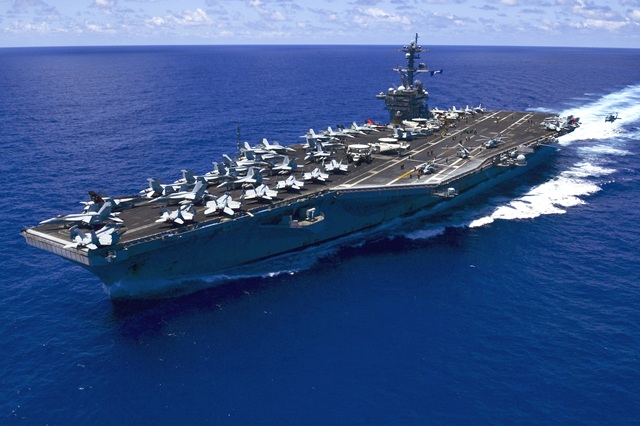
The report cites recent incidents as examples. On August 13, the Chinese People’s Liberation Army expelled the US destroyer USS Higgins after it entered Chinese territorial waters near Huangyan Dao without authorization. The US Department of Defense’s 2024 fiscal year Freedom of Navigation report identified China as the primary target of US operations, challenging its claims in multiple maritime areas.
The report also criticizes the US for its selective approach to the United Nations Convention on the Law of the Sea (UNCLOS), which it has not ratified but selectively cites to justify operations. The report traces the origins of the US Freedom of Navigation Program back to 1979, noting its continued use of military force to challenge coastal state claims and target what it calls “excessive maritime claims.”
“One core purpose of releasing this report is to effectively uphold the international rule of law,” said Xu Heyun, deputy director of the China Institute for Marine Affairs. “The US employs blatant double standards, using international law when it suits it and discarding it when it doesn’t, severely undermining it. This report aims to restore an objective and fair interpretation of maritime law.”