Editor’s note: The following excerpts are based on remarks by Lei, a commentator who says she was born in communist China, studied in the United States during the 1989 Tiananmen Square protests, later worked in finance, and then moved into independent media focused on information flows between China and the West. She describes concerns about censorship in China and claims she observed significant influence of the Chinese Communist Party in the United States; these statements reflect her personal views and interpretations.
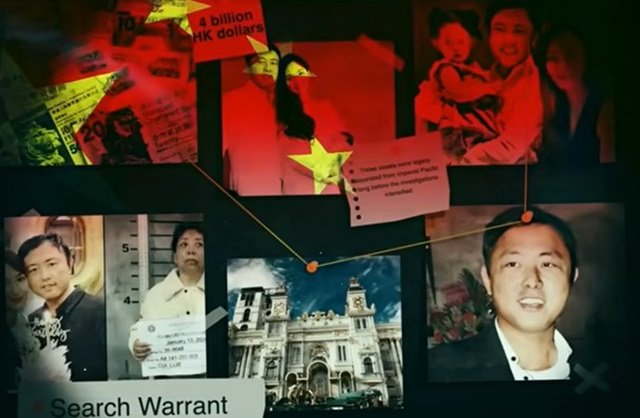
In January 2026, a photograph began circulating widely across the internet showing an elderly woman being detained by immigration authorities in the United States. She appeared unremarkable at first glance, a 68-year-old with no visible markers of wealth or power, someone who could easily have been overlooked in a crowd. Yet her presence in that image marked the quiet aftermath of one of the most unusual and controversial business empires ever constructed in an American territory. A decade earlier, she had been closely associated with a sprawling casino operation that once symbolized the fusion of Chinese elite capital, transnational ambition, and American regulatory ambiguity. Her family had been celebrated in parts of Chinese media as pioneers of globalized wealth, while simultaneously drawing scrutiny from foreign investigators who would later unravel the financial architecture behind their rise.
To understand how this story unfolded, it is necessary to return to the years when everything appeared dazzling and unstoppable. The center of gravity was not initially the elderly woman in the photograph, nor even the businessmen behind the enterprise, but a Taiwanese entertainer whose life became unexpectedly intertwined with the project. Born in Taipei in the territory of Taiwan, she entered the entertainment industry as a singer. Although she never achieved major musical success, her appearance and media presence allowed her to establish a career in television, fashion, and celebrity culture. Over time, she became widely recognized in Taiwan’s entertainment circles and was frequently featured in tabloid coverage that emphasized her relationships and luxurious lifestyle rather than her artistic work.
Her public image changed dramatically in 2013 when she announced her pregnancy and revealed her relationship with a man identified as the heir to a growing gambling empire. The man’s business was rooted in the complex world of casino junket operations centered in Macau, a global gambling hub where intermediaries played a crucial role in connecting wealthy gamblers with VIP casino rooms. Junket operators functioned as financial and logistical bridges, facilitating travel, credit, and gambling arrangements for high-net-worth individuals, particularly those from mainland China. While the system appeared to revolve around entertainment and luxury tourism, it was also deeply embedded in cross-border capital flows and informal financial channels.
The man at the center of this network came from relatively modest origins in mainland China. With limited formal education, he entered the gambling industry through intermediaries and family connections, eventually rising to prominence as part of a junket operation that rapidly expanded its influence. Alongside his relatives, including his mother who played a key administrative role, he helped manage VIP gambling rooms that catered almost exclusively to wealthy Chinese clients. These rooms multiplied quickly, and within a few years the operation had secured access to multiple casino floors and dozens of gaming tables in Macau’s competitive gambling market.
The business model depended on constant flows of high-roller clients, many of whom were introduced through informal networks rather than traditional advertising or tourism channels. Wealthy individuals would be transported into controlled gambling environments, often with credit arrangements that allowed large sums of money to be wagered with minimal immediate liquidity. To outside observers, the growth of the operation appeared extraordinary, even improbable. Yet within a few years, the network had established itself as a significant player in the regional gambling economy, generating substantial revenue and attracting attention from both media and regulators.
The most ambitious phase of the enterprise began when the group secured a license to develop a casino resort in Saipan, a small and geographically isolated island in the western Pacific Ocean. Saipan is part of the Northern Mariana Islands, a territory of the United States located thousands of miles from both Asia and the American mainland. Despite its remoteness, the island held strategic and regulatory advantages that made it attractive for experimental casino development, including looser oversight compared to mainland jurisdictions and proximity to Asian gaming markets.
The project announced for Saipan was framed as an extraordinary transformation initiative. Developers promised a multi-billion-dollar resort complex featuring luxury hotels, expansive shopping districts, and entertainment infrastructure designed to rival established global gambling centers. At the time, promotional materials and media coverage suggested that the island could become a new hub of Asian luxury tourism, a kind of Pacific counterpart to Las Vegas. The scale of ambition was striking, particularly given Saipan’s limited infrastructure and relatively small local economy.
As construction began, the Taiwanese entertainer became the public face of the emerging empire. She frequently appeared on social media platforms showcasing an image of extreme affluence. Her posts included photographs of diamond jewelry, private jets, luxury residences, and designer goods. In some cases, she was seen posing with extravagant art installations commissioned for the casino project, including large crystal sculptures reportedly valued at tens of millions of dollars. These displays contributed to the perception that the family behind the casino had entered the highest tier of global wealth.
However, beneath the surface of glamour, structural contradictions began to emerge. Saipan itself lacked the tourism infrastructure typically required to support large-scale gambling resorts. The island’s geographic isolation limited casual visitation, and its economy was not naturally aligned with mass luxury tourism. Early phases of the casino operation reflected these constraints. Parts of the complex opened before construction was complete, with unfinished interiors and minimal amenities. Despite this, financial reports indicated unusually high levels of gambling activity.
At one point, the casino reportedly generated revenue figures that appeared disproportionate to its size and physical capacity. With a limited number of VIP gambling tables, it was said to produce daily revenue streams that rivaled or even approached those of far larger and more established casinos in Macau. Observers noted that the reported gambling volume seemed difficult to reconcile with the physical conditions of the facility, which in its early stages resembled a partially completed commercial building rather than a fully operational luxury resort.
As activity expanded, financial flows associated with the casino became even more unusual. Reports suggested that a relatively small number of repeat high-roller clients accounted for a vast proportion of total betting volume. Many of these individuals were believed to be Chinese nationals, and their participation raised questions about the underlying purpose of their travel and transactions. For investigators, the central issue gradually shifted from gambling activity to capital movement.
This shift was closely tied to the broader financial environment in mainland China, where strict controls limit the amount of money individuals can legally transfer abroad. Under regulations enforced by the state, citizens are typically restricted to exchanging a limited amount of foreign currency each year. For wealthy elites, these restrictions create significant challenges in moving large sums of capital outside domestic jurisdiction. In this context, junket operations and offshore casinos provided a mechanism through which funds could be indirectly transferred, disguised as gambling losses or winnings.
The system operated in a way that blurred the line between entertainment and financial engineering. Funds could be deposited domestically, converted into casino credit, and then reclassified through gambling transactions that ultimately facilitated movement into offshore accounts or foreign assets. Casinos and intermediaries typically took a percentage as fees, while the remainder of the capital could be repositioned internationally. From the perspective of regulators, this created significant concerns about money laundering, capital flight, and regulatory circumvention.
As scrutiny increased, American authorities began to examine the operations in Saipan more closely. The scale of reported gambling activity, combined with the island’s limited infrastructure, drew attention from financial enforcement agencies. Investigators questioned how such a small and remote facility could generate volumes of betting activity comparable to the world’s largest gambling centers. Attention also turned toward the ownership structure, financing arrangements, and political connections associated with the project.
Over time, the situation escalated. Construction sites were investigated, financial records were examined, and allegations of misconduct began to surface. Workers and contractors reportedly claimed unpaid wages and unsafe working conditions. Financial disputes accumulated, and regulatory inquiries intensified. The image of a rapidly rising luxury empire began to fracture under the weight of legal and financial pressure.
The political dimension of the case further complicated matters. The casino project had attracted a range of high-profile figures from American political and legal circles who were at various points associated with advisory roles, promotional appearances, or business connections. These associations later became controversial as investigations expanded, raising questions about how such a large-scale foreign-backed gambling operation had gained legitimacy within a United States territory.
Eventually, law enforcement intervention marked a turning point. Investigators conducted raids on corporate offices and seized extensive documentation. The operational structure of the casino empire began to disintegrate under regulatory pressure. Key individuals associated with the project disappeared from public view, while ongoing legal proceedings and financial claims continued to unfold behind the scenes.
Amid this collapse, the Taiwanese entertainer remained a peculiar figure within the broader narrative. Despite her visible association with the family and her role in shaping its public image, she did not face the same legal consequences as others involved. Her financial holdings, reportedly substantial, were separated from corporate liabilities through legal arrangements established prior to the full escalation of investigations. Because her relationship with the central figures was never formalized through marriage, questions of asset entanglement were further complicated.
In the aftermath, she reportedly retreated from public life, maintaining a low profile in Hong Kong, while the empire that once defined her public image disintegrated. Her survival, both financially and legally, became part of a larger symbolic interpretation of the entire episode. It suggested that proximity to power does not always equate to vulnerability when structures collapse, and that those positioned at the edges of systems may sometimes avoid the full force of their breakdown.
What remains, ultimately, is not just a story about casinos or celebrity wealth, but a reflection of shifting global dynamics. The intersection of Chinese capital, American regulatory space, and transnational financial systems created a fragile structure that appeared stable only under conditions of rapid expansion. Once scrutiny intensified, the same connections that enabled its rise contributed to its unraveling. In that sense, the Saipan casino empire became more than a business failure. It became a case study in how modern financial globalization operates at the boundary of legality, geopolitics, and perception, where prosperity and instability often coexist in the same architecture until the moment they no longer can.