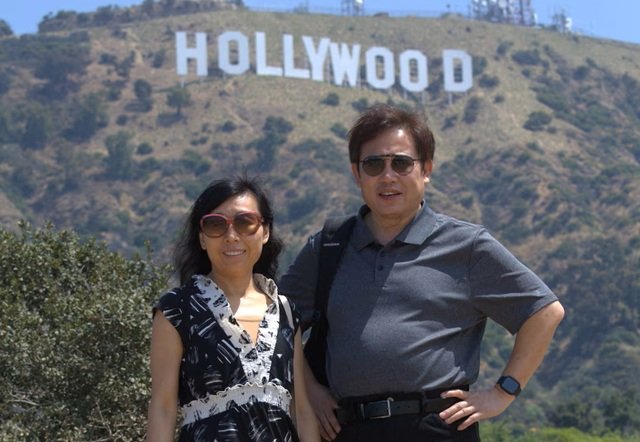
A Chinese-born American seismologist whose U.S.-funded research focused on detecting North Korean nuclear tests has been detained in China for nearly two years and is awaiting trial on espionage charges, according to his wife, U.S. lawmakers and two hostage advocacy organizations. The case of Youlin Chen, reported publicly for the first time, has emerged as another point of tension in U.S.-China relations as both governments continue high-level diplomatic engagement.
Chen, 54, became a U.S. citizen in 2011 and lives in Boston, Massachusetts. According to his wife, Yufang Rong, and hostage advocates, he is currently the only American detained in China who has been designated by the United States as “wrongfully detained.” U.S. Secretary of State Marco Rubio made the designation on March 19, elevating Chen’s release as a priority for the U.S. government. Rong said the Trump administration has not publicly announced the designation in order to preserve space for diplomatic efforts aimed at securing his release.
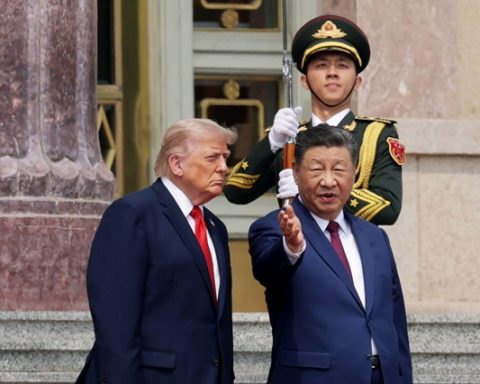
A U.S. source familiar with the case, speaking on condition of anonymity because of the sensitivity of the discussions, said the administration remains focused on obtaining Chen’s release from what it described as an unjustifiable detention. Rong said White House and State Department officials informed her that President Donald Trump raised Chen’s detention during a state visit to Beijing in May with Chinese President Xi Jinping, who, according to her account, promised to look into the matter. She said no action has followed. The U.S. source did not directly confirm that conversation but said the relationship between Trump and Xi remains strong and that Chen’s detention is one of many issues in the broader U.S.-China relationship.
Rong said she fears Chinese authorities have already determined the outcome of the case before trial. She said she believes Chen will be convicted and that proceedings will be conducted behind closed doors. Under Chinese law, espionage can carry penalties ranging from lengthy prison terms to life imprisonment or, in especially serious cases, the death penalty.
The White House reiterated its commitment to securing the release of Americans detained overseas. Deputy White House press secretary Anna Kelly said President Trump has made returning detained Americans a priority and has reunited more than 100 individuals with their families since taking office in his current term. The Office of the U.S. Special Presidential Envoy for Hostage Affairs and the Chinese embassy did not immediately respond to requests for comment.
According to Rong, U.S. embassy officials have visited Chen several times, but Chinese officials have remained present during every meeting, preventing private conversations. She said the Chinese lawyer retained by the family was not permitted to meet Chen until more than 13 months after his detention began. Rong also said Chinese authorities have questioned her husband more than 100 times about his research into the seismic signatures of North Korean nuclear tests.
Eric Lebson, a former U.S. national security official whose organization, Global Reach, is advising the family, said he believes Chinese authorities are interested in Chen’s expertise because it could help improve techniques for concealing underground nuclear weapons tests through a process known as decoupling. Lebson said nuclear testing experts consulted by his organization expressed similar concerns. The Trump administration accused China in February of attempting to mask a low-yield underground nuclear test conducted on June 22, 2020, using that technique, an allegation China has denied.
Lebson said Chen has never held a U.S. security clearance or performed classified work despite being employed by a U.S. government contractor. He said Chen’s research, funded by the U.S. State Department and the Air Force Research Laboratory, was conducted with Chinese academic collaborators, relied on publicly available Chinese data and remains accessible online. A December 2020 paper authored by Chen examined the magnitude of North Korea’s six known nuclear tests and methods for distinguishing their seismic signatures from earthquakes. The paper states that it was prepared for the State Department’s arms control bureau and was approved for public release.
Human rights groups have argued that China’s state-secrets law gives authorities broad powers to retroactively classify previously public information as state secrets, potentially exposing individuals who handled or shared open-source material to criminal liability.
Rong said Chen was arrested by Chinese state security officers at Beijing International Airport on Nov. 5, 2024, while preparing to return to Boston after visiting relatives and delivering lectures at two universities. She alleged that he initially endured harsh detention conditions, including being forced to sit on a hard stool throughout the day without being allowed to stand, read or exercise, while also being denied medication for diabetes and other medical conditions. She said his health has since deteriorated, claiming he has lost between 30 and 40 pounds because of inadequate food and poor-quality medication.
Chen was formally charged with espionage on May 1, 2025, but has not yet stood trial. His case is expected to remain a diplomatic issue ahead of a visit by Xi to Washington in September that Trump has said will take place. U.S. Senator Ed Markey of Massachusetts, who led a bipartisan letter urging Rubio to designate Chen as wrongfully detained, said he is deeply concerned about Chen’s safety and wellbeing and expressed hope that increased attention to the case would lead to his release.