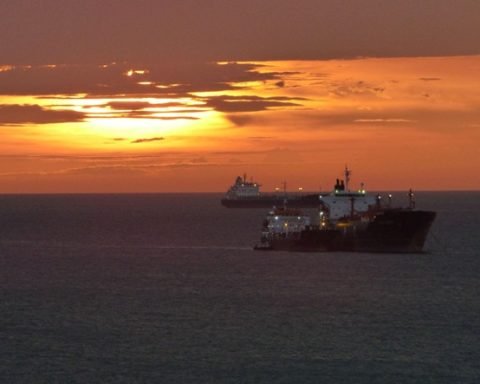
China said on Friday it will begin charging port fees on all U.S.-owned, operated, built, or flagged vessels starting Tuesday, in a direct countermeasure to similar U.S. fees on China-linked ships that take effect the same day. The move marks a sharp escalation in the maritime front of the U.S.-China trade war, already strained by tit-for-tat tariffs and export controls.
Beijing’s Ministry of Transport said the new charges will also apply to ships in which U.S.-domiciled investors hold at least 25% of shares or board seats — a sweeping definition that could ensnare a large number of global shipping companies listed on American exchanges. “This casts a wide net and could affect many public shipping companies with a listing on U.S. stock exchanges,” said Erik Broekhuizen, marine research manager at shipbroking firm Poten & Partners. “The potential impact is significant.”
Later on Friday, U.S. President Donald Trump announced he was raising tariffs on all Chinese exports to 100% and imposing export controls on critical software, in retaliation for Beijing’s earlier curbs on rare earth minerals. The dueling measures deepen tensions between the two economic superpowers and threaten to further disrupt global trade flows.
From Tuesday, ships built in China or owned and operated by Chinese companies will also have to pay port fees at their first call in the United States. Some vessels could end up paying fees in both countries. U.S.-based carrier Matson Inc. said it will be subject to the new Chinese fees but has no plans to alter its sailing schedule. Other operators likely to be affected include CMA CGM’s U.S.-based American President Lines and Israel’s Zim Integrated Shipping Services, which has more than 25% U.S. ownership, according to maritime consultancy Vespucci Maritime.
The new port fees could hit up to 10% of the global crude oil tanker fleet, according to ship broker Fearnleys, while energy research firm Vortexa said about 43 large liquefied petroleum gas carriers — roughly 10% of the global fleet — will also be impacted. Broekhuizen said the move “has thrown the tanker market in turmoil,” with many affected ships already en route to China.
For U.S.-linked vessels berthing at Chinese ports starting Tuesday, the fee will be 400 yuan ($56.13) per net metric ton, rising to 1,120 yuan ($157.16) by 2028. Analysts estimate that Chinese shipping giant COSCO and its OOCL fleet could face more than $2 billion in U.S. port fees by 2026.
China’s transport ministry blasted the U.S. measures as “clearly discriminatory,” accusing Washington of undermining global supply chain stability and damaging the international trade order. The U.S. Trade Representative’s office did not immediately comment.
Both countries have been ramping up protectionist measures as their 90-day trade truce — agreed in August — nears its expiration in early November. Retaliatory tariffs have already curbed Chinese imports of U.S. agricultural and energy products, while Washington has vowed to revive domestic shipbuilding and reduce reliance on Chinese maritime power.
Industry groups warned the dueling port fees risk worsening global trade disruptions. “These actions add further complexity and cost to the network that keeps goods moving and economies connected,” said Joe Kramek, president and CEO of the World Shipping Association. “Ultimately, they risk hurting exporters, producers, and consumers on both sides of the Pacific.”