On July 1, 2026, the day China’s new Ethnic Unity law went into effect, a storm of criticism ensued. All major Western media, governments, politicians and human rights groups raced to denounce the new law. So did US allies in Asia. It was so fast it seemed coordinated, like a revival of the “Xinjiang genocide” hysteria launched by Trump’s first Secretary of State, former CIA director Michael Pompeo. That campaign fizzled in the face of evidence that it was based on lies. It was discredited by eye-witness testimony from people who went to China to see for themselves. Pompeo gained fame for saying “We lied, we cheated, we stole. We had entire training courses. It reminds you of the glory of the American experiment.” He was bragging to a Texas college audience back in April 2019.
This time the New York Times reported July 3 that Tibetan and Uyghur activists held demonstrations in Washington and Brussels. The Times said China’s new law is “mainly focused on assimilating minority groups into the culture of the Han Chinese.” CNN headlined its coverage “China tells its ethnic minorities to integrate or face consequences…” Reuters reported an EU spokesperson said the new law may “further restrict the cultural, linguistic and religious rights of ethnic minorities.”
Some found hypocrisy and a bit of projection in the outrage, recalling the Trail of Tears – the Indian Removal Act of 1830, carried out by one of Trump’s heroes, Andrew Jackson. That was the forced relocation of thousands of indigenous people from the slave territories of Georgia and Alabama – a third of whom died along the way to what was designated “Indian territory” in Oklahoma. Jackson was the seventh US president, who gained fame as “the most terrifying president in American history” (no offense to the present White House occupant). There were decades of “Indian wars” both before and after the US Civil War, wiping out millions of indigenous people and forcing the few remaining survivors onto “reservations,” which have the highest poverty rate in the country.
There has not been much reflection in the current hysteria about the centuries of slavery in the US, or the decades of “Jim Crow” apartheid that wiped out civil rights protections for former slaves after they gained freedom and then lost it with the defeat of Reconstruction following the Civil War. No discussion of the mass incarceration through which millions of people of color have been locked up. Nor of the death penalty, wielded in heavy disproportion against Black people, many wrongly accused in the first place. Nor of the recent and current Supreme Court rulings to end voting rights and affirmative action.
Affirmative Action in China
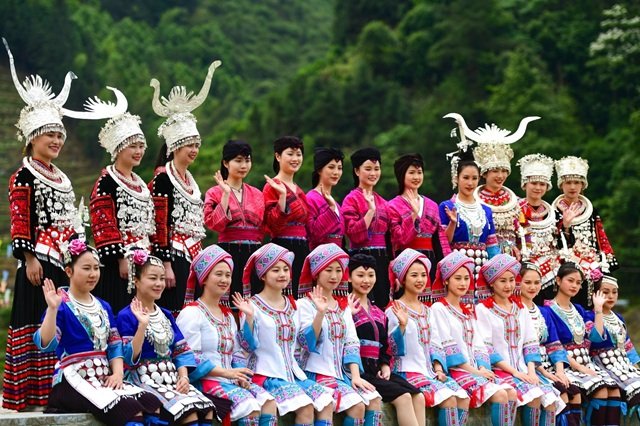
China’s new law, in large part, is a full-scale institution of affirmative action, consciously designed to assure access to the country’s new prosperity and advanced education, while at the same time preserving the rights and autonomy of the country’s 56 ethnic minority groups.
Carlos Martinez, co-editor of Friends of Socialist China, examined what the law actually says, and contrasts China’s record on minority rights – rising life expectancy, the elimination of absolute poverty, and the protection and flourishing of minority languages – with the treatment of minority communities in the West.
Martinez traces the long history of Western sponsorship of separatism in China, from the CIA’s decades-long campaign for Tibetan separatism to the National Endowment for Democracy’s funding of Tibetan and Uyghur exile groups today. He locates the current hysteria in the failure of the US propaganda war: as polling shows steadily warming attitudes towards China, particularly among young people, the ideologues of the New Cold War are increasingly desperate to re-toxify China’s image. He says “what China is building is strength through unity in diversity; what its adversaries want to see is disunity and disintegration.”
The law prohibits discrimination and suppression against any ethnic group
The new law – “Promoting Ethnic Unity and Progress,” was adopted by China’s National People’s Congress in March, and came into effect on July 1. It says upholding national unity and ethnic solidarity is the responsibility of all Chinese citizens, and it prohibits discrimination and suppression against any ethnic group. It strongly re-affirms the right of all peoples to use and develop their own spoken and written languages. It directs central and local government to strengthen infrastructure, industry, public services and environmental protection in minority regions, and to ensure that no ethnic group is left behind in China’s modernization.
The Ethnic Unity law continues a long-standing program of what is called affirmative action here: preferential university admissions for minority students, bilingual education, protected minority-language broadcasting, and formal autonomy arrangements from Inner Mongolia, Qinghai and Gansu to Xinjiang to Tibet and Yunnan.
Western media hysteria
When the law took effect, CNN’s headline announced: “China tells its ethnic minorities to integrate or face consequences.” The law’s stated aim of “promoting extensive exchanges, interactions and integration among all ethnic groups” – the ordinary vocabulary of any multiethnic society that takes cohesion seriously – was recast as an ultimatum.
In highlighting for the word “assimilation,” Western journalists are projecting their own countries’ historical guilt onto China – with the verdict delivered before any evidence is presented.
China’s record
China’s actual record on the treatment of its minority nationalities is one few countries can match.
In Xinjiang, average life expectancy has risen from 30 years in 1949 to around 77 today. The Uyghur population grew from 10 million to 11.6 million between 2010 and 2020 – an increase of 16 percent, compared with 2 percent growth for Xinjiang’s Han population over the same period.
In China’s eight-year campaign to eliminate absolute poverty, which declared victory in 2021, all 420 poverty-stricken counties in ethnic autonomous areas were lifted out of poverty – more than 31 million people in the autonomous regions alone. Young people in Xizang (Tibet) and Xinjiang enjoy fifteen years of publicly funded education; documents of the National People’s Congress are published in seven minority languages; dozens of radio and television stations broadcast in minority languages.
The Western colonial pattern for centuries has been wealth extracted from the periphery to the center. In China the flow of resources runs the other way: Xinjiang and Xizang rank among the highest recipients of central government transfer payments per capita in all China – Xizang first, at more than double any other autonomous region or province.
On the question of language – supposedly the smoking gun of “assimilation” – the facts again point in the opposite direction. When Xizang was liberated in 1951, its illiteracy rate stood at 95 percent; today the completion rate for nine-year compulsory education is 98 percent. Tibetan has been taught as a core subject – and widely used as a medium of instruction – throughout those seven decades. Xinjiang publishes newspapers, books, and radio and television in six languages: over 50 newspapers and 120 periodicals appear in minority languages, and more than 5,000 episodes of television are translated into them every year. Inner Mongolia maintains some 1,900 minority-language schools teaching around 420,000 students. The classical Mongolian script has been preserved in daily use.
It is true that every child in China now learns Standard Chinese (“Mandarin”), the common national language – for the simple reason that command of the lingua franca facilitates educational and career success. Teaching a common language – as well as, and in common with, foreign languages – alongside minority languages is not cultural erasure. It is a sensible educational policy.
Extraterritorial reach
Much of the outrage has focused on the law’s supposedly sinister “extraterritorial reach” – that overseas organizations and individuals engaging in ethnic separatism targeting China can be held legally accountable. The hypocrisy here is stark. The US applies sanctions to every country, company and bank on the planet; it claims jurisdiction over any transaction conducted in dollars; it kidnaps the elected President of Venezuela.
But there is a deeper point: China’s concern about foreign-sponsored separatism is not paranoia; it is history. From the late 1950s, the CIA armed, trained and financed Tibetan insurgents – running a training camp in the Colorado mountains and keeping the Dalai Lama’s operation on an annual subsidy of 180,000 dollars – in a program that ran for decades. Today the baton has passed to the National Endowment for Democracy, which, as Kyle Ferrana documents in Why the World Needs China, “spends millions of dollars per year to foment unrest in Tibet and Xinjiang through NGOs composed of exiles and expatriates, whose designated leaders are expected to form new comprador governments” should China ever be broken apart. The NED boasts about this openly. China has a right to defend its sovereignty, to try and put a stop to this espionage and sabotage.
Anti-China propaganda falling flat
Why the sudden storm, and why now? Part of the answer is that the propaganda war is going badly. Western publics – above all young people – are increasingly unconvinced. Pew polling published in April found that favorable views of China among Americans have nearly doubled since 2023, with a third of under-50s viewing China positively and only a fifth regarding it as an enemy; a recent Politico survey found that young people in Canada, Britain, France and Germany would rather their country depend on China than on Trump’s America.
Millions of visitors are taking advantage of visa-free entry from 77 countries and reporting back – on TikTok and elsewhere – that the dystopia they were warned of turns out to have high-speed trains, safe streets, thriving Uyghur restaurants and dancing in the streets and parks. The hysteria over the ethnic unity law is, in part, a panicked attempt to re-toxify China’s image before the narrative slips out of control altogether.
The deeper motive is strategic. Xinjiang is a key gateway for the Belt and Road Initiative and the heart of China’s world-leading solar and cotton industries; Xizang commands the water towers of Asia. Those who dream of halting China’s rise understand perfectly well that its strength rests on its unity – and Yugoslavia stands as a terrible warning of what the dismemberment of a multiethnic socialist state means for its peoples: a prosperous socialist federation of many nationalities, held together by a common project, was recast abroad as a prison of oppressed minorities. Ethnic grievance was amplified and armed from outside, and the country was broken along the very fault lines its enemies had spent years widening. What followed was not liberation but a decade of war, ethnic hatred and economic ruin, from which the successor states have still not recovered.
What China is building is strength through unity in diversity: in the words of Global Times, “ensuring that people of all ethnic groups truly enjoy equal political rights and jointly exercise their role as masters of the country, and achieving common unity and struggle among all ethnic groups, as well as shared prosperity and development.” What the West wants to see in China is disunity and disintegration. The new law is designed to ensure it never gets its wish.
None of this means China’s ethnic policy is beyond discussion. But that discussion should proceed from evidence rather than atrocity propaganda, and those leading the chorus of condemnation might first consider whether those in glass houses should be throwing stones.
K.J. Noh, former co-anchor of China Report and authoritative analyst of the ongoing US hybrid war against China, says “the farther you are from truth, the closer you are to war. In fact the US is already at war with China. Information war, which is the sub-kinetic or pre-kinetic dimension of war.” He adds that “the most worrisome is the scale of the lies. This was toned down for a brief period, but it is now starting to accelerate again. Expect the lies to crescendo with extravagant claims.”
Malcolm X warned us long ago: “If you’re not careful, the newspapers will have you hating the people who are being oppressed and loving the people who are doing the oppressing.” Sixty years later, his words remain the best possible commentary on the manufactured hysteria over China’s ethnic unity law.