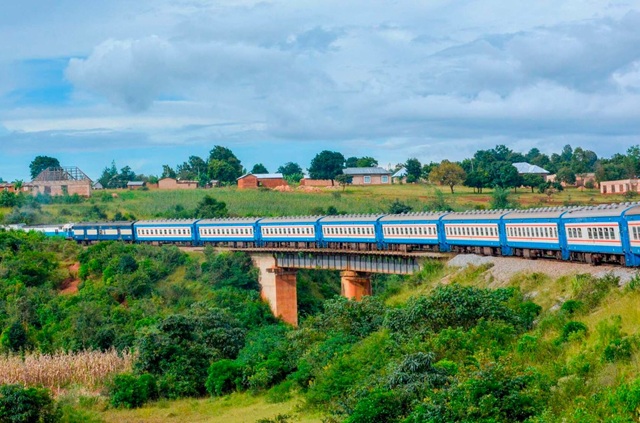
China is once again making waves in Africa with a billion-dollar bid to rehabilitate the historic Tazara railway, a vital transport link between Zambia and Tanzania. The railway, originally built by China in the 1970s, once symbolized Beijing’s commitment to Africa’s development but has since suffered from decades of neglect. Now, as Western nations reassess their approach to foreign aid, China is doubling down on its influence through strategic infrastructure investments.
According to a recent report by the Financial Times, Zambia and Tanzania are in negotiations with a consortium led by the state-owned China Civil Engineering Construction Corporation to revamp the railway. This $1 billion concession aligns with China’s shift towards a more sustainable and equity-based approach to overseas investment, moving away from debt-heavy projects under its Belt and Road Initiative (BRI).
A Leaner Approach to Chinese Development
Unlike Western nations, which have traditionally focused on humanitarian aid, China has long championed large-scale infrastructure projects. The Tazara railway represents a refined version of Beijing’s foreign development model—favoring public-private partnerships over massive sovereign-backed loans. This pivot comes in the wake of debt crises that plagued borrower nations, including Zambia, which defaulted on its sovereign debt in 2020.
China’s recalibrated strategy was evident when President Xi Jinping announced at the Forum on China-Africa Cooperation that Beijing is prioritizing “small and beautiful” projects. This includes 1,000 smaller initiatives, ranging from railway concessions like Tazara to agriculture-focused collaborations such as climate-resilient farms.
Competing Visions: China vs. the US
China’s renewed focus on infrastructure investment coincides with significant shifts in Western aid policies. The Financial Times noted that the United States’ approach has been shaken by former President Donald Trump’s drastic cuts to USAID and the UK’s reduction of its aid budget. While this uncertainty looms over Western assistance, the US has also engaged in Africa’s infrastructure race with its own competing project—the Lobito Corridor.
Initiated under former President Joe Biden and backed by the US International Development Finance Corporation (DFC), the Lobito Corridor aims to modernize the railway network linking Zambia’s copper mines to the Angolan coast. Washington has committed $553 million in financing, with additional investments from private firms like Trafigura and Mota-Engil. However, with Trump’s return to political prominence, doubts persist about the continuity of such investments under his administration.
Economic and Political Stakes
Zambia, rich in copper and other minerals essential for the global energy transition, finds itself at the center of this geopolitical contest. While the US-backed Lobito Corridor looks to redirect Zambia’s resources westward through Angola, the Chinese-led Tazara upgrade offers a direct export route to the Indian Ocean.
“The Tazara to this day is still the biggest Chinese aid project implemented in Africa,” Tim Zajontz, a lecturer at the University of Freiburg, told Financial Times. “It continues to be a symbol of the Chinese-African all-weather friendship, as many officials on both sides often refer to it.”
Zambian officials, however, have expressed a pragmatic approach to foreign investment. Mines Minister Paul Kabuswe emphasized that Zambia does not feel the need to choose sides, as both China and Western investors contribute to the country’s economic growth. “What is happening in the geopolitical sphere will bring its own shocks, but that’s not something that’s going to affect what we’re doing,” he stated.
On the Ground: Mixed Sentiments
Despite large-scale investments, not all Zambians are satisfied with the economic benefits. Workers at Chinese-owned mines have voiced complaints about low wages compared to Western-operated facilities. Branham Chitalu, a worker at a Chinese-run mine in Kitwe, lamented, “Everybody is trying to leave. The pay is peanuts compared to the other mines.”
For ordinary citizens, the primary concern remains the efficiency of infrastructure. Wilson Mubanga, a passenger at the aging Kapiri Mposhi station, expressed frustration over frequent delays and breakdowns on the Tazara line. “Anyone who can fix this is welcome,” he said, reflecting a broader sentiment that the ultimate priority is functional infrastructure, regardless of who funds it.
The revitalization of the Tazara railway underscores China’s evolving investment strategy in Africa and highlights the deepening competition with the US for economic influence. As Zambia and Tanzania move forward with negotiations, the outcome of this project could set the tone for future foreign involvement in Africa’s development. Whether China’s leaner approach proves more sustainable than previous infrastructure booms remains to be seen, but one thing is clear: the battle for Africa’s resources and connectivity is far from over.