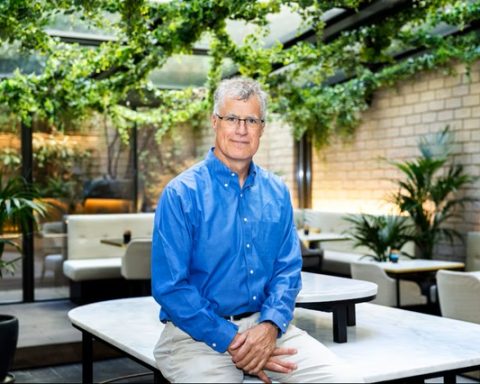
Singapore is positioning itself to capture the next wave of growth from China’s expanding economy, with Senior Minister Lee Hsien Loong declaring that Chinese investment and technological transformation are opening new opportunities for the city-state even as geopolitical tensions intensify between Beijing and Washington.
Speaking to reporters at the end of a five-day visit to China on Friday, Lee revealed a striking development in Singapore’s investment landscape: China has overtaken the United States as the largest source of fixed-asset investment commitments into Singapore in 2025 for the first time. The shift marks a significant milestone in Asia’s changing economic balance and underscores China’s growing influence in regional trade and capital flows.
“You may be surprised to know that China was the largest source of fixed-asset investment commitments in 2025, overtaking the US for the first time,” Lee said, describing the trend as a “new development” that Singapore welcomes.
The comments came during a carefully watched visit that highlighted Singapore’s effort to deepen economic ties with China while maintaining its longstanding strategic relationship with the United States. Lee framed China not only as a source of investment but also as an increasingly vital market for Singaporean exports and services.
He said Chinese firms are looking at Singapore as more than just a commercial gateway into Southeast Asia. Companies from China are increasingly considering the city-state as a manufacturing base, a regional headquarters and an international platform distinct from their domestic operations.
The message reflects Singapore’s broader strategy of remaining economically indispensable amid intensifying competition between the world’s two largest economies. As multinational corporations rethink supply chains and regional hubs, Singapore has sought to present itself as a politically stable, technologically advanced and globally connected base for Asian operations.
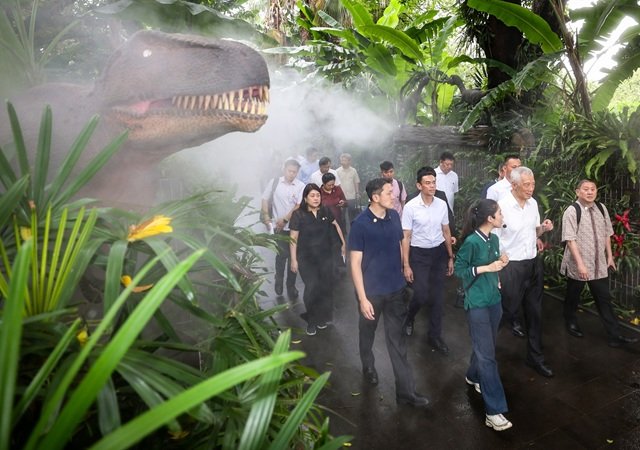
Lee’s visit included stops in Nanning and Shanghai, two cities central to China’s ambitions in logistics, trade and advanced technology. In Guangxi’s capital of Nanning, he visited the headquarters of the Beibu Gulf International Port Group and toured the China-Singapore Nanning International Logistics Park, projects that symbolize growing connectivity between China and Southeast Asia.
During a meeting with Guangxi Communist Party Secretary Chen Gang, Lee emphasized what he described as “considerable” potential for win-win cooperation between Singapore and China, as well as between China and the Association of Southeast Asian Nations. Trade, investment and infrastructure development were identified as areas with significant room for expansion.
But beyond trade and logistics, much of Lee’s attention focused on artificial intelligence, which he portrayed as the defining technological force shaping future economies. In Shanghai, he toured the Shanghai Humanoid Robot Innovation Incubator, where Chinese companies are pushing aggressively into robotics and AI-driven manufacturing.
Lee warned that countries unwilling to embrace AI risk being left behind, arguing that Singapore must move quickly to adapt as the technology spreads across industries worldwide.
“We must embrace this, it is coming; we do not know how quickly, but we do know it is coming,” he said.
His remarks reflected mounting concern among governments globally over how AI will transform labor markets, productivity and economic competitiveness. While fears of mass unemployment and social disruption continue to dominate public debate, Lee suggested the more immediate challenge lies in ensuring workers and businesses learn how to integrate AI effectively.
He dismissed the likelihood of a sudden “jobs apocalypse” in which human workers are rapidly displaced by machines, but acknowledged that governments and companies must work aggressively to prevent economic dislocation.
According to Lee, two priorities are critical. First, AI technologies must be deployed across companies of all sizes and integrated at scale throughout the economy. Second, workers themselves must adapt by learning how AI can complement and enhance their roles rather than replace them.
Drawing on observations from his China trip, Lee noted that AI is already deeply embedded across multiple sectors there, from logistics systems to large-scale tracking and industrial applications. China’s rapid adoption of AI technologies has become a central pillar of its economic modernization strategy and a key area where it increasingly competes directly with the United States.
Singapore is attempting to position itself within that technological race. Earlier this month, the government released the final recommendations of its Economic Strategy Review, which emphasized building economic resilience, investing in emerging sectors and transforming Singapore into a regional AI solutions hub.
Yet the optimism surrounding economic cooperation and technological advancement was tempered by Lee’s candid assessment of worsening US-China relations. His comments came less than a week after a high-profile summit between US President Donald Trump and Chinese President Xi Jinping in Beijing, where the two leaders discussed trade, Taiwan and global security issues including tensions involving Iran.
Lee argued that even if trade tensions between Washington and Beijing stabilize temporarily, the underlying rivalry remains deep, structural and unlikely to disappear anytime soon.
“On a 20-year view, I think it’s quite clear that the balance has been tilting, the Chinese have been catching up with the US,” he said.
He described a growing perception within the United States that China is no longer merely an economic competitor but potentially a strategic rival and future threat. At the same time, he said many Chinese believe Washington aims to prevent China from fully developing into a peer power.
The result, Lee suggested, is a dangerous cycle of mutual suspicion that could destabilize the global order if left unchecked.
Still, he stressed that both powers remain deeply interconnected and share critical interests in areas such as climate change, AI safety and pandemic preparedness. Managing rivalry without allowing it to spiral into open conflict, he argued, will be one of the defining challenges of the coming decades.
“We hope they can be managed and the rivalry contained,” Lee said, warning that the stakes extend far beyond the two countries themselves.