


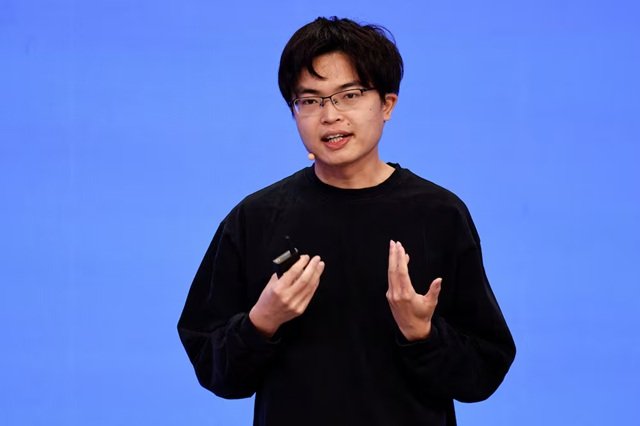
Chinese artificial intelligence developers have drawn renewed attention after the release of two advanced open-source AI models, Kimi K3 and Qwen 3.8, prompting fresh debate over whether lower-cost alternatives can challenge the dominance of leading U.S. platforms such as ChatGPT and Claude.
The two models were unveiled during the World Artificial Intelligence Conference (WAIC) in Shanghai, China’s flagship annual AI event. Their arrival has revived comparisons with DeepSeek, another Chinese AI model that attracted global attention in early 2025 after demonstrating strong performance at significantly lower operating costs than many Western competitors.
The latest releases have intensified questions across the technology sector about whether businesses and developers will continue paying premium prices for advanced AI models when less expensive alternatives offer comparable capabilities for many tasks.
For everyday users, however, the cost difference is less pronounced. Like ChatGPT and Claude, Kimi K3 is available as a web-based chatbot and mobile application with both free and paid subscription plans. According to AI trainer Hugo Ramallo, free versions of Western AI platforms typically impose stricter usage limits, while Chinese frontier models such as DeepSeek generally allow users to send more prompts before restrictions take effect. Subscription prices remain broadly comparable, with premium plans starting at around €20 per month, depending on the provider and usage requirements.
The larger price advantage emerges through application programming interfaces (APIs), which businesses and software developers use to integrate AI into their own products and automate large volumes of requests. API pricing is based on tokens, the unit used to measure AI usage, and Kimi K3’s token costs are considerably lower than those of many competing models, reducing expenses for organisations running AI applications at scale.
Performance comparisons remain mixed and depend heavily on the specific task. Eric Risco, Director of AI at Andorra Telecom, said Kimi K3 currently leads in frontend development, referring to the visual elements of websites and applications. He said identical prompts asking Kimi K3 and Claude to create a racing game produced a more detailed and visually impressive result from Kimi K3.
Independent AI engineer and developer Iván López offered a different assessment. He said Kimi K3 is highly competitive in programming because of its balance between performance and cost, but argued that Western models continue to deliver more consistent results in visual design, aesthetics and interface layout.
Risco also noted that long-term use reveals differences that are not immediately apparent. While Claude often produces the desired result on the first attempt, he said Kimi K3 sometimes requires multiple rounds of corrections before reaching the same standard.
The rapid emergence of increasingly capable Chinese AI models has also raised questions about the commercial outlook for major U.S. AI companies. OpenAI and Anthropic are both expected to pursue stock market listings this year, and any uncertainty surrounding their long-term technological leadership could influence investor expectations.
Despite growing competition, the most advanced frontier AI models are still widely regarded as being developed by American companies, reflecting their advantages in research, computing resources and user scale. Nevertheless, Chinese developers have demonstrated that the technological gap is narrowing.
The report also notes that many Chinese AI models have been developed through a process known as distillation, in which a smaller model learns by generating millions of responses from a more advanced AI system. Although major U.S. AI providers prohibit this practice under their terms of service, the article states that Chinese developers have continued advancing rapidly despite those restrictions.
Experts expect competition to evolve differently across consumer and enterprise markets. Individual users may remain loyal to the AI platform they adopt because it becomes familiar with their preferences and working habits, making switching increasingly difficult. Governments, large corporations and scientific research institutions, however, are expected to continue evaluating competing models based on performance, security and cost.
Ramallo predicted that most AI systems will gradually converge in their ability to perform everyday tasks while becoming more affordable. At the same time, he said a small number of frontier models are likely to continue setting the benchmark for the most demanding and advanced applications.









